

 Jan 2026


If you have ever wanted to settle who would win in a bar fight between Ahri and Darius while also arguing about whether Teemo is actually evil or just very committed to being annoying, 2XKO is Riot Games' answer. Born from the ashes of Project L and polished in Riot's studios across Los Angeles, Sydney and the San Francisco Bay Area, 2XKO drops the League of Legends cast into a 2v2 tag-team fighting arena where teamwork, timing and slightly theatrical violence matter. The basic promise is simple and sensible: choose two champions from Runeterra, designate a Point and an Assist, and get to work converting thumbs into decisive, pixel-based justice. The game launched on January 20, 2026 for Xbox Series X/S and PlayStation 5 (PC had an early access run starting in October 2025), and while it looks like a fighting game, it behaves like a well-executed love letter to tag mechanics with Riot's polish applied like a thin veneer of competence.
2XKO is, at heart, a 2v2 tag-team fighting game with a handshake tag and the kind of mechanics that make match commentators swoon. You pick a Point (your active fighter) and an Assist (your backup), and you can swap between them mid-combo to extend pressure, continue strings, or perform dramatic exits. Mobility isn't content with walking: dashes, jumps and air dashes exist for when you need to remind someone you are a physical being who disapproves of their approach. The inputs are familiar to anyone who's spent time with fighting games: light, medium and heavy attacks form your normal attack suite, while special moves require directional input combinations. Supers are a meter-guzzling reward for correctly spending your brain's stamina - they're executed by combining an attack button with the special-move input and produce powerful, often flashy outcomes. The tag system isn't just for swapping; the Assist mechanic lets you call backup for one-off interventions or swap in to continue a combo, which makes planning and synergies part of the fight rather than an afterthought. Defense is sensibly layered. Blocking works the usual way. Pushblocking exists to let you create space when someone gets overly friendly with your guard. Parry is present to reward timing and nerve; nail the moment and you turn your opponent's confidence into an opening. The Fuse system is 2XKO's subtle brain: it allows players to tailor duo synergies and playstyles so your Ahri+Ekko plan can be less of a meme and more of a functioning strategy. Customization isn't just cosmetic; it nudges team composition into meaningful territory. Characters are chosen from the League universe, and Season 0 launched with 11 playable fighters: Ahri, Ekko, Yasuo, Darius, Illaoi, Braum, Jinx, Vi, Blitzcrank, Teemo and Warwick. Riot clearly intended variety: you have mobile zoners like Ahri, brutal mid-rangers like Darius, and tricksy time-benders like Ekko. Season 1 teased new faces such as Caitlyn, which means the roster is set to swell - and Riot does love to drip-feed characters and watch forums combust. Game modes are pragmatic: private matches for the friends-and-enemies you choose, training mode for learning that one janky combo you saw in a clip, and the multiplayer modes you'd expect for a fighting title focused on competition. Everything important is present without ritual sacrifice: the tag mechanics enable dynamic combos, assists add strategic intervention, and the defensive tools keep offense honest. It's a tactical game that also expects your thumbs to behave like athletes in a small but highly competitive ecosystem.
2XKO runs on Unreal Engine and looks like the sort of stylish, slightly exaggerated fighter Riot would make if they set out to please both art-school grads and people who buy licensed hoodies. The character designs and animations are faithful to their League of Legends origins while being tuned for the clarity fighting games demand: read an opponent's movement, react accordingly, and enjoy the effect animations that punctuate hits. The gallery of credited artists - Jessica Oyhenart and Katon Callaway among them - have done the thing artists do when given a big IP and allowed to have tasteful fun. There's a gameplay screenshot in the press kit that sums up the visual approach: readable action framed with a bit of cinematic panache. Visual effects for supers and special moves are theatrical without becoming noisy, which is helpful when your Assist shows up and everything on-screen tries to out-sparkle your attention. The sound team - Jesse Zuretti, Casey Edwards and Mike Pitman - get a mention in the credits; their work supports the blows and the spectacle, which is exactly what you want from a fighting game soundtrack and hitscape. If you have an Xbox Series X/S and enjoy things that look like they cost money, this will satisfy.
2XKO is a tasteful, well-made tag fighter that does not try to reinvent the wheel so much as redecorate it with League of Legends charm. The rebranding from Project L paid off in a game that is deliberately structured, tactically rich and populated by characters who bring both baggage and personality. The Fuse system adds meaningful customization, the tag and Assist mechanics reward planning, and the defensive options keep matches from becoming a single, sad auto-win. It isn't flawless. The roster is modest at launch with 11 fighters - which is generous enough for early access but means long-term fans will be waiting for the planned post-launch additions. There's also the small matter of it being free-to-play, which makes people suspicious in ways that are unfortunately justified in other titles; Riot hasn't made microtransaction systems the star here, but it's the sort of thing to keep an eye on. Nominations for Best Fighting Game at The Game Awards 2025 and a D.I.C.E. nod suggest this was not a quiet experiment, and the core experience justifies that attention. If you like tag-team fighters, appreciate smart design, and enjoy watching Ahri and Darius solve problems with coordinated violence, 2XKO on Xbox Series X/S is worth your time. It plays clean, looks good, and makes the rather specific argument that two is better than one unless you are facing Teemo, in which case two is questionable. Score: 8/10 - a tight, stylish fighter with room to grow and enough substance to keep you logged in until the next season drops.
 Ultraman Fighting Evolution on PlayStation
 ACA Neo Geo: Art of Fighting 2 on Xbox One
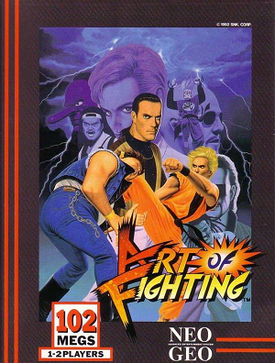 ACA Neo Geo: The King of Fighters '98 on Xbox One
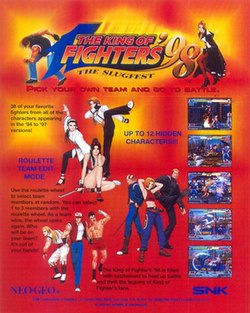 Touhou Hyoibana: Antinomy of Common Flowers on Switch










 Another SquareThought Site