

 Oct 2023
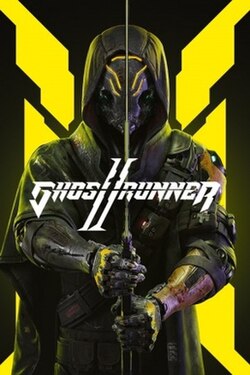

If you liked the original Ghostrunner's mix of hyper-precise movement, one-hit death stakes and neon-splashed aesthetic, Ghostrunner 2 arrives like a katana delivered by a very punctual motorcycle courier. Developed by Poland's One More Level and released on 26 October 2023, the sequel keeps the first-person, blade-first DNA intact while layering in new systems - most notably a stamina rulebook that actually matters, a grappling hook, slow-time "Sensory Boost," and (for people who like to die stylishly on two wheels) motorcycle sections. Powered by Unreal Engine 4 and released on current-gen platforms including Xbox Series X/S, the game leans into a technical identity: fast traversal, tight input windows, and deliberate design decisions that reward planning as much as raw reflexes.
Ghostrunner 2 is a study in mechanical focus. It's still a first-person slasher-platformer where both you and enemies can die in a single hit, which means the game's systems have to be unambiguously readable. The foundational layer is movement: Jack can dash, jump, wall-run, slide and grapple, and these are not flavor moves - they are primary verbs. The grappling hook alters traversal calculus by enabling mid-air redirection and sequencing that turns a straight hallway into a permuted obstacle course. Sensory Boost temporarily slows time, and because every encounter can be lethal, that slowdown is more than cinematic sugar; it is a window for route correction and precision aiming. The stamina meter is perhaps Ghostrunner 2's most consequential mechanical tweak. Where the original felt like you could chain dashes and deflections with near-impunity, the sequel introduces a throttle. The stamina pool governs dash frequency and the ability to deflect, adding a resource-management layer on top of twitch execution. On a technical design level this is smart: it reduces the combinatorial explosion of movement options (and the exploitation thereof) while forcing players to think in micro-bridges - "Do I spend dash to close distance, or save it to deflect the next instant-kill shot?" That tension converts the movement kit into a tactical decision set rather than a pure speedrun toy. Combat sits at the intersection of swordplay and toolbox abilities. The katana remains the primary weapon (fast, precise melee), but a suite of special abilities complements it. The Shuriken ability throws multiple electrical projectiles, useful for both stunning enemies and activating remote switches; this duality means abilities are leveraged across combat and puzzle domains. The one-hit-kill design pushes encounters toward prioritization and target sequencing: use the environment, allow Sensory Boost to create clean lines for lethal angles, or use Shuriken to neutralize ranged threats before closing for a kill. Enemy design and encounter composition are tuned around this premise - ranged units and environmental hazards force you to chain traversal and ability use with near-military timing. Ghostrunner 2 also expands its spatial design. Levels are more non-linear than the first game, offering route planning rather than a single choreography. This has technical implications: the level layout must clearly telegraph traversal affordances and enemy placements to accommodate multiple approaches without breaking pacing. The game attempts this by giving players tools (grapple, wall-run) that scale across environments, and by presenting multiple coherent pathways rather than random nooks. The result is a gameplay tectonic plate where strategy and reflex coexist - you may map out a path, then execute it at a speed that makes your brain feel like it's sprinting in molasses. One More Level also added vehicular combat via a motorcycle, and it's not a throwaway. These sections retain the same core constraints - one-hit diedom persists - but add a new kinematic layer: velocity, lean, and obstacle timing. Balancing melee-style precision while moving at high speed is non-trivial; the motorcycle sequences must reconcile very different control cadences without breaking player expectations. The team's solution, according to development notes, was to ensure the motorcycle matched the game's pacing and aesthetic while remaining a distinct rhythm. That motorcycle is explicitly not upgradable, which is a deliberate technical and design choice: it keeps the vehicle as a controlled, scripted set piece rather than turning it into an out-of-proportion progression loop. Progression-wise Jack can buy upgrades, further diversifying the mechanical palette. These upgrades are the usual RPG-lite modifiers - changes to abilities, perhaps reductions in cooldowns or enhancements in utility - and they integrate with the stamina and deflection systems to shift combat calculus over time. The active blocking mechanic was added to aid approachability. From a design standpoint this is an accessibility and onboarding move: hardcore players get the original's razor-edge demands, but the mechanic grants newer players a mitigation path that keeps momentum without invalidating the skill ceiling. The single-player-only structure keeps the game's performance envelope focused: no network code compromises, no PvP balance concerns. This allows the designers to craft encounters and technical tuning specifically for deterministic, local input-response loops. Combined with UE4's mature toolset, One More Level could iterate on traverse timings, animations, and collision in a way that preserves the game's feel - the thing that matters most in a title where one mis-timed dash equals a respawn. The net effect is a game that plays like a live-wire tutorial in speed, precision and risk management, with a mechanical clarity that signals intention even when you're moving at absurd speed.
Ghostrunner 2 runs on Unreal Engine 4, which is a practical choice rather than a flashy, buzzword-heavy one. UE4 provides a stable, well-understood pipeline for high-contrast cyberpunk visuals: emissive neon, layered post-processing, and crisp particle FX for blade impacts and Sensory Boost slow-mo. The engine's strengths show in readable visual language - enemies, climbable surfaces and interactive geometry are distinguished clearly, which is crucial when the player is making millisecond decisions. On the artistic side, the game leans heavily into cyberpunk tropes: high-gloss surfaces, scattered grime, and a neon-primary palette that makes enemies and projectiles pop. Those choices aren't aesthetic indulgence alone; they serve function. High-contrast lighting and clear material definition reduce ambiguity about what you can interact with at speed. Motorcycle sequences benefit from motion-blurred environments and kinetic particle trails; the visual feedback is tuned not just for spectacle but to telegraph collision and obstacle timing. Unreal Engine 4's mature animation tooling also helps the movement system feel precise - wall-runs, dashes and grapples need to snap to the world without jitter, and the engine supports that level of polish with robust animation blending and root motion options. A technical footnote: the game ships with a varied soundtrack handled by multiple composers (We Are Magonia, Dan Terminus, Arkadiusz Reikowski, Gost, Daniel Deluxe). Audio design ties directly into gameplay: audio cues for enemy attacks, ability readiness, and the signature sensory slow are all part of the feedback loop. Good audio feedback is half the battle in high-speed first-person games, and Ghostrunner 2 uses its score and SFX to complement visual clarity so that players get multi-sensory signals for split-second decisions. The documentation doesn't dive into frame-rate targets or platform-specific rendering modes for Xbox Series X/S, but the combination of UE4 and a focused single-player scope typically allows developers to target stable performance budgets and high visual fidelity without unpredictable network or AI scaling costs. The level design and non-linear paths also imply a need for efficient streaming of assets to avoid hitching during fast traversal, and the game's use of scripted motorcycle sections suggests careful synchronization between physics, animation and visual effects to maintain consistency at speed.
Ghostrunner 2 is a technical evolution of a tight concept rather than a reinvention. It refines the first game's core with meaningful mechanical additions: stamina gating that forces tactical decisions, grappling and Sensory Boost that expand traversal and aim windows, and motorcycle sequences that change cadence without derailing the core loop. The active blocking mechanic and purchasable upgrades make the game more approachable without gutting the skill ceiling, and the non-linear level design rewards forward planning as much as raw reflexes. Reviews landed squarely in the "generally favorable" camp (Metacritic ~80 on Xbox Series X/S) with outlets praising precision and style, though a few critics called out pacing or design rough edges. If you're on Xbox Series X/S and you like games that respect your input and punish sloppy timing with poetic immediacy, Ghostrunner 2 is worth the ride - just expect it to be demanding in its own, carefully tuned way. It's technically confident: UE4-driven visuals that aid readability, audio that reinforces timing-critical actions, and deliberate design tradeoffs that keep motorcycle fights from turning into an out-of-place minigame. The Game Awards nomination for Best Action Game was hardly a surprise. For players who enjoy optimizing routes, chaining abilities, and learning minute windows of opportunity, this sequel is a high-speed classroom for mastery - and it looks and sounds like it while doing it. For everyone else, the accessibility options, including active blocking, mean you can still enjoy the neon, even if your reflexes occasionally file for unemployment.
 Ghostrunner 2 on PS5
 Ghostrunner on Xbox Series X/S
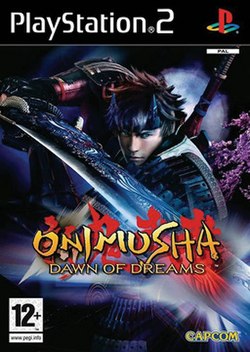
 Onimusha: Dawn of Dreams on PS2
 Action Man: Operation Extreme on PlayStation
 Door Kickers: Action Squad on Switch
 Combat Elite: WWII Paratroopers on PS2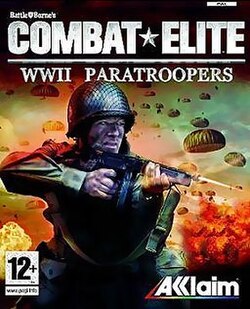
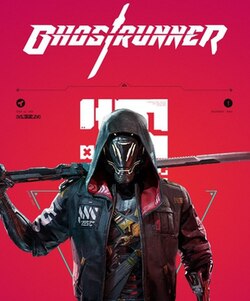 Ghostrunner on Switch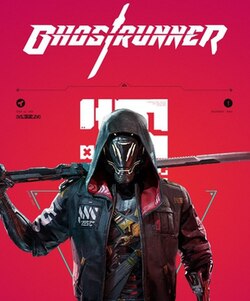










 Another SquareThought Site