

 Oct 2024
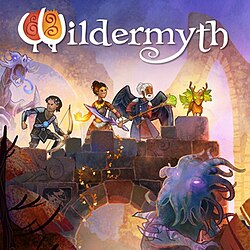

Wildermyth arrives on Xbox Series X/S bearing the rare badge: indie game that actually understands its technical identity. Built by a six-person core team at Worldwalker Games and ported to consoles by Auroch Digital, Wildermyth isn't trying to win a shader-off; it's trying to make a game where systems consistently generate dramatic, meaningful narrative. The game's headline mechanic is procedural storytelling layered on top of a clearly-defined handcrafted spine - a design decision that shifts the engineering burden away from brute-force rendering and into stateful simulation, deterministic event generation, and robust authoring tools that stitch those pieces together into readable, shareable artifacts (the so-called "Library of Plays"). If you care about how games do emergent story rather than simply pretending emergent story exists, Wildermyth is interesting in a way AAA spectacle rarely is.
At its mechanical core, Wildermyth is a tactical, turn-based role-playing game that borrows the grid-based, cover-and-movement logic popularized by XCOM but repurposes it for a more narrative-centric experience. The player recruits a roster of randomized characters at the outset; these characters are not just numbers on a stat sheet, they're agents in a procedural systems stack. Each character carries a compact state machine made up of attributes, skills, evolving traits, relationships, age, and narrative flags. The long arc of a campaign is the result of repeatedly sampling and mutating those state machines during scripted beats and unscripted events alike. From a systems perspective, the most important thing to understand is the alternation between handcrafted and procedural layers. Worldwalker defines a clear beginning, middle, and end for the campaign - that's the handcrafted spine - and lets procedural events and character-driven micro-narratives fill the connective tissue. That hybrid approach changes technical trade-offs: the game needs a deterministic event generator that can produce plausible narrative scenes (battles, personal epilogues, friendships and rivalries) while being constrained enough to mesh with the fixed beats. Determinism matters for reproducibility (for debugging and for players who want to share stories), so it's likely the team relied on seeded RNG and event templates with preconditions to ensure narrative coherence. Combat itself is conventional enough to be immediately legible to tactical fans: grid tiles, action points/movements, ability cooldowns, and positional modifiers. Where Wildermyth's systems shine is in the persistence of combat outcomes. A single skirmish can alter a character's trait list (a scar, a curse, a bond), and those traits are first-class inputs back into the procedural story generator. Architecturally this implies a tight coupling between the combat simulation and the narrative layer: combat modules emit events into a narrative bus, and the story generator consumes those to instantiate new comic-strip sequences, dialogue branches, or mechanical perks. It's an efficient, parsimonious loop: gameplay -> state change -> story artifact -> new gameplay possibilities. Outside of combat, the campaign map is deliberately a system design about scarce resources: time and choices. Decisions such as rebuilding a village are modeled as trade-offs - invest time for long-term benefits or rush preparation at the risk of being underpowered for the next invasion. The map layer therefore behaves like a meta-scheduler, converting player actions into opportunity costs. From a technical standpoint this reduces the need for sprawling open worlds and focuses engineering effort on meaningful state transitions and UI affordances that make those trade-offs readable. User experience on consoles is where engineering choices are most obvious. The original PC UI is mouse-first; porting to Xbox Series X/S required careful remapping of selection, camera, and tactical inputs to a controller paradigm without breaking the game's information density. A strong port will preserve quick information access (tooltips, action previews) while consolidating less-frequently-used UI into radial menus or context-sensitive buttons - a small but important technical challenge to avoid friction during high-stakes tactical turns. One last technical note: Wildermyth's character aging and relationship systems are lightweight but consequential. Aging isn't window dressing; it's a state variable with triggers (retirement, death, legacy traits), and relationships can create persistent modifiers or unlock unique events. Implementing this cleanly requires good versioning of character records and a save format that tolerates long, branching histories - especially important when players expect to hand down legacies from one campaign generation to another. Taken together, Wildermyth's systems don't just coexist; they feed one another. Procedural generation isn't used as a toy to produce disposable randomness, it's a disciplined authoring technique that turns play history into narrative output. For players who enjoy thinking about systems and the emergent behavior they produce, there's a lot to admire under the hood.
Wildermyth's visual identity is a conscious technical choice: the game renders most of its storytelling through stylized 2D comic-strip panels (the Library of Plays) and an isometric tactical playfield with painterly, vector-like textures. This is not an omission but an optimization. By leaning into a distinctive 2D aesthetic, Worldwalker reduces GPU-bound complexity and shifts the technical emphasis to runtime content assembly - generating panels, compositing character portraits, and rendering textual narration in a way that feels handcrafted even when it's procedurally generated. Because the game blends handcrafted comic assets with procedural text and sprites, the art pipeline has to be tightly integrated with the narrative system. Each procedural event needs an asset mapping layer (which illustration to use, how to position character portraits, which busts/poses match a given trait), and those mappings must scale across thousands of possible permutations without exploding asset counts. The likely solution is a modular asset system: a base set of illustrations and overlays that are recombined dynamically. That approach is great for memory usage and download size - the game can deliver a rich variety of narratives without a huge disk footprint - and it fits a small team's constraints. On Xbox Series X/S specifically, that visual strategy should translate into excellent performance headroom: minimal shader complexity, limited overdraw, and mostly CPU-bound costs for procedural generation and UI composition. The console port responsibilities therefore tilt toward optimizing CPU-side narrative generation threads and ensuring that dynamic UI updates during battle are frame-timely, rather than squeezing out extra frames for heavy GPU loads. Controller-friendly HUD scaling and legible typography at typical TV viewing distances are also critical; the Library of Plays needs to read well on a couch, which is a different UX challenge than a desktop monitor. Graphically, the trade-off is obvious: Wildermyth sacrifices photorealism for clarity and narrative expressiveness. For players expecting flashy particle systems and cinematic camera sweeps, the aesthetic might feel modest. For those who want visuals that serve the story and gameplay systems efficiently, it's a smart, deliberate engineering choice that keeps the game's primary strengths front-and-center.
Wildermyth on Xbox Series X/S is a rare breed: a tactical RPG where the fun is as much about plumbing the emergent behavior of well-designed systems as it is about acing a combat encounter. Its technical architecture - a hybrid of handcrafted campaign beats and robust procedural generation - is the game's raison d'être. That architecture imposes useful constraints that make generated narratives coherent and mechanically meaningful, and it allows a six-person studio to deliver an experience that feels much larger than the sum of its team size. There are legitimate caveats. The combat can, at times, feel repetitive because the tactical layer trades a lot of mechanical variety for narrative depth. Players who prioritize high-fidelity graphics or constant mechanical novelty may find Wildermyth's focus narrow. Also, Worldwalker's decision to end active development after the Omenroad DLC means future technical improvements will be limited to what the current teams and community can sustain. For technically minded players - the ones who enjoy tracing cause-and-effect through state machines, seed-based generation, and compact asset pipelines - Wildermyth is must-play. On Xbox Series X/S it benefits from hardware that can easily handle its art and focus CPU headroom on the procedural engine and UI responsiveness. If you want a game that treats procedural storytelling as engineering, not marketing, this title is a tidy, well-engineered example. Score: 8.8/10 - a high mark for an indie that understands and owns its technical choices, and then turns those choices into memorable stories.
 Combat Elite: WWII Paratroopers on PS2
 Rainbow Moon on PS4
 The Banner Saga 2 on PS4










 Another SquareThought Site