

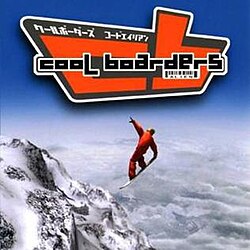

Cool Boarders: Code Alien landed on the original PlayStation 2 late in 2000 as UEP Systems' last hurrah for the franchise on Sony hardware, and a Japan-exclusive detour for the series. On paper it reads like a conservative evolution rather than a reinvention: the familiar arc of trick-based scoring, big jumps, and goofy characters returns, but under the hood there are a number of technical choices that make this entry feel like a PS2-generation title rather than another PlayStation 1 transplant. This review approaches Code Alien as an engineer with a snowboard: interested in inputs, outputs, and what happens to the data (your inputs) as it flows through the game's physics, camera, and feedback systems. There is charm and polish here - GameSpot's "top-notch production" line isn't lying - but there are also clear trade-offs that a careful, detail-oriented player will notice.
Controls and feel are where Code Alien tries to do the most convincing impersonation of real snowboarding within the constraints of a controller. The mapping is straightforward but with depth: the X button functions as both a tap-to-jump and hold-to-charge input, while the D-pad is used to set up directional aspects of tricks. The PlayStation 2's pressure-sensitive face buttons are put to practical use - light versus heavy pressure results in different trick variants - which adds a layer of analog expressiveness that the earlier PlayStation titles couldn't replicate. The game also provides onscreen messages indicating the degree of spin or flip you are setting up, which is critical for a trick game. That feedback is a small but high-ROI feature: when the engine tells you "360" or "720" in real time, the player can translate timing and stick motion into intentional outcomes rather than blind flailing. The trick master mode, which acts as an escalating tutorial on an endlessly repeating slope, is a clever design for teaching the engine's nuance. Since the environment resets and is predictable, the player can focus exclusively on the input timing, analog strength, and the game's aerial control quirks. Speaking of air control, this is a place where Code Alien made an explicit improvement over Cool Boarders 2: the game gives you more agency in the air, smoothing out landing windows and making it easier to recover from over-rotations. That improvement alters the risk calculus for players: larger combos and more ambitious spins are viable because the post-rotation recovery mechanics provide a forgiving buffer. The system encourages experimentation with link combos because the reward curve no longer punishes you instantly for minor misalignments. License mode shifts the focus to obstacle navigation and precision rather than pure trick scoring. From a systems standpoint, this is a testbed for mechanical mastery: the player must thread through obstacles which exercise the responsiveness stat of characters (Irin) and the speed stat (Jin). Each starter character is effectively a tuned parameter set: Yagi for technical multipliers, Jin for top-speed situations, Irin for input-to-response latency, and Cindy as a balanced baseline. The presence of branded boards - Volcom, Arnette, Burton - is mostly cosmetic to casuals but functionally represents different handling profiles for players who care about micro-optimizations. Multiplayer presents the usual trade-offs of late-2000 console networking: split-screen competition in extreme and trick modes supports direct head-to-head comparatives, but the local multiplayer ecology is dominated by the camera and framerate compromises necessary to render two viewpoints. The game leans into gameplay parity here - both players have access to the same trick systems and input feedback - but expect simplified draw distances and more aggressive LOD transitions in split-screen to keep performance acceptable. On the mechanical side, some forced hazards remain in the level scripts. The balance between dynamic risk and frustrating interruption is delicate; Code Alien reduces the number of forced hazards compared to earlier titles, but reviewers and players still flagged the remaining ones as unnecessarily disruptive. From a design perspective, the hazard frequency and placement directly affect flow; too many forced events break combo chains and reduce the player's ability to enter and exit high-scoring registers. The development team clearly aimed to minimize these interruptions, and in many runs they succeeded, but the residual hazard scripting is still the game's most persistent blemish. The feedback systems - camera framing, onscreen damage/trick degree readouts, and the tactile variety afforded by pressure-sensitive inputs - compose a robust input-output loop. Code Alien is engineered to reward precise, repeatable inputs rather than random theatrics, which makes it attractive to players who enjoy drilling tricks and optimizing routes. That said, the game never becomes a hardcore physics sim; it remains a trick-first arcade with a stronger simulation flavor than its predecessors. The net effect is a game that sits comfortably between accessible fun and technical depth.
The visual presentation is a clear leap forward from the PS1-era Cool Boarders titles, and UEP Systems used the extra headroom of the PS2 in a few pragmatic ways. Terrain variety is improved both in mesh complexity and in obstacle assortment, which does two important things: it reduces visual monotony and it creates more interesting physical interactions between skater and environment. The art direction leans towards comic sensibility and quirky character models, which gives the visuals personality while keeping polygon counts reasonable. Camera improvements are arguably the most impactful technical enhancement: the framing logic smooths rotational transitions during tricks and reduces jitter when switching from ground to air. This camera reliability feeds directly into player performance - when your viewpoint is stable and predictive, your muscle memory can track spin and landings more effectively. Despite these gains, some PS2-era limitations remain visible. Object pop-in and LOD transitions are still present in dense obstacle areas, which can momentarily confuse depth perception and timing for precision tricks. The lighting model is conservative: you get solid directional lighting but little in the way of advanced shadowing or ambient occlusion, so some scenes can appear flatter than the higher-end PS2 titles of the era. Overall, the graphical choices feel pragmatic: UEP improved what mattered for gameplay - ground fidelity, obstacle variety, camera behavior - while avoiding expensive rendering techniques that would have risked frame rate stability.
Cool Boarders: Code Alien is a technically minded evolution of the series that favors refined input fidelity, camera niceties, and air control improvements over flashy new mechanics. It succeeds where it matters: the player feels like the game listens. Pressure-sensitive trick variants, a useful trick-degree HUD, and an effective tutorial loop make this one of the more approachable yet deep snowboarding titles of its time. Production values and character charm are high, and the inclusion of branded boards and distinct character stat profiles gives the systems layers for players who enjoy optimization. Problems remain with residual forced hazards and some streaming/pop-in artifacts, but those are annoyances rather than dealbreakers. For a PS2-era, Japan-only release, Code Alien punches above its weight as a technically competent and genuinely fun trick engine. If you care about how a snowboarding game responds to your thumbs and want a title that rewards practice and precision, it's worth digging up a copy - or at least a playthrough - and seeing how many clean 720s you can string together before physics or a surprise hazard tells you otherwise.
 Cool Boarders 2 on PlayStation
 Cool Boarders 4 on PlayStation
 Shaun White Snowboarding on DS
 Shaun White Snowboarding on PS3
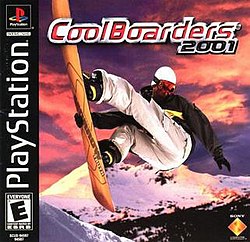
 Cool Boarders 2001 on PS2
 Chill on PlayStation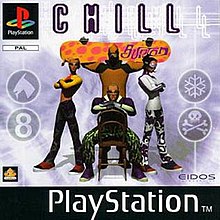
 Rising Zan: The Samurai Gunman on PlayStation












 Another SquareThought Site