

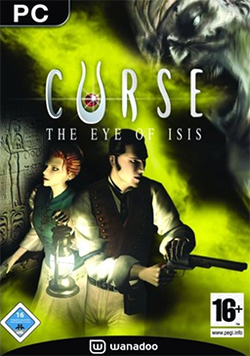

Curse: The Eye of Isis is one of those modest survival-horror entries that wears its inspirations on its sleeve and its technical compromises in the open. Developed by Asylum Entertainment and released across PC, Xbox and (region-limited) PlayStation 2, it's mechanically indebted to the fixed-camera, inventory-minded classics of the late 90s and early 2000s. If you're approaching the PS2 version expecting a revolutionary title, set your expectations to 'B-grade period-piece'-but if you like methodical pacing, tension that relies on resource scarcity and camera choreography, Curse has enough going on to warrant a look. This review focuses on the PS2 release while pulling technical context from the game's broader reception. I dig into the systems that matter to a technically-minded player: camera and rendering decisions, user interface and menu design, combat and resource systems, audio feedback, and how those elements combine to define both the game's strengths and its flaws. The end result is a survival-horror package that is sometimes clever in design but too often held back by polish-level issues and missing modern niceties. I rate it 6.5/10 because it accomplishes the basics well enough to be playable and occasionally atmospheric, but it doesn't push the PS2 hardware or the genre's conventions far enough to rise above average.
Curse borrows heavily from the fixed-camera survival-horror template: rooms are framed by static viewpoints, inventories feel precious and combat is designed to be sparing. Those choices are stylistic but have important technical implications on a console like PS2. Fixed cameras allow the engine to stage scenes and manage what needs to be rendered, which can help performance and permit more controlled lighting and composition. In Curse's case, that staging mostly works: the game uses camera placement to build tension, because the player rarely knows precisely what lurks just outside the frame. This is a deliberate pacing tool and a cheap, effective way to engineer scares when you don't have the budget for sophisticated AI. The trade-off is that fixed cameras also put a premium on design clarity. When the camera angle shifts, player movement and enemy placement must be tightly choreographed to avoid awkward collisions or unjust deaths. Curse mostly avoids catastrophic camera-induced deaths, but it does suffer from the classic annoyances of the approach: poorly telegraphed corner turns, enemies clipping through geometry, and occasional disorientation during action sequences. These are not catastrophic, but they break immersion and reveal that the game's collision and camera transition pipelines weren't tuned to console-level smoothness. Controls on the PS2 are one area that reviewers noted as relatively competent. Compared to the clunky tank controls of early Resident Evil entries, Curse's input handling is reportedly above average-more responsive and less likely to leave you staring at a wall while a mummy chews your ankles. That said, the combat is mechanically simple and, according to contemporaneous reviews, a bit too easy. Enemy AI patterns are basic: thugs react predictably, and the undead largely pursue in straight lines or simple flanking attempts. With the abundance of scripted encounters rather than emergent behavior, combat becomes a test of resource management rather than tactical depth. Resource economy is where the game aims to create tension. Ammo conservation, healing item scarcity and inventory limits force choices reminiscent of the survival-horror golden age. The twist is that Curse's map and menu systems undermine that tension by being clunky. A useless map, as reviewers observed, breaks the loop of exploration and planning by failing to communicate spatial relationships and backtracking requirements effectively. Menus that are slow or awkward to navigate raise cognitive load during high-stress moments; the result is tension for the wrong reasons. From a design standpoint, the level layout and fixed-camera framing allow for puzzles and choke-point encounters, but they rarely reach the satisfying interlock of puzzle, combat and exploration that defines the best entries in the genre. Instead, you get competent staging interrupted by interface friction, enemy placement that favors quantity over cleverness, and occasional aesthetic repetition in environments that robs the exploration of a sense of discovery. The game's narrative and voice acting-praised in several reviews-do a decent job of keeping events moving, but the scripting can't fully mask mechanical repetition. Performance-wise, the PS2 version benefits from the same constraints that make fixed-camera games easier to render: fewer on-screen objects need to be processed relative to fully dynamic camera games. That said, reports about the Xbox release having been briefly backwards-compatible with Xbox 360 and then removed because of glitches hint at platform-specific quirks. There's no sweeping evidence that the PS2 port is buggy in the same way, but the game's overall polish level suggests you should expect minor pop-in, texture flatness and AI edge-cases rather than buttery console-grade refinement.
Graphically, Curse sits squarely in the 'competent but uninspired' quadrant. Contemporary coverage described visuals as 'a tad too flat' with 'little life,' and that's a fair summary from an objective technical perspective. The PS2 hardware is capable of richer materials and more convincing dynamic lighting than what Curse presents, but choices in texture resolution, model detail and shading keep the game's surfaces and characters looking somewhat posterized and static. The decision to use fixed camera angles reduces the need for high-density geometry at all times, and the engine seems to exploit that by allocating detail where the camera expects to look. However, instead of leaning into atmospheric lighting and shader work to sell the Victorian museum and its dusty exhibits, the game often relies on straightforward baked or simple dynamic lighting with limited post-process nuances. Result: scenes communicate the theme competently, but they rarely pop. Character models are serviceable, with acceptable silhouette readability and readable hitboxes, but animation cycles are repetitive and occasionally stiff-another place where budget constraints show. Texture work is functional for props, walls and artifacts, but the low variety and limited use of normal/detail maps make flatness more noticeable on a TV at typical PS2 resolutions. Environmental detail is used to stage setpieces rather than to reward exploration; decorations are recycled, so backtracking feels less rewarding visually. The user interface and HUD designs are utilitarian; button prompts and inventory icons are legible but lack finesse, which aligns with critical comments about 'clunky menus.' Audio design deserves a nod here: voice performances were singled out as a relative strength, and the soundscape-while not cutting-edge-does an efficient job of punctuating scares. The game's overuse of a 'random freaky noise' effect, noted by reviewers, points to a design crutch rather than a polished sound tactic. Instead of using subtle cues and dynamic music transitions, the game occasionally opts for blunt audio stings, which cheapen moments that might otherwise have been genuinely tense. From a technical audio engineering view, the mix favors speech clarity over complex environmental reverb or positional audio tricks, a safe call for PS2-era titles but one that limits immersion.
Curse: The Eye of Isis on PS2 is a textbook example of a game that understands the survival-horror formula and applies it without reinventing it. The fixed-camera approach, inventory-limited combat and resource tension are all present, but the implementation is middling: controls are competent, voice acting is better than average, and the staging can be effective, yet the visuals are flat, the menus and map add friction, and enemy design favors predictability. If you're a fan of period-piece horror and you enjoy methodical gameplay that prizes atmosphere over action, Curse will scratch that itch-especially if you can find the PS2 European release at a bargain price. If you demand technical polish in UI/UX, graphical ambition or emergent enemy AI, this title will feel dated and occasionally frustrating. The aggregate critical reception (roughly 60-63/100 on contemporary aggregators) matches that assessment: an average game with specific strengths and problematic rough edges. Technically minded players will appreciate some of the clear design trade-offs (fixed cameras to control rendering load and stage scares, a tight resource economy), but they'll also be bothered by the polish shortcuts (clunky menus, a useless map, audio stings as band-aids). In short: Curse is competent, occasionally atmospheric, and technically interesting as an exercise in doing a lot with a little-but it's not the lost PS2 masterpiece that excuses its rough edges. Score: 6.5/10.
 Top Darts on PS3
 Tori-Emaki on PS3
 Obscure: The Aftermath on PS2
 Crow Country on PS4
 Tormented Souls on PS5
 The Forest on PS4
 Play with the Teletubbies on PlayStation
 The Powerpuff Girls: Chemical X-traction on PlayStation












 Another SquareThought Site