

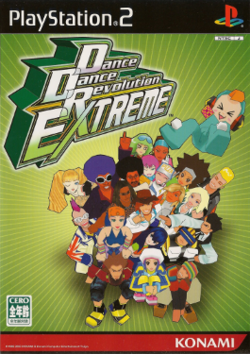

Dance Dance Revolution Extreme 2 arrives like a polite shove to the ribs: nostalgic, insistent, and likely to make you sweat if you still own a functioning dance pad. As the tenth home DDR release in North America, Konami took the familiar template - arrows, techno, and the occasional pride-shredding 'Fail' - and polished it for the PlayStation 2 era. If you remember DDR as a machine of social humiliation and cardio gains, Extreme 2 behaves like a reunion where most of the guests are Naoki Maeda originals and at least one of them brings a remix you didn't ask for but secretly enjoy.
Extreme 2 keeps the basics of DDR perfectly intact: arrows scroll, you step on the corresponding panels, and an on-screen announcer judges you with the subtle cruelty of a gym teacher who also DJs. The game ships with 74 songs, of which 50 are tucked behind progression systems like Dance Master Mode. That means you can't just mash 'Start' until the game pities you - you unlock content by playing, not by hoping the universe feels generous. If you have a steady relationship with the PS2 memory card, Dance Master Mode rewards persistence. The majority of Extreme 2's track list consists of Konami originals, many credited to Naoki Maeda, which keeps the soundtrack predictably energetic and internally consistent. The decision to make most tracks in-house is sensible: it gives the game a signature sound and spares you the awkward experience of a licensed pop song looping while you repeatedly miss a diagonal arrow. Extreme 2 is also notable for being the first PlayStation DDR to include online multiplayer. Yes, the mid-2000s introduced the very modern concept of competing against other sweaty people who live far away. It is an achievement that felt slightly futuristic at the time and slightly baffling now, like discovering your old phone once had features you thought only existed in science fiction. The online mode is a solid attempt to extend replayability - and to let you discover that strangers have invented ways of getting way better at 'Butterfly' than you ever will. Gameplay-wise, expect familiar modes and a few sensible tweaks. The game preserves the Extra Stage lineage (that glorious reward where you unlock a chance to play an ultra-difficult encore if you perform well enough), the graded ratings, and the usual difficulty ladder. Unlike arcade epics with several hundred songs, Extreme 2 pares the list down to a digestible 74 tracks for home consumption, which is convenient when your living room is a shrine to ergonomics rather than an arcade hall. The game gives each song its own video made specifically for the title, except one notable exception: Sean Paul's "Get Busy," which reuses part of its official music video. The bespoke visuals add personality and help the PS2 release feel like an actual console game rather than an emulation of a cabinet that misses the smell of quarters. Unique videos also mean you will remember certain songs for their choreography and imagery as much as their step patterns - which is useful when you need to emotionally justify why you keep failing the same sixteenth-note sequence. Controls respond with the expected immediacy for DDR on PS2. The experience will always be partly contingent on the pad you use: a flimsy third-party mat will make the game a test of patience, not skill. With a decent pad, the step detection and timing windows are fair and unforgiving in the ways you want them to be. The game's timing and scoring system reward precision without dangling impossibility as bait. If you're wondering whether Extreme 2 tried to reinvent the wheel: it did not. It did, however, add polish, online battles, and a curated soundtrack that leans heavily on Konami's internal catalog. That choice keeps the package cohesive and replayable, if not revolutionary. But then again, DDR isn't a franchise that typically measures its success by revolutionary gestures. It measures success by whether you can finish a song without collapsing on living-room carpet, and Extreme 2 passes that test frequently.
Graphically, Extreme 2 is pragmatic. This is the PS2 - the generation that gave us convincing explosions and polygonal hair that aspired to seduce polygons into a better life. Konami used the console's modest power to create unique music videos for almost every track, and those videos are where the game's visual identity lives. They are not award-winning shorts, but they are crafted to match the music's tempo and mood, which is precisely what you want while trying to hit camouflaged up-left arrows. The user interface keeps the DDR template: arrows, life meters, and an announcer who might as well be narrating your increasingly poor life choices. There is a sense of clarity in the presentation - the important elements are large, readable, and designed to be understood at a glance while your feet are arguing with physics. Where the PS2 shows its age is in texture detail and background depth; the videos and 2D overlays are sharper selling points than any attempt at immersive 3D environments. Extreme 2's video content is a pragmatic compromise. The commissioned clips help the home release justify its existence and differentiate itself from arcade imports or bootleg cabinets that sometimes made the rounds. The only reused clip, for a Sean Paul track, feels like a leftover concession to licensing convenience rather than a creative choice, but it's a harmless one - particularly since the rest of the collection prioritizes original visuals. If you judge DDR on fidelity to the arcade experience, the visuals do the job. If you judge it as a showcase of PS2-era graphical prowess, you'll notice it isn't trying to hide its budget. The important part is that nothing in the visual presentation obstructs gameplay; in fact, the clarity of the UI is the most notable graphical virtue here. When your feet start missing, at least you won't be able to blame bad arrow visuals.
Dance Dance Revolution Extreme 2 is a competent, well-tuned continuation of the franchise's home releases. It doesn't explode into novelty, nor does it die trying; instead, it offers a dependable, comfortable DDR experience wrapped in unique videos, a mostly original soundtrack, and the novelty (for 2005) of online multiplayer. If your living room needs an excuse to tumble into cardio while pretending it's just 'gaming', Extreme 2 provides that excuse with a straight face. The tracklist, driven largely by Konami's internal composers, keeps the auditory experience cohesive and immediately recognizable to long-time players. The inclusion of 74 songs - 50 unlocked through play - gives the game enough legs for a long-term relationship with your memory card. The debut of online multiplayer on a PS2 DDR title is a historical footnote that also adds genuine replay value, even if today's online standards make it feel charmingly antiquated. This is not the game that will convert your friend who needs convincing that rhythm games are a lifestyle. It will, however, make ardent DDR fans and newcomers who appreciate immediate, physical gameplay very happy. It is also a reminder that sometimes the best sequel is simply 'more' done sensibly: more songs (eventually unlocked), more videos, and an extra layer of connectivity. For fans, it's a solid buy; for casual players, it's a dependable rental that rewards two things: willingness to step repeatedly and a tolerance for the unflattering sight of your own footwork. Score: 8/10. It does what DDR does, and does it well - which in this series is essentially the highest praise available unless you enjoy massive song lists and arcade cabinets that eat quarters with joy. Recommended if you want a PS2-era rhythm game that respects its lineage and provides a fair dose of pain-disguised-as-fun.
 Just Dance 2017 on Switch
 Dance Factory on PS2
 Dance Dance Revolution on PlayStation
 PixelJunk 4am on PS3
 Pop'n Music 5 on PlayStation
 Pop'n Music 6 on PlayStation
 Dancing Stage Fever on PS2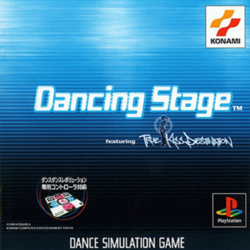












 Another SquareThought Site