

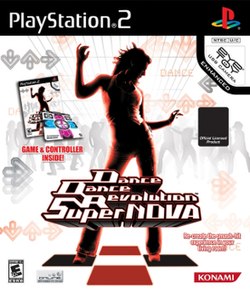

If video-game storytelling had been forced to grow up in a nightclub instead of a living room, Dance Dance Revolution SuperNova would be that messy, charismatic cousin who shows up wearing neon and actually knows how to salsa. On paper DDR is a rhythm game about arrows and timing, but SuperNova dresses those arrows in personality: songs become people, modes become temperaments, and the cabinet itself is the stage manager barking cues. This installment returned arcades to the floor after a three-year homeward hiatus for proper arcade releases, and on the PlayStation 2 it tried to capture that cabinet swagger with licensed pop bops, EyeToy camera hijinks, online play and a hefty playlist. The result is a game that doesn't pretend to be a narrative-heavy epic, but if you squint and treat each track as a character, SuperNova delivers a surprisingly satisfying ensemble drama - complete with bosses, mentors, sidekicks and the one weird cousin named "CHAOS."
If SuperNova were a TV show, its pilot would be called "How to Not Totally Fail at Dancing (But You Will, For Comedy)." The game keeps DDR's core: arrows scroll to a Step Zone and you stomp on the matching panels in time. But for a game series that had been iterating forever, SuperNova introduced a few new beats to keep the plot moving. The timing judgement now reads like a critic's review column: Marvelous, Perfect, Great, Good, Almost and Boo. "Marvelous" is the applause; "Boo" is the heckler in the back. The modes are characters in their own right. "Tutorial" is the patient mentor who teaches rookies not to trip over the pad; it holds your hand, shows you the basics and then gently pushes you into Beginner songs. "Easy", "Medium" and "Difficult" are the stages of a coming-of-age arc. "All Music" is the obsessive collector who refuses to be boxed into a playlist. "Nonstop" and "Challenge" are the danger-loving friends who dare you to do stupid things, and "Battle" is the asshole rival who sends modifiers to your screen mid-song just to make you cry. The mode-select screen is a small ensemble cast, each with a wardrobe of songs appropriate to their role. Modifiers now have more personality. You can turn off jumps (the game's equivalent of telling a hyper friend to sit down), use "Flat" or "Rainbow" arrows for different visual vibes, and try the new "Note" option that recolors arrows by timing density - effectively letting you read the rhythm like a map. The "Little" modifier was renamed "Cut" and removes non-quarter-beat notes, making the chart feel less cluttered for players who prefer binary drama. The song wheel now displays all difficulties at once; it's like an agent showing every audition piece simultaneously - efficient and mildly terrifying. Extra Stage mechanics stage their own mini-sagas. In the original SuperNova, if you score an AA or better on the final stage at Expert or Challenge you unlock an Extra Stage. Depending on what mode you chose, the boss song appears: "Healing-D-Vision" if you were in the softer modes, or "Fascination MAXX" (and its eternal love mix) for the hard-liners. The bosses force you into gauntlet conditions - 1.5x speed, Reverse scroll, Rainbow arrows - and give you a full, non-renewable dance meter. Beat those and the story escalates to One More Extra Stage: "CHAOS", the game's manic final boss, played with Sudden Death. One slip, one "Good" instead of "Perfect," and the story ends abruptly. On the technical backstory, arcades used the PlayStation 2-based Bemani Python 2 hardware; that matters because it meant better graphics and audio, which, in rhythm games, is like giving your actors a better sound system. SuperNova was also the first DDR to introduce e-Amusement for online ranking and content delivery - a meddling producer who only worked in Asia, frustrating non-Asian players who were promised linkage and then given coupon samplers instead when Sony-related hardware issues canceled the Link Data reader. In short: dramatic promise, theatrical disappointment. The PS2 release brought console-only flourishes. Licensed tracks gave the soundtrack guest stars like Justin Timberlake and Gwen Stefani, and EyeToy mini-games let you add a little motion-cam improv to your performance. Online play via PlayStation Network let you duel strangers - the modern-day equivalent of the rival at the arcade who kept hogging the machine but now lives miles away. If the player is the protagonist, SuperNova's strength is the way the game stages growth: a beginner-friendly tutorial, modes that scale into harder commitments, and boss encounters that test not only reflexes but nerves. It's not a linear story, but the arc of a player rising through ranks - from 'I have no rhythm' to 'I am a glowing arrow machine' - is handled with satisfying structure.
The visuals in SuperNova are less "character-driven indie film" and more "neon music video directed by someone who loves particle effects." By moving arcades onto the Python 2 board (a PS2-based system), Konami gave the series higher-quality graphics and improved sound fidelity compared to the older Bemani System 573. Instead of canned, pre-rendered FMV for every track, the game frequently uses randomly generated characters dancing in stylized backgrounds - think of them as background extras who somehow steal every scene. Some tracks still get pre-rendered videos, which work like guest cameos: flashy and memorable. Arrow skins and modifiers are part of the wardrobe department here: "Rainbow" makes everything loud and gaudy, "Flat" keeps it classy, and the "Note" visual option turns arrow colors into timing hints like color-coded costume choices. The UI change that displays all difficulties on the song wheel at once is a smart design call; it's cleaner storytelling - you can instantly see how a song's role changes depending on the difficulty you choose. On the PS2 version, licensed tracks come with polished audio (and a few fully produced remixes) - useful because in a rhythm game your soundtrack is the lead actor. EyeToy support adds a cheeky layer where motion capture clips let you basically cameo inside your own performance. The downside: console ports and regional arcade cabinets weren't uniform in component quality. North American cabinets used by Betson reportedly had lower-quality footpads and monitors than Asian machines, a production quirk that's like giving the hero cheaper shoes right before the big dance-off. The PS2 port does its best to replicate the arcade energy, but nothing quite matches the physical thump of an arcade mat - unless you're that one person with a PS2 DDR pad bolted to a concrete floor and a deep dedication to suffering for art.
If SuperNova were a stage play, it would be a long, neon-infused variety show that knows what it is and leans into the spectacle. The cast is enormous: hundreds of songs that act like a repertory company (304 in the arcade release, many with crossovers from Bemani titles), a trio of boss songs that show up for climactic finales, and a supporting ensemble of modifiers and modes that create mini-dramas for every session. For newcomers, the Tutorial mode is a gracious mentor. For veterans, the Extra Stage and One More Extra Stage mechanics provide a satisfying, old-school DDR rush: nail it and you're crowned; flub it and you feel the sting of hubris. SuperNova's flaws are mostly administrative: promised Link Data functionality was canceled, e-Amusement features were region-locked, and hardware quality varied across regions. Critics noticed this; the PS2 release scored around 7/10 from outlets like GameSpot and IGN and sits in the low 70s on aggregate. Those are fair numbers for a package that's both deeply enjoyable and curiously uneven. If you play SuperNova as a playlist of songs you like, you'll have a great time. If you approach it as a training ground to become a DDR legend, it offers a structured, thoughtful path upward. And if you want a narrative, consider the soundtrack your cast: "Fascination" seduces, "Unreal" is the brooding final boss, "TRIP MACHINE PhoeniX" is rebirth, and "CHAOS" is the inevitable, glorious meltdown. For a rhythm game that doesn't pretend to tell a traditional story, SuperNova still manages to deliver character arcs in spades - and it makes you sweat like a dramatic hero along the way. Recommended for anyone who likes their exercise served with a side of synth-pop and theatrical flair.
 Just Dance 2017 on Switch
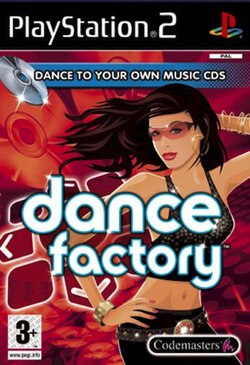
 Dance Factory on PS2
 Dance Dance Revolution on PlayStation
 PixelJunk 4am on PS3
 Pop'n Music 5 on PlayStation
 Pop'n Music 6 on PlayStation
 Dancing Stage Fever on PS2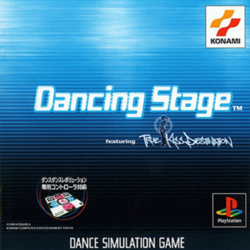
 Metal Gear Solid: Integral on PlayStation
 ISS Pro Evolution 2 on PlayStation
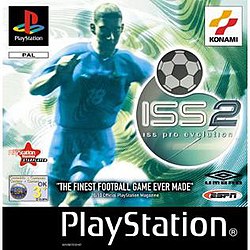 Pro Evolution Soccer 2 on PlayStation
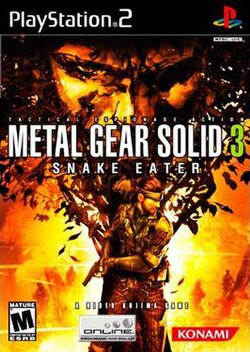
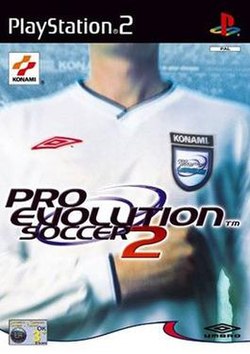 Metal Gear Solid 3: Snake Eater on PS2
 Dance Dance Revolution Best Hits on PlayStation












 Another SquareThought Site