

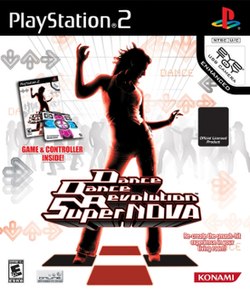

Dance Dance Revolution SuperNova 2 (DDR SN2) is the kind of rhythm game that treats your feet like a high-precision input device and your cardio like an achievement metric. Konami took the SuperNova base and tightened the nuts and bolts for this follow-up: a reworked scoring system, new timing windows integrated into the score cap, extra-stage logic overhaul, and a smorgasbord of arrow and display modifiers that change how the underlying stepchart signal is presented to your feet. The PlayStation 2 port landed in North America on September 25, 2007 and attempted to cram arcade-level functionality into consumer hardware (with a few concessions), while bringing licensed pop tracks, EyeToy camera features, and online play into the mix. If you care about the engineering behind a music game as much as you like the music itself, SN2 is the model that says "we thought about timing windows, latency and metrics - and we made them part of the fun."
Mechanically DDR SN2 is still the DDR lineage you know: arrows scroll toward a fixed Step Zone, and the timing of your step is judged against the moment the arrow hits that zone. The important technical change here is how timing is absorbed into the scoring model. SN2 introduces a new score cap of 1,000,000 points and makes Marvelous-level timing (the tighter-of-the-timing windows) an actual factor in that single-game score rather than an opaque bonus tacked onto courses. That rewiring matters: it changes optimization techniques for high-level play. Hitting Marvelous where previously you chased full combos for bragging rights now directly increases your score potential. Full combos remain sexy, but AA and AAA ratings are now derivable from raw score thresholds rather than simply combo purity. This is a small-seeming change that has outsized effects on tournament calibration and on how players prioritize timing consistency versus riskier step patterns. The timing judgement ladder in SN2 reads Marvelous, Perfect, Great, Good, Almost, Boo (regional naming quirks exist). Marvelous is the new MVP because of the scoring changes. On the performance side that means input latency and pad responsiveness get highlighted: a console port with sloppy pad polling or a miscalibrated display-sync will make Marvelous much harder to hit, which in turn reduces achievable scores. Konami addressed part of that problem on the arcade side by running the Bemani Python 2 (a PS2-based arcade board) in machines - which provided better audio/video fidelity - and the console port keeps a lot of those lessons but is constrained by PS2 I/O and regional hardware variations. Modifiers and options: SN2 expands the player's toolset to change signal presentation. It introduced new speeds (0.25x and 0.5x) that are useful for training on dense streams, and visual options such as Note (a timing-based recolor mode that maps color to rhythmic subdivisions), Flat and Rainbow arrow palettes, Brake (arrows slow as they near the Step Zone) and Wave (arrows bounce as they approach the judgement line). You can also disable jumps, a surprisingly useful option for accessibility and training. "Little" was renamed "Cut" and removes non-quarter-beat notes - again useful for practicing signal patterns. Those modifiers aren't cosmetic: Brake and Wave change the kinematics of arrow travel on-screen and thus alter how your brain predicts the hit moment. That interacts with input timing windows in subtle ways: using Brake can make some long streams easier visually but can also desynchronize your internal rhythm if you switch back and forth without retraining. SN2's mode selection also reflects a design for layered onboarding. The game dropped the scatter of difficulty menus in favor of a reduced, contextual collection: Beginner (a curated subset), Standard (full access), Nonstop, Challenge, Battle and the new Tutorial. The tutorial is worth calling out; it is explicit game-engine-level scaffolding for new players that teaches step timing, judgment windows and basic modifiers before the player sees the full song list. Battle mode is a nifty technical experiment: a competitive modifier delivery system where players trigger effects to clutter opponents' visual streams - a local-networked gameplay layer that demonstrates how the same arrow events can be transformed into interactive systems. Extra Stage logic received a full rework. The previous SuperNova locked Extra Stage access behind Final Stage performance; SN2 instead lets earning an A or better on a prior song add a boss song to the Final Stage, with AA unlocking further difficulties. Extra Stage access is gated by score thresholds and the player's performance determines a limited, non-renewable dance meter (up to four bars) for that Extra Stage - a mechanic that forces optimization of accuracy under scarcity rather than simply extending playtime. Achieve AA on the Extra and you move to Encore Extra Stage where Sudden Death meter is in effect: any Good, Almost, Boo or N.G. judgment terminates play. This variable-resource metering is a clever risk/reward system and it affects how you plan consumption of modifiers, especially if you're chasing unlocks. Networking and data persistence: arcade SN2 leaned heavily into e-Amusement for event content, internet rankings, and post-release song drops. For PS2 owners, that connectivity was partially mirrored via online play over PlayStation Network and limited EyeToy features for minigames and camera-integrated gimmicks. However, the console lacks the full e-Amusement integration; a Link Data feature to connect arcade and PS2 via memory card was planned and shown in flyers but canceled due to Sony supply issues. Konami attempted to patch the UX gap by providing offline unlock codes and physical coupon compensation for early purchasers in North America, which is a reminder that console ports must consider the server-side ecosystem as part of the technical design.
On PS2 hardware SN2 is pragmatic: it doesn't reinvent the GPU, but it optimizes the pipeline for clarity and timing. The arcade's move to Bemani Python 2 (PS2-based) is notable because it reduced the fidelity gap between dedicated cabinets and consoles; both could offer crisp arrow sprites, smooth animations and consistent audio playback when the machine and pad hardware cooperated. In-game visuals were simplified and tuned with a focus on unobstructed hit-readability: the song wheel displays all difficulties at once, reducing UI navigation cost, and the step zone and arrow shapes received subtle stylistic updates to improve visual parsing at high speeds. Konami also added character cut-ins and a small marquee that displays song title and artist during play. These features are light on GPU overhead but carry high UX value, giving players quick contextual information without drawing attention away from the Step Zone. The random character-dancer background approach avoids expensive prerendered cutscenes and keeps memory footprint down, yet some songs still fall back to prerendered video when licensing allows. On the PS2, the EyeToy camera introduces an additional sensor stream; Konami's mini-games use that feed for novelty interactions, but those augmentations are peripheral to the core play loop and don't affect timing-critical rendering. Performance caveats: the PS2 architecture means timing calibration is always a potential pain point. SN2's tighter scoring rewards for Marvelous timing expose any display lag or pad polling jitter. In practice the experience is excellent on well-maintained hardware with responsive pads, but regional console/peripheral variability (and the occasional North American cabinets having lower-quality footpads and monitors, per later reporting) can make hitting that Marvelous window reliably a challenge. That inconsistency is not a software bug so much as a hardware ecosystem liability - a lesson for rhythm games that invest heavily in competitive timing.
Dance Dance Revolution SuperNova 2 is an engineer's DDR: it rewards measurements, optimizations and understanding of timing as much as it rewards reflexes. The 1,000,000 score cap and the integration of Marvelous timing into that metric are the most consequential changes - they change the reward calculus for high-level players and make scoring a cleaner, more comparable metric across songs and runs. The improved modifier suite (Brake, Wave, Note coloring, extra slow speeds) and the tutorial and Battle modes broaden both training and competitive options, while the Extra/Encore staging redesign introduces resource-constrained challenge runs that feel deliberately designed rather than tacked on. Where SN2 stumbles is less in its software design and more in the real world: PS2 hardware constraints, the lack of full e-Amusement parity for console players, and the variable quality of peripheral hardware in different regions all mean your experience will be as good as the pad you stomp on and the display you stare at. The PS2 port compensates with licensed tracks, EyeToy experiments and online PSN play, but if you play to chase Marvelous-heavy scores you should be prepared to calibrate and, if possible, use higher-quality pads. For a rhythm-nerd who reads timing windows like a map and enjoys systems that reward small statistical improvements, SN2 is a satisfying, technically thoughtful entry. For a casual friend who just wants to dance to Gwen or Justin Timberlake and ignore score math, it's still fine - but you might miss the subtle balancing work happening underneath the choreography. Overall: a solid, technically mature DDR that nudges the series into a more competitive, metric-driven era without losing its arcade heart. Score: 7/10 - recommend for players who care about timing hygiene and if you can get your hands on a responsive pad, your feet will thank you.
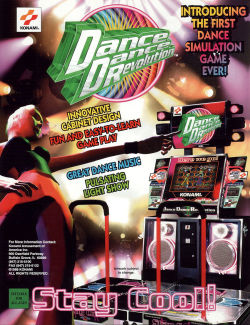 Just Dance 2017 on Switch
 Dance Factory on PS2
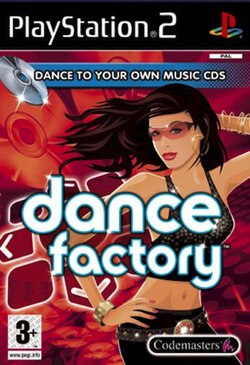 Dance Dance Revolution on PlayStation
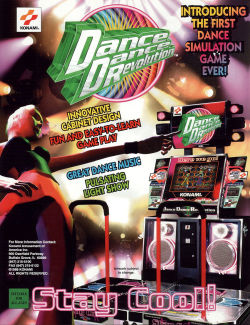 PixelJunk 4am on PS3
 Pop'n Music 5 on PlayStation
 Pop'n Music 6 on PlayStation
 Dancing Stage Fever on PS2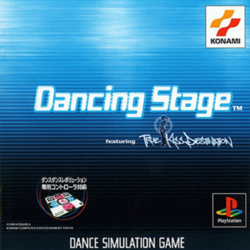
 Metal Gear Solid: Integral on PlayStation
 ISS Pro Evolution 2 on PlayStation
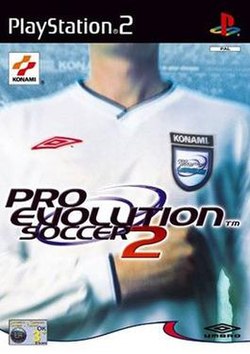
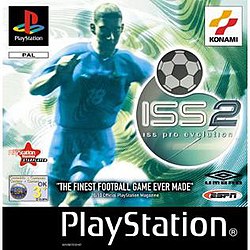 Pro Evolution Soccer 2 on PlayStation
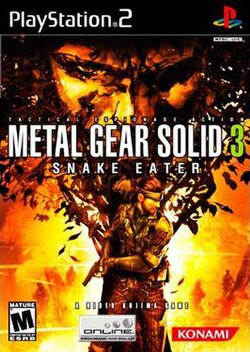
 Metal Gear Solid 3: Snake Eater on PS2
 Dance Dance Revolution Best Hits on PlayStation












 Another SquareThought Site