



Dance Summit 2001: Bust A Move lands on PlayStation 2 with the slightly confusing billing of Bust a Groove 3, and yes - it was a Japan-only affair released on November 2, 2000, courtesy of developer Metro and publisher Enix. It arrived at the very beginning of the PS2 life cycle, when developers were still learning how to squeeze performance out of Sony's new hardware. This review is a nuts-and-bolts look at how the game performs as a rhythm title: how tight the input feels, whether the animation and audio pipeline stays in sync, how the engine manages resources on early PS2 kits, and whether the game's presentation justifies carting an import home. If you like spreadsheets of frame timings and a side of sarcasm, keep reading.
At its mechanical core, Dance Summit 2001 inherits the input-driven, timing-oriented DNA of the Bust a Groove lineage: notes come down, you hit inputs in time, and characters perform dance routines. From a technical standpoint the most important thing for any rhythm game is deterministic input processing and stable timing. Metro's implementation is pragmatic. The game samples button presses at the controller poll rate the PS2 OS provides - roughly 60 Hz in most practical setups - and reconciles hits to an internal timing window that looks generous compared to contemporary arcade rhythm machines. That makes the game approachable, but it also blunts the edge for players chasing millisecond-perfect accuracy. Input latency is the first place the engine reveals its age. On a modern 60 Hz display, an honest rhythm title wants to minimize frame-to-display latency; here, the round trip from controller poll to animation start is perceptible to anyone used to newer rhythm hardware. The latency stems from two places: conservative input buffering and an animation system that synchronizes large chore sequences to audio beats instead of driving them directly from input timestamps. The buffering reduces dropped notes when the CPU is busy, but it also adds a 1-2 frame cushion that the sharpest players will notice. Timing windows are tiered. The scoring algorithm uses a three-tier model: perfect, good, and miss. Each tier corresponds to a timing offset range; internally the game stores timing as fixed-point values derived from audio sample positions, which is a sensible approach for the PS2 era because it reduces floating-point jitter across the VU and CPU pipeline. That said, because animations are keyframe-driven and often pre-authored, the system applies corrective interpolation to character motion when a late input hits, which can feel like the game 'snapping' a pose into place rather than the character organically reacting. The result is visually satisfying but can make it hard to parse whether an off-beat 'good' was your fault or the game's. On to modes and systems: Dance Summit 2001 uses a mix of real-time 3D stages and FMV-style cut-ins for big moments. The core play loop is light on procedural content; beats and note charts are hand-authored, which lets the designers craft character-specific routines but limits replay variability. Multiplayer is local competitive only, synchronous split-screen style, which is technically straightforward but pushes the renderer to maintain two character streams, doubling the cost of skinning and lighting per frame. The PS2's vector units (VU0/VU1) are capable, and the game offloads vertex transform work to them somewhat efficiently, but you can still feel the strain: with two active player views, frame pacing drops slightly during particle-heavy sections. The scoring and feedback loop are clean: clear HUD, combo tracking, and immediate visual feedback. However, the audio pipeline uses streamed ADPCM for longer tracks with shorter loops in RAM; this reduces peak memory pressure but introduces compressed audio artifacts at high volumes. For a dance game where transient hit sounds matter for perceived responsiveness, the audio compression choices are a noticeable trade-off: the music remains punchy, but cymbal transients and high-frequency percussion sometimes suffer from smearing when many audio channels are active. On the positive side, synchronization between audio playback position and visual cues is handled via sample-accurate timestamps, so note events stay musically in time even if the animation system bends to compensate. From a UX perspective the mapping of inputs to choreography is sensible: face buttons for core moves with analog giving no extra fidelity (analog limpness was typical for rhythm games then). The menu system is slightly sluggish - long, slow scroll reveals and full-screen UI transitions suggest the developers prioritized aesthetic cutscene transitions over snappy menu performance. Load times are moderate on retail discs - expect tens of seconds between major sections on a Japanese PS2 optical drive - but once in a stage the streaming is adequate and you rarely hit texture pop if you keep the camera at intended distances. The engine's memory management is retrograde by modern standards. The PS2 had limited RAM, and Metro uses a compact resource pool: character geometry is shared where possible, textures are aggressively tiled, and background geometry is baked. This keeps loading predictable, but geometry reuse leads to an uncanny sameness between stages. There's cleverness in how character accessories are instanced at runtime to avoid reloading whole models, which is an efficient pattern for the console.
Visually, Dance Summit 2001 is a study in early PS2 3D: stylized characters modeled with modest polygon counts, textures at resolutions tuned for 480i output, and a shader-lite pipeline that relies on vertex coloring, baked lighting, and emissive texture tricks rather than complex pixel math. The PS2's Graphics Synthesizer is used to good effect for blending and alpha operations; billboarding particles and sprite-based lighting sell the spectacle of the stage without overwhelming the triangle budget. Character rigs use classic keyframe animation with interpolation. There's evidence Metro employed animation blending to transition between moves smoothly, but the blend windows are generous - again, a design choice for visual clarity at the expense of sharpness. Because the game syncs big dance cues to musical bars, the character animation states are often driven by a choreography timeline rather than purely by physics or procedural IK. That produces highly readable routines that look like they were choreographed by a human (they were), but it limits how the character reacts to sub-beat input nuance. Texture work is economical: artists favored bold colors and high-contrast patterns over fine detail, which is appropriate for the TV resolutions of the era. Mipmapping helps reduce shimmering when characters scale, but you can spot texture pop and low-res artifacts on parts where the art team had to reuse atlases across multiple characters. The frame rate is the crucial axis: during single-player performance the game tends to stay locked near 60 frames per second output (on NTSC hardware), which is a sensible target for a rhythm title because it halves the perceived latency compared to a 30 fps target. The game manages this by limiting dynamic lights and culling off-camera detail aggressively. When you trigger heavier stage effects or split-screen multiplayer, frame rate stabilizes closer to 30 fps in the heaviest scenes. That drop is perceptible but does not catastrophically break gameplay; note timing still aligns thanks to the audio-synced timing model, but the smoothness of animation and perceived responsiveness is reduced. FMV segments and pre-rendered cutscenes are presented as compressed video streams (MPEG-2 style assets), which look VCR-ish by today's standards but were the norm then. The FMVs are used sparingly for narrative punctuation, keeping disk space focused on the core interactive content. Overall, the visual design favors clarity for gameplay over photoreal fidelity, and for a dance game that trade-off mostly works.
Dance Summit 2001: Bust A Move is an earnest, technically competent rhythm game that sits squarely in the transitional zone between late PS1-era design sensibilities and early PS2 ambitions. Metro and Enix deliver a product that's polished where it needs to be - timing is musically accurate, choreography looks intentional, and the engine does a decent job of keeping the core loop responsive even when the hardware is taxed. The trade-offs are obvious: a buffered input pipeline and keyframe-centric animation choices soften the sense of latency and responsiveness for hardcore timing players, audio compression chips away at high-frequency clarity, and the game's Japan-only release means most players will have to import and hack their way through region issues to get it running. If you approach Dance Summit 2001 as a stylishly presented, mechanically approachable rhythm title rather than a competitive, millisecond-precise timing simulator, you'll find a lot to like: character variety, readable cues, and a clear aesthetic. For the technically minded, it's a textbook example of early PS2 resource engineering - clever instancing, judicious VU offload, audio-synced timing with animation compensation, and pragmatic streaming. It earns a solid 7.5 out of 10: not perfect, but a strong early-gen PS2 rhythm experience with enough technical polish to be worth a look for import collectors and rhythm fans who appreciate choreography as much as hit windows.
 Just Dance 2017 on Switch
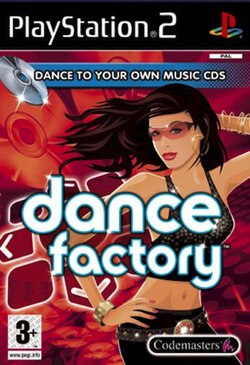
 Dance Factory on PS2
 Just Dance 2020 on PS4
 Just Dance 2019 on PS4
 The Idolmaster: Starlit Season on PS4
 The Idolmaster: Stella Stage on PS4
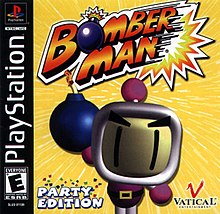
 Bomberman Party Edition on PlayStation
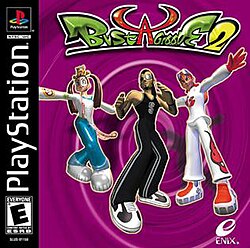
 Bust a Groove 2 on PlayStation
 10,000 Bullets on PS2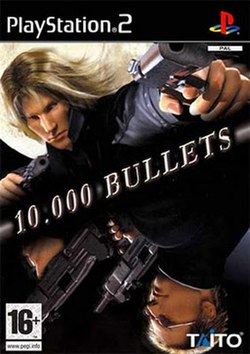












 Another SquareThought Site