

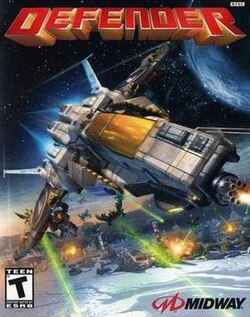

Defender for PlayStation 2 is the polite, slightly grumpy grown-up of an 1981 arcade classic. It keeps the premise so simple a caveman could grasp it: aliens show up, local humans panic, spaceship pilot is expected to do the heavy lifting. The 2002 remake takes that core and dresses it in 3D like someone who finally learned how to use a bread maker but is still making toast. Set on a handful of planets and moons in our own Solar System, the objective is unchanged and stubbornly pure: fight off waves of invading aliens while protecting astronauts. If you buy into the nostalgia and like your action served in concise arcade-sized portions, Defender offers a handful of tense rescue moments and the kind of binary moral choice only retro shooters can offer - save the human or let them be absorbed into an alien and then curse at a tougher enemy. Reviews were mixed, which is the universe's way of saying the game is competent but not the second coming of fast-paced pew-pew. If you are after historical accuracy, this is a remake, not a museum piece; if you want modern reinvention, this is also not that. What you get is: tidy mechanics, predictable escalation, and the comforting knowledge you will die a lot before learning the rhythm.
At heart, Defender is a rescue checklist with lasers. The player flies around planetary environments, fends off several classes of alien craft and, most importantly, scoops up humans in peril and transports them to a drop zone for extraction. The enemy landers - which behave like ships that read modern parenting guides but failed the empathy chapter - try to kidnap humans. If a lander manages to grab a human you have a brief window to blow it apart and catch the slowly falling human before they smack the ground and become environmentally unfriendly. Miss that catch and the human is absorbed into the lander, which promptly upgrades from nuisance to nightmare: the absorbed human makes the lander transform into a much more difficult enemy, like turning a mosquito into a velociraptor. Ground units add another wrinkle by converting fallen humans into zombies, a neat little escalation that punishes sloppy play and encourages prioritising targets. The game's flow is deliberately arcade-y. Waves of enemies come at you, you protect the humans, and the risk curve is tied to your ability to multitask under pressure. It is one of those designs where success looks easier than it is; watching a pro player rescue an entire group of astronauts with surgical precision is like watching someone fold fitted sheets - impressive and slightly unsettling. Defender's variety comes from the handful of alien craft types and mission geography: different planets and moons change the backdrop and the tactical angles, but the core loop remains faithful and surgical. There are no sprawling side quests, no moral choices that take hours to regret - decisions here are split-second and require slightly more coordination than yelling at a TV. The remake stays conservative in expanding mechanics. It doesn't try to be an RPG with a jetpack or a simulation about the long-term psychological effects of extraterrestrial rescue work. Instead it leans on the original's tension: save the human, stop the lander, dodge the conversion, rinse, repeat. Controls on the PS2 are straightforward enough to get into the action quickly, although the game expects you to learn to prioritize like a bored air-traffic controller with a penchant for explosions. Difficulty scales by turning captured humans into more dangerous foes and by increasing enemy aggression, which keeps later stages from being a gentle scenic tour of our solar furniture.
Defender's visual identity is a time capsule wearing modern clothes. The 3D graphics give depth to planets and moons that the 1981 original only hinted at with pixels and drama. Space environments are serviceable and occasionally pretty - planetary surfaces and backdrops do enough to suggest variety, and explosions look satisfyingly destructive. It's not a visual benchmark for the PS2 era, but it doesn't need to be. The design prioritises clarity over photorealism: enemies are distinct enough to prioritise on sight, humans are visible even when the screen becomes a festival of laser fire, and the HUD communicates the rescue objective without requiring a seance to interpret. If you like graphical bravado, you will find the budget here fairly modest. Textures are plain, animations are functional, and the overall palette is more 'practical' than 'painterly.' That said, the 3D presentation helps the game understand space as an arena rather than a flat corridor, and the camera and effects do a competent job of keeping the action readable. For players who value gameplay over graphical flexing, Defender's visuals are a polite background orchestra that never tries to upstage the performers. For players who expect every 2002 release to be a dazzling epic, it will look like a competent stage set rather than IMAX.
Defender on PS2 is honest about what it is and refuses to pretend to be anything more dramatic. It is a faithful modernisation of an old formula: about rescuing humans, shooting aliens, and occasionally feeling very clever for having caught someone as they fell. Critics were mixed and the scores reflect a game that does its small set of jobs well but doesn't expand much beyond them. If you want a deep campaign, narrative twists, or emergent sandbox chaos, this won't be your jam. If you want tight arcade loops, clear goals, and the gratifying sting of getting better at a game one rescued astronaut at a time, Defender will provide several decent sessions. The rating - about 7.3 out of 10, reflecting the PlayStation 2 reception - puts Defender in the 'recommended if you like this kind of thing' category. Buy it for nostalgia, for bite-sized blasting, or for the pleasingly blunt satisfaction of rescuing pixelated humans from a bad fate. Do not buy it expecting a revolutionary reimagining. Consider it a reliable spaceship: it gets you into orbit, takes the punches, and brings most of the civilians home. Occasionally you will fail spectacularly, and that, in the purest arcade tradition, is half the fun.
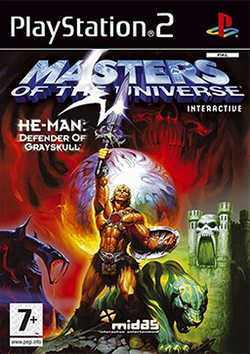
 Masters of the Universe: He-Man: Defender of Grayskull on PS2
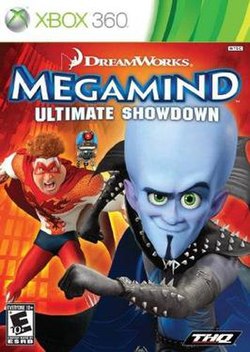
 DreamWorks Megamind: The Blue Defender on DS
 Yurukill: The Calumniation Games on PS5
 Centipede: Recharged on Switch
 Miss Kobayashi's Dragon Maid: Sakuretsu! Chorogon Breath on Switch
 Time Crisis on PlayStation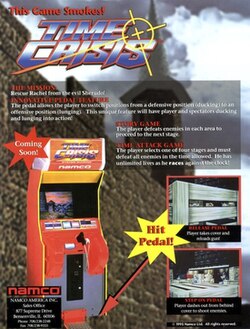












 Another SquareThought Site