



Deus Ex: The Conspiracy is the PS2 incarnation of a game that already had the internet and conspiracy theorists whispering sweet nothings in its ear. On PlayStation 2 the sprawling, choice-heavy experience was squeezed into a console that politely asked for smaller backpacks and fewer simultaneous NPCs. What survives is still the story-first, systems-second masterpiece that made players feel like a paranoid admin of humanity's destiny. But when people talk about Deus Ex they usually mention gameplay freedom. I want to talk about people - the characters - because the reason JC Denton stays in cultural conversations is not only because he has augmentations, but because the cast around him forces moral choices that actually sting. The PS2 port, retitled The Conspiracy in many regions, is a technical and design exercise in translation: levels were streamlined, augmentations rebalanced and the interface redesigned for DualShock. Those changes alter pacing and sometimes blunt the sharp elbows of the original, yet the holograph of the original narrative - the relationships, betrayals, and ideological tussles - remains intact. If you're playing on PS2 or remembering it, your joystick is steering a story more interested in power and persuasion than high scores. The game gives you three finales, and the characters are the battery acid in each choice.
Deus Ex's core play loop is famously multivalent: you can stealth your way through a ventilation shaft, hack your way in through a terminal, or simply spray bullets until someone blames you for property damage. The PS2 port keeps that menu of approaches but makes a few console-friendly edits: inventory and augmentations were rebalanced, maps trimmed and reorganized to fit memory constraints, and controls were reworked for the DualShock. These practical changes shifted some of the playstyle calculus - explosions still work, but sometimes the stealth path is now shorter or longer depending on which corridor the port team had to compress. All of that technical scaffolding matters because it supports character arcs. JC Denton exists in the meat between a systems design and a story script. He starts as a nanotech-equipped UNATCO agent, the sort of blank-slate protagonist that lets players project. But the projection is never fully blank; JC's arc is shaped by the people who tug him off script. Paul Denton, JC's brother, performs the first major narrative tug. Paul is written as a mirror and a ghost: genetically and technologically similar to JC but ideologically divergent. When Paul's defection and the kill switch subplot hit, it transforms the game from a spy thriller into a family melodrama with national stakes. Paul's arc is tightly wound around discovery and betrayal. If Paul survives your choices, later sections feel like a reconciliation subplot; if he dies, the story adds a cold absence that reframes JC's choices as orphaned decisions. The PS2 team's late-inserted scenes to resolve Paul's possible survival reflect an honest attempt to preserve player agency even when memory and cartridge size objected. Tracer Tong is the hacktivist/technocrat who injects the game with anarchic wit. He is both mentor and trickster: he removes JC's kill switch and then sends him on errands to deshadow power players. Tong's arc matters because it shifts JC from soldier to inquisitor. Tong proposes a future of decentralized tools and fractured authority; he provides puzzles rather than marching orders. On PS2 Tong's presence remains intact, but some of his side systems - the breadth of choices in Hong Kong - feel leaner owing to reworked maps. That compression occasionally reduces the sense of ecosystem Tong cultivates, but the philosophical thrust of his arc survives: decentralize or be subjugated. Morgan Everett is the in-house representative of the old guard. His arc is an exercise in institutional preservation: keep the system intact at moral cost. Everett is the game's polite argument for benevolent authoritarianism. Early on he appears as an ally; by the time Paris rolls around his motives make you squirm because he'd literally prefer a world ordered by the few. He doesn't shout; he explains. Deus Ex's writing does a fine job of making Everett temptingly reasonable, and the PS2 port preserves his essential narrative beats. The port's streamlined levels sometimes reduce opportunities to eavesdrop on Everett's world, which can make his eventual reveal feel less organic for players who skipped side quests. Walton Simons and Bob Page sit at the story's punitive end: Simons is managerial ruthlessness incarnate, a government official who weaponizes bureaucracy, while Page is the corporate apex predator who believes that merging with an AI will accomplish what markets couldn't. Simons and Page are simple in their appetites but complex in their execution: Page wants godhood through data, Simons wants control through policy. Their arcs converge in the game's final act, forcing JC to reconcile technological utopianism, oligarchic tyranny, and grassroots fragmentation. The AIs - Daedalus, Icarus, and the merged Helios - form the plot's conceptual center. Their arc is less about identity and more about what governance looks like in a world where code can lord over consciousness. Daedalus begins as a tool, evolves into a political instrument, and eventually becomes part of a synthesis that turns into Helios. That merger is Deus Ex's metaphysical mic drop: it presents a choice between human messiness and machine-scale benevolence. The endings present three distinct philosophies - Tong's carnivore-like freeing of communications to produce city-states, Everett's controlled oligarchy, or Helios' technological monarchy - and the PS2 port keeps these choices. The emotional resonance of those endings depends heavily on your relationship with earlier characters; if you ignored Tong, the Tong ending reads as sabotage. If you supported Paul, Everett's solution cuts deeper. So, gameplay choices are not just mechanics: they're narrative votes about the arcs of those characters. On PS2 the controls and rebalancing sometimes nudge players toward particular approaches, but the moral topology - the lines connecting JC, Paul, Tong, Everett, Simons, Page, and the AIs - remains the beating heart of the experience.
Graphically, the PS2 version is a translation job with design compromises. The port adopted skeletal animation and added motion capture to smooth movement and make cutscene moments feel less like marionette theater. These changes modernized character motion relative to the original PC's stiff models, but the overall visual fidelity still lags behind native PS2 contemporaries; texture work and environmental detail were scaled to fit limited memory. Critics praised the adaptation of mechanics to the console controller and commended new character models, but some reviewers noted frame-rate drops and long load times between areas. In practice, the skeletal models make conversations less awkward - which matters when you spend so much time looking at people talk philosophy - but the trimmed environmental variety occasionally flattens the world-building that made characters feel embedded in a living city. Voice acting across versions has always been uneven; on PS2 the performances retained their charm and cheesiness, which, depending on your tolerance for melodrama, can either enrich a character's personality or undermine a tense debate with a mis-timed accent.
Deus Ex: The Conspiracy on PS2 is not a perfect port and it will not make a purist weep with joy, but it is a remarkable preservation of a game that treats characters as levers and narrative as a sandbox. The port team did the hard work of balancing systems, reworking interfaces and preserving, as best they could, the dense web of motivations and confrontations at the game's core. Playing it, you discover a story that is less about who wins a firefight and more about who convinces you to stay silent, speak up, or burn the server room down. If you're after a pure mechanical sim, the PC original remains the cleanest needle. If instead you want a console-ready ride through conspiracies, ideological fights, and the occasional fraternal betrayal, the PS2 version is an honest, sometimes ragged, but still moving way to meet JC Denton and his mess of friends and enemies. And despite load times and trimmed corners, the choices you make will still echo: people will live or die because of you, and the world will tilt on the axis of your moral laziness or courage. That, more than the polygons or the framerate, is why Deus Ex still matters.
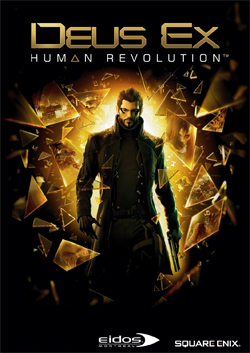
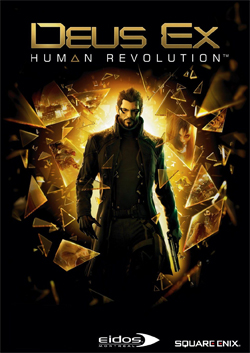 Deus Ex: Human Revolution Director's Cut on PS3
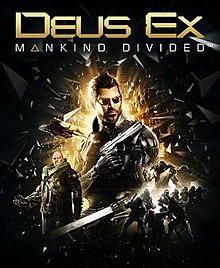
 Deus Ex: Mankind Divided on PS4
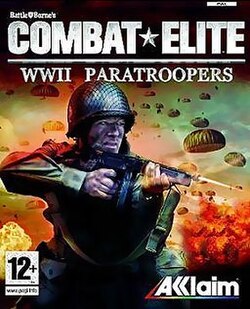
 Combat Elite: WWII Paratroopers on PS2
 Onimusha: Dawn of Dreams on PS2
 Crimson Sea 2 on PS2
 Dirge of Cerberus: Final Fantasy VII on PS2












 Another SquareThought Site