

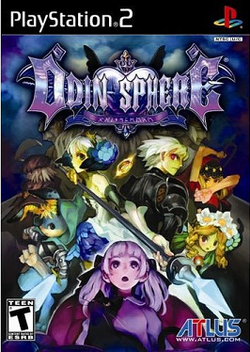

Odin Sphere is the sort of game that arrives wearing a hand-painted costume, recites a sonnet, then proceeds to punch a dragon in the face. It comes from Vanillaware, a studio that refused to accept that everyone else had decided 3D was the only way to show off pixels, and instead drew everything by hand until their wrists filed a formal complaint. The result on PS2 is a two-dimensional action-RPG where storybook art and beat-'em-up combat share the same teacup. You play five protagonists across six interlocking "books": a Valkyrie, a prince-turned-Pooka, a fairy princess, a shadow knight, and a woodland survivor who will probably bewitch you if you stare at her long enough. Their stories overlap, contradict and comfort each other like a well-acted soap opera run through a medieval blender. From a mechanical perspective, Odin Sphere is a stage-based side-scroller with circular areas, Phozon-powered magic, Psyphers (which are weapons with suspiciously dramatic names), and a farming system that lets you grow food to level up your characters. If that's not an intoxicating mix, then at least the soundtrack is composed by Basiscape, who make music that sounds like your heart discovering orchestral arrangements for the first time. The PS2 original is adored for its visuals and story, adored with the occasional side-eye for its framerate hiccups and inventory tedium. The remake, Leifthrasir, addressed many of those issues, but this review is about the PS2 edition: the charmingly stubborn first born of the series. If you like fairy tales with a sword addiction and don't mind your frame rate doing a theatrical gasp every now and then, this is for you.
Odin Sphere's combat is modestly ambitious. It borrows the rhythmic satisfaction of a 2D beat-'em-up and dresses it up with RPG trimmings: combos, special Psypher skills, and a Phozon system that feels a little like collecting bottled lightning. Each area is a circular stage. Your objective is usually: make enemies vanish. Sometimes enemies vanish dramatically. Occasionally they stage a protest. Combat rewards speed, daring, and a healthy tolerance for a POW gauge that drains with physical attacks. The POW gauge is the game's way of making your hero take a nap if they overcommit. Use it up with wild swings and you will be forced to stand there blinking while the gauge quietly fills, presumably to teach you humility. Phozons, the glowing life-energy things you collect, fill your magic meter and let you power up Psyphers. Psyphers are magical weapons with personality issues; upgrade them and you upgrade your damage output. Phozons are also the currency for unlocking new skills in Leifthrasir, but on PS2 they were primarily a reward-and-resource loop: fight, gather, and watch your arsenal incrementally become less apologetic. The RPG bits come in odd but charming forms. Character progression isn't the usual experience-point treadmill. Instead, Vanillaware uses a food-and-farming system. You plant seeds, feed them Phozons so they age by being emotionally supported, then harvest meals that permanently raise stats. There is also an Alchemy system that combines materials into potions and items. Alchemy on PS2 is pleasantly clunky-satisfying in that "I made something" way, but also reminding you occasionally that menus can be both a tool and a punishment. Inventory management drew consistent flak upon release; the interface can feel like a filing cabinet designed by someone who wanted you to think about your life choices. Level design uses the circular stage construct to focus play into compact, battle-heavy encounters. That leads to excellent, punchy boss fights where choreography matters, and to large battles that sometimes drag the PS2's hardware into dramatic slowdowns. These slowdowns are not a feature; they are a vintage reminder that the system was asked to render enormous, hand-drawn sprites and failed with dignity. The original's frequent frame-rate drops in crowded scenes turn frantic combat into stop-motion art occasionally. It is memorable in the same way a thunderstorm is memorable when you're not inside it. Each protagonist handles differently. Gwyndolyn, the Valkyrie, flutters and slashes with aerial grace; Mercedes uses magic and shepherds plot complications like a queen; Cornelius has a Pooka arc and a misfortune of being both adorable and tragic; Oswald performs the grim knight routine; Velvet is a survivalist with a secret. Leifthrasir later gave these characters extra unique abilities and reworked systems, but the PS2 original already had enough variety that rotating between the five stories rarely felt repetitive in the immediate term-only in the long term, when the loop of "enter stage -> kill enemies -> move on" insists on fully expressing itself. Battle grading is another sly carrot: you are graded on time, damage taken, and how viciously you bullied enemies. Higher grades award more money and better loot, and in practice this encourages learning enemy patterns rather than button-mashing. There is a rhythm to mastering Odin Sphere's encounters, and when you hit it, combat is gratifying and occasionally elegant. When you miss it, you will be staring at a POW gauge, muttering at a text box, or inventing elaborate justifications for why you planted the wrong seed.
Visually, Odin Sphere is the only videogame I can think of that looks like a medieval illuminated manuscript decided to try modern animation. George Kamitani and the team at Vanillaware created hand-drawn sprites at full scale and then shrunk them into the PS2's memory, which explains why every frame looks lovingly squeezed. Details abound: the food looks edible, the clothing drapes like it has an opinion, and characters move with a stage-like theatricality that owes more to ballet and picture books than to any modern cinematic vernacular. The cutscenes are presented like stage plays, because literal camera moves are awkward in 2D. This was deliberate and works: the dialogue boxes and static stage elements make conversations read like acts in a play, and that Shakespearean flavor was doubled down on during localization. Text bubbles were a problem for the English team because Japanese kanji compresses meaning; Atlus had to individually resize and position bubbles for English. The localization took its theatrical style very seriously, so if you like nobles speaking like they swallowed a sonnet, this is an aural treat. On the downside, the PS2 had limits. The artwork was scaled down, occasionally resulting in low-resolution character faces and the much-discussed single-character breast-jiggle feature (Velvet). More importantly, large fights will trigger performance hiccups. Enemies, particles and large bosses suddenly force the PS2 to choose between maintaining the action and indulging in a slide-show impressionism. For a game built around timing combos and appreciating hand-crafted animation, occasional slowdowns are inconvenient and a little cruel. Sound design and music are not. Basiscape's soundtrack-led by Hitoshi Sakimoto and Masaharu Iwata-lends the whole thing cinematic depth. Themes are orchestral with a dash of Celtic-tinged wonder and end-credit singers deliver the main theme with appropriate gravitas. The voice acting in the PS2 release is numerous (over five hours of voiced dialogue) and occasionally slips in quality because some last-minute lines were recorded outside of a professional booth. It is, however, heartfelt. The music does heavy lifting on emotional beats, and rarely lets the visuals carry more than they can.
Odin Sphere on PS2 is equal parts fairy tale, operatic melodrama, and hand-painted button-masher. Its strengths are obvious: breathtaking 2D art, a multi-perspective narrative that treats each protagonist like a chapter in a sorrowful bedtime story, and combat that rewards pattern recognition and creative aggression. Its faults are equally obvious, like a conspicuously tired frame rate during crowded encounters and an inventory system that seems to enjoy making you think about packaging laws. If you're picking it up now, you have two honest choices: play the original PS2 version for historical affection and raw charm, or go for Leifthrasir if you want those systems smoothed, the framerate steadied, and the voice acting given a professional polish. For many players in 2007, Odin Sphere was a revelation: proof that 2D could feel modern and that a small team with stubborn taste could create something commercially successful. For a modern player, the PS2 original still reads as a love letter to traditional game art, albeit with the occasional editorial note: "please don't make too many enemies in one room; the console will cry." Score: 8.5/10. It's beautiful, it's occasionally infuriating, and it's the sort of game that will make you care about a prince who turns into a Pooka. Hard to be mad about that.
 Valkyrie Elysium on PS5
 Princess Crown on PS4
 Combat Elite: WWII Paratroopers on PS2
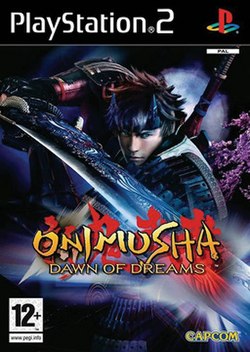
 Onimusha: Dawn of Dreams on PS2
 Action Man: Operation Extreme on PlayStation
 Project Sakura Wars on PS4
 13 Sentinels: Aegis Rim on PS4Unicorn Overlord on Xbox Series X/S
 Dragon's Crown Pro on PS4
 GrimGrimoire OnceMore on PS4












 Another SquareThought Site