

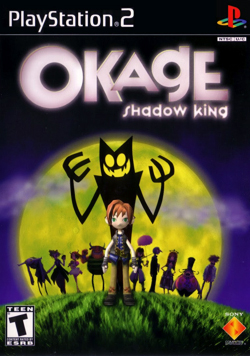

Okage: Shadow King arrives like a tea party for nightmares: polite, slightly absurd, and featuring a tiny aristocratic villain who insists on sitting on your shoulder. Developed by Zener Works and published by Sony Computer Entertainment for PlayStation 2, it's an RPG that mostly remembers to be charming, occasionally remembers to be clever, and sometimes forgets to explain things it expects you to already know - such as why a 16-year-old boy named Ari is now the unwilling valet to a bottled ancient evil called Stan. The game slipped into the early PS2 library in 2001, bringing hand-painted town screens, turn-based battles, and a script that seems to have been written by someone who enjoys irony and ghosts in equal measure. You will probably laugh. You will probably grind. Both are acceptable forms of worship in this game.
The basic loop of Okage is reassuringly familiar: visit towns, talk to suspiciously well-dressed NPCs, cross the overworld, and explore dungeons that exist to test patience and inventory space. Warp pillars act as an early gift to people who dislike backtracking, once discovered; they are the game's way of rewarding curiosity and being slightly less cruel. Combat is turn-based, which means nothing explodes in real time unless you want it to. Battles start when Ari walks into an enemy on the map, which is the sort of tactical contact most modern games have outsourced to randomized encounters. The wrinkle here is Stan, Ari's shadow-bound master, who is not playable but still very much the star. Stan likes flashy magic and dramatic commentary. You get the spells, you take the praise. Fights play out with HP and MP, elemental affinities that determine what spells fit whom, and a delay-waiting system that lets a character hang back to synchronize for combo attacks. It's a polite little tango: wait for the ally to finish a move, then step in for a more powerful follow-up. It makes the turn-based battles feel a touch more strategic than 'spam the strongest attack until a boss dies and then have an existential crisis about money.' Ari himself is fairly unremarkable as a combat unit to start with (his first weapon is a humble branch, which is a stance on weapon philosophy), but as you progress he upgrades into an actual sword-wielding participant. If Ari falls, the game over screen will remind you that ignoring the protagonist's health is not a viable life choice. Character roles are flavored more for personality than strict min-max balance. Rosalyn the disgraced heroine will stab and sulk; Gutten Kisling the eccentric scientist casts potent offensive magic while demonstrating an unhealthy enthusiasm for collecting toenail clippings; Big Bull is a straightforward muscle man who wants to open a gym and will probably forget to close it if recruited; and Linda, the aspiring singer, uses her microphone as a weapon and supports the party with chants that would make most producers uncomfortable. The roster also includes Epros, a Shakespearean card-thrower who rhymes his way through exposition, because a quest to defeat fake Evil Kings isn't complete without someone in tights reciting couplets. The game's story is goofy in a way that claims to be both subversive and affectionate toward RPG tropes. Ari's grandfather pulls out an ancient bottle to save his sister from a ghostly curse, performs a ritual, and inadvertently summons Lord Stanley Hihat Trinidad XIV - Stan - who then merges with Ari's shadow. The ensuing quest is to defeat the fake Evil Kings who stole Stan's powers. The moral complexity here is middle-grade-level but emotionally sincere: Stan wants to be feared, Rosalyn wants respect, and Ari mostly wants his shadow back and to stop people pointing at him. The interface and progression are classic PS2-era RPG: towns full of shops, side quests that feel like social media but with less ads, and dungeon puzzles that ask the eternal question: did you bring the right key? Save points are generous enough to be unaggravating, but enemies do force the occasional grind if you want to avoid being repeatedly embarrassingly defeated by named bosses. The elemental system is clear in battle, and the combo/wait mechanic adds enough tactical meat to make fights more than stat-checks. Stan, while not playable, is a game design triumph: a central puppet who speaks up at comedic intervals and never lets you forget who wrote the script. Development quirks bleed into the experience in ways both charming and slightly janky. Zener Works migrated development from the canceled Panasonic M2 and the original PlayStation to the PS2 after Sony's hardware announcements. This led to remakes of graphics and code early in the console's life, which explains occasional rough edges and a debugging vibe that says 'we were learning the machine while you were playing.' The result is an RPG that sometimes feels lovingly handcrafted and occasionally like an experiment in teaching the PlayStation 2 how to behave.
Visually, Okage is a mixed bag that behaves exactly like a 2001 PS2 title trying to be both storybook and slightly creepy. The towns are painted with a whimsical style - imagine a picture book that got into Gothic novels and refused to apologize. Character models are small and cartoony when you walk the overworld, but the cutscenes and portraits have personality in spades. The animation isn't going to win awards for realism, but it conveys expression in a way that dialogue alone wouldn't. The color design leans toward pastels with an occasional smear of macabre, which suits a game about shadows, stolen crowns, and parasols hiding shameful pink shadows. Combat sprites and spell effects are where the PS2-era budget shows both restraint and ingenuity. Spells are flashy enough to be satisfying, especially Stan's big magic moves which announce themselves with the kind of pomp reserved for soap opera villains. The overworld is functional rather than awe-inspiring: it's serviceable for travel and exploration, and warp pillars do a lot of heavy lifting in areas where the camera might otherwise sulk. Technical hiccups are rare but present - a product of early PS2 development and the team's rushed engine adjustments - and they add a kind of retro charm if you find charm in the console equivalent of a hiccup. Overall, graphics don't attempt photorealism and are better for it. The art direction leans into character design and tone, and that's the right call. If you're playing Okage today, you're not here to be dazzled by polygon density; you're here for expression, personality, and the occasional well-timed weird face from Stan.
Okage: Shadow King is the sort of RPG that doesn't try to outdo the big, glossy epics of its era. Instead it doubles down on personality. The writing is humorously off-kilter, the characters are eccentrically memorable, and the combat includes enough tactical choices to keep boredom at bay. It received average reviews on release - a Metacritic score around 70/100 reflects a game that many found enjoyable but flawed - and that seems fair. The flaws mostly come from being an early PS2 title developed under shifting technical conditions: the move from other hardware to the PS2 meant redoing graphics and wrestling with debugging tools that were still in diapers. If you like RPGs that favor voice and oddball charm over mechanical perfection, this will probably sit nicely in your collection. If you need modern conveniences and graphical fidelity stitched into a narrative that treats you like a coffee-addicted strategy consultant, this isn't for you. The supporting cast elevates what could have been a forgettable quest into something you will smile about later, perhaps in the shower, while contemplating why a villain would prefer being feared to being loved. And if you enjoy Stan's thinly veiled tantrums and Rosalyn's parasol-based dignity issues, you'll likely forgive the occasional technical scrapes. Score: 7/10. Recommend if you have patience for turn-based systems, an appetite for deadpan, macabre humor, and a soft spot for RPGs that feel like someone sketched a parody of the genre and then put enough heart into it to make it sincere. Also recommended if you want a game where the bad guy is literally attached to your shadow and cannot stop making jokes about it.
 King's Quest on PS3
 Prince of Persia: The Fallen King on DS
 Combat Elite: WWII Paratroopers on PS2
 The Banner Saga 2 on PS4
 Arcania: The Complete Tale on PS3
 Predecessor on PS4












 Another SquareThought Site