



There are tie-in games, and then there are licensed tie-ins that seem to have been conceived during a particularly short editorial meeting. Pimp My Ride, the PS2 entry developed by Eutechnyx and published by Activision, takes MTV's cheesily charismatic car-rehab show and attempts to turn it into a game of automotive makeover and light street-racing. The concept reads well on paper: strip down a customer's rust bucket, learn their tastes, and transform it into something ostentatious enough to make the neighbours complain. In practice the execution betrays the kind of rushed, checkbox design that made many late-era licensed games feel like paid advertisements with input lag. If you are the sort of player who remembers the halcyon days of magazine reviews and pixelated box art, consider this review a paginated public service announcement: Pimp My Ride is faithful to the source material in name and superficial trimmings, but loses most of the amusement in middling mechanics, repetitive tasks, and a physics engine that looks like it learned to drive in a washing machine. Critics were merciless; on Metacritic the PS2 build limps in with a score in the mid-30s out of 100, and that aggregate is a useful spoiler for anyone hoping this would be the next great console surprise.
At its heart Pimp My Ride splits its time between two responsibilities: earning cash and turning cars into thematic shrines. Players accept jobs from a modest roster of customers - each with their specified likes and quirks - and then attempt to rebuild each vehicle "bumper to bumper" to suit those tastes. The makeover phase is the game's selling point on paper. You pick components, apply visual motifs, and try to capture a client's personality. The problem is that the palette of choices never quite attains the variety necessary to make each job feel like a meaningful puzzle; too often you swap a grille for a spoiler and the game tells you you have nailed the brief. Earning money is where the design reveals its shortcuts. Rather than run an involved business sim of sourcing parts or negotiating prices, the game funnels you to a handful of repeatable money-makers: smashing into traffic to collect cash tokens, destroying environment items like parking meters and signs, and a set of minigames. The minigames include "Hot Steppin'", a rhythm-based exercise, and the curiously named "Ghost Ride the Whip", which turns button timing into a performance metric. There are also gimmick tasks like greeting pedestrians by driving slowly and mashing buttons - an activity that the player does once and then recognises as the space-filler it is. Pimping showdowns add a competitive angle: you and an AI customizer are scored for how well you translate a client's tastes into a completed car, and the higher score wins the job. This could have been satisfying if the scoring criteria were transparent and the customisation meaningful; instead it frequently feels arbitrary. Gameplay loop fatigue arrives quickly because raising cash, playing the same minigames, and swapping a limited set of parts becomes mechanical rather than creative. There are sparks of charm - the idea of interpreting a customer's personality through car bling is inherently silly in a good way - but they are smothered by repetition. The more generous critic will say the game delivers a handful of memorable moments if you are starved for themed vehicular absurdity. The less generous critic will point at the lack of replay value and the game's tendency to reduce everything to fetch-and-press chores. If you hoped to manipulate an advanced damage model or tune engine internals, look elsewhere. Pimp My Ride's focus is cosmetic and arcade-lite, and for players seeking substance under the shine, the game offers little beneath its paint job.
Graphically Pimp My Ride sits firmly in the 'serviceable for its era' category while occasionally flirting with embarrassment. Car models have enough silhouette detail to be recognisable, and the game's custom parts usually slot into place without awful clipping; however, the environments and textures are often flat, with bland streets and uninspired backdrops that fail to sell the illusion of a living city. Animations are stilted at times and the particle and lighting work feel overly conservative for a mid-2000s title. More damning than the visuals is the game's physics and performance. Critics singled out poor physics behaviour and, in the case of the handheld ports, atrocious frame rates; the PSP build was widely described as "nauseatingly choppy" and even prone to crashes that could corrupt saves. On the PS2 the situation is gentler but still unsatisfying: collisions and vehicle handling rarely feel convincing, making driving more of an obstacle than a pleasure. When the only reward for driving skill is to break more street furniture to earn cash, the whole enterprise becomes a dull, noisy loop. Presentation does capture a little of the show's brash personality - if only because the designers lean into the gaudy - but polish is inconsistent. Menus are functional but bland, and the UI rarely communicates why a given customisation choice helped you win the score-based competitions. In a game that trades heavily on style, the execution feels penny-pinched.
Pimp My Ride on PS2 is one of those licence-led curiosities that reads better than it plays. The premise - customise cars to suit eccentric clients and earn money through daft driving stunts and minigames - is charmingly trashy in concept, but the title does not back that charm up with the mechanical depth or presentation it needs. Critics were near unanimous in their disinterest: the game's reception was 'unfavourable' across platforms, with Metacritic numbers in the low-to-mid 30s for the PS2 release and substantially lower for handheld and Wii ports. Reviewers called out poor physics, thin replay value, repetitive gameplay and, in some versions, performance so bad it threatened save integrity. If you are a completionist fan of the show with a soft spot for gaudy car accessories, you might find a couple of hours' guilty pleasure here. For anyone who values crisp driving mechanics, meaningful customisation choices, or a reason to return after the credits roll, Pimp My Ride is not worth the time or the shelf space. Consider this a polite recommendation to let the show remain a cultural footnote and to leave your gaming dollars for a title that actually wants them. The sequel, Pimp My Ride: Street Racing, attempted to continue the concept in 2009 but did little to change the underlying lesson: not every television idea is improved by becoming a video game.
 Ride 3 on PS4
 Tony Hawk: Ride on PS3
 Roary the Racing Car on DS
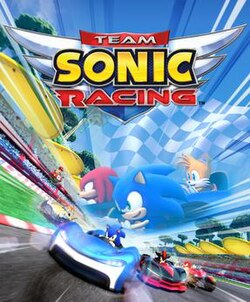
 Team Sonic Racing on Switch
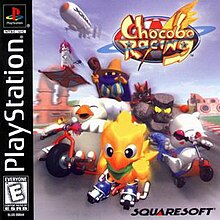
 Chocobo Racing on PlayStation
 Garfield Kart: Furious Racing on Switch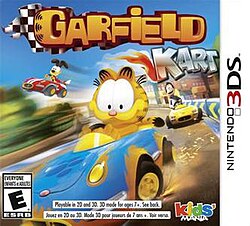
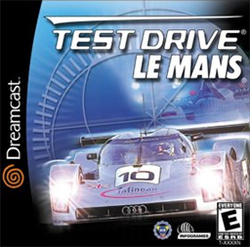 Car & Driver Presents: Grand Tour Racing '98 on PlayStation
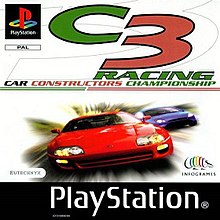
 C3 Racing on PlayStation
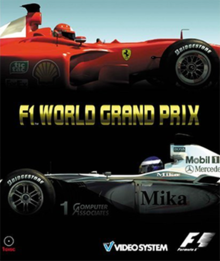
 F1 World Grand Prix 2000 on PlayStation
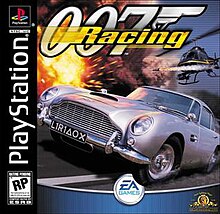
 007 Racing on PlayStation
 Ride to Hell: Retribution on PS3












 Another SquareThought Site