

 Aug 2025


Milestone's Ride arrived in 2015 with a simple pitch: take the simulation sensibilities that worked for car racers like Forza Motorsport and graft them onto motorcycles. The result is mechanically earnest, intermittently brilliant, and occasionally maddening - like a superbike that wants to hit apexes but also needs a nap. Ride sold respectably at launch (top 10 on the UK PS3 chart and top 15 on PS4), picked up Best Technical Achievement at the Italian Video Game Awards in 2016, and established a foundation that Milestone iterated on in sequels. This review focuses on the PlayStation 4 build, with an eye toward the systems that matter to a technically minded rider: physics, handling, performance, UI flow, and how well the game communicates the brutal poetry of two-wheel dynamics.
Ride's core loop is built around bike collection, classes, and circuit work. The original game leaned on a relatively compact set of categories - four distinct groups - which shapes the player's progression: it's less about an endless sea of parts and more about extracting value from a smaller, curated stable. That curation is a double-edged sword. On one hand, fewer classes mean each bike category has more identity and you learn nuanced responses quicker. On the other hand, if you wanted the shotgun variety of later entries (Ride 2's ~200 bikes across 15 categories), the original can feel scientifically conservative. From a mechanical perspective the game aims toward simulation but keeps one foot in accessibility. Braking, throttle modulation, and weight transfer are the pillars of the handling model here. Milestone's implementation emphasizes timing: you can feel the bike's tendency to stand up under hard throttle, to bite mid-corner if you overcommit, and to become nervous under aggressive trail braking. The result is a handling model that rewards clean inputs and punishes twitchy corrections - which is what a good motorcycle sim should do. Where Ride distinguishes itself technically is in how the game surfaces that feedback. The audio design, while not a trophy-winning feature on its own, delivers engine character and gearbox chatter that cues you into road speed and gear decisions. The cockpit and camera choices favor clarity over theatrics; the camera placements are conservative so you can judge lines without cinematic lens flare getting in the way. For players with steering-wheel backgrounds the concept translates to a tactile code for bikes: manage traction rather than muscle brute force. The AI and difficulty curve trend toward accessibility. Reviews described Ride as "Forza Motorsport with bikes," and that's a useful shorthand: the AI behaves like a competent pack to race against but rarely executes the surgical precision of top-tier motorcycle sims. Newcomers benefit from the gentler learning slope. However, simulation purists will notice missing depth in some systems: tire temperature modeling, long-term degradation and fuel strategies are either simplified or absent compared to hardcore bike sims or endurance-focused titles. That said, Milestone prioritized making corner entry, mid-corner balancing and exit behavior feel believable rather than burying players under telemetry screens. Customization and progression are functional. Cosmetic and performance upgrades exist, though the early Ride feels like version 1.0 of a system later expanded in sequels. If you're the kind of player who lives in suspension geometry settings and brake bias spreadsheets, you'll appreciate the presence of tuning options; if you want infinite knobs, you'll feel teased. Multiplayer modes and single-player events make the structure familiar and steady, but the real technical merit is in the learning feedback loop: better inputs equal faster lap times, and the game communicates that relationship clearly. On the user-experience side there's a grievance worth flagging: loading times. Multiple reviewers and users noted long loads on the PS4 build; Richard Seagrave of GameSpew called them out specifically. For a title built on repetition - lap, tweak, lap again - loading overheads harm the rhythm. The time you spend waiting between bike selection, track, and race is time not spent refining your technique, and that friction is especially unforgiving when you're chasing incremental setup improvements. Finally, Ride's success as a technical exercise should be measured against its ambition. Milestone had pedigree with MotoGP and SBK titles, and Ride was an attempt to make motorcycle ownership and career progression digestible for a wider audience. It mostly achieves that: the physics teach you to be better, the progression nudges you to experiment, and the racecraft is satisfying if not razor-sharp. Expect a game that rewards patience and precision more than flamboyant showboating.
Graphically, Ride in its original PS4 incarnation plays conservatively. Track fidelity and bike models are detailed enough to appreciate rivets, fairing contours, and brand liveries. Texturing and lighting do the job, but you can spot the era: reflections aren't physically perfect and weather effects are limited compared to later entries. It's important to point out that Milestone's series technical trajectory is visible in retrospect - Ride 3 and Ride 4 use Unreal Engine 4 (later entries) and push dynamic weather, time of day, and wet-surface rendering much further. The viral attention Ride 4 received for near-photoreal wet asphalt shows where the technical baseline established by the original eventually led. On PS4 the original Ride's frame pacing and visual clarity favor clarity over spectacle. That aligns with the game's mechanical priorities: you need to read the apex, the curbing, and the braking markers without distraction. If you want cinematic CC-laden replays, looks-wise you'll get competent results but not the kind of photorealism that made Ride 4's rainy demo a meme. For technical players the visuals are primarily functional - they communicate surface detail and reference points for braking and turn-in, which is what matters most when lap time is your religion.
Ride is a technically earnest first attempt to translate motorcycle nuance into a console racer accessible to a broad audience. Its strengths are a handling model that rewards clean, precision inputs and an approachable progression system that teaches without humiliating. Weaknesses include loading friction and a tuning system that feels like the scaffolding of a bigger idea - later sequels expanded on these foundations. The game's reception (Metacritic ~66/100, mixed reviews between 5/10 and 7/10) is fair: Ride is competent and occasionally compelling, but not definitive. If you want a bike racer that prioritizes readable physics and teaches you how to ride faster, you'll find value here; if you need exhaustive simulation systems and cutting-edge wet-weather realism, the later entries are the destinations. Consider Ride a well-engineered prototype that planted the seeds for a more ambitious technical evolution.
 Tony Hawk: Ride on PS3
 Ride 2 on PS4
 Roary the Racing Car on DS
 Team Sonic Racing on Switch
 Garfield Kart: Furious Racing on Switch
 Ben 10: Galactic Racing on PS3
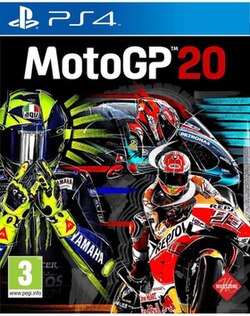 MotoGP 20 on Switch
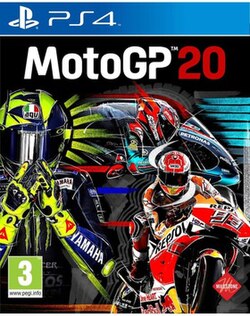 MotoGP 20 on Xbox One
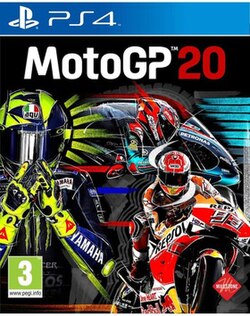 Monster Energy Supercross: The Official Videogame 4 on PS5
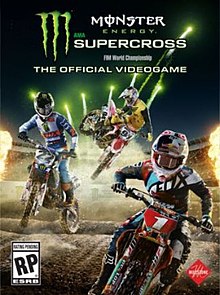 Monster Energy Supercross 4 on PS4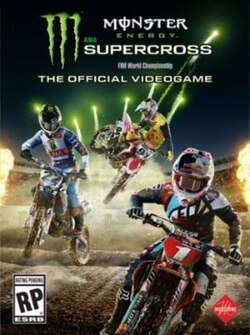










 Another SquareThought Site