

 Feb 2017


If you think motorbike racing is just holding on tight and praying, Ride 2 is here to tell you that you are both almost right and tragically underprepared. Built by Italian studio Milestone, the sequel expands on the original Ride's ambition: more bikes, more categories, more customization, and more tracks that will convince you that the difference between glory and contact-lunch is three degrees of steering and one mis-timed downshift. Released for PlayStation 4 on February 14, 2017, Ride 2 isn't a beginner-hostile simulator for gear-head purists, nor a banging arcade for the 'tap to win' crowd - it's a middle path that rewards technique. The game brings roughly 200 bikes across 15 categories, throws in tight street layouts like Macau and Ulster, and invites you to learn a surprisingly deep skillset if you want to stop being lapped by teenagers on late-model superbikes.
Ride 2's central challenge is deceptively simple on paper: pick a bike, pick a track, and out-ride your rivals. The reality is that the game insists you do it with a rider and machine that behave like actual physics took a coffee break and then came back grumpy. The enormous roster means you won't master everything overnight - and that's the point. Each bike category behaves differently: vintage monsters are slow to turn but spectacular at making you look cool; modern literbikes are explosive on the straights and savage if you try to flick them like a 600cc. This variety forces you to adapt your core skills rather than rely on one exploitative trick. Throttle control is the game's unforgiving homework. Unlike arcade racers that let you lean on the gas and forgive mistakes, Ride 2 penalizes aggressive throttle inputs mid-corner with immediate consequences: loss of rear traction, highside attempts, and that stomach-dropping slide where your avatar's body becomes a wishful thought. Learning to modulate the throttle, use smooth roll-ons, and time your exits is the baseline skill. Braking is equally sculpted; the game rewards trail-braking and progressive pressure rather than stomp-and-pray habits. Getting on the brakes earlier and backing off as you tip into the apex will shave seconds more reliably than late, panicked stops. Corner entry and line selection feel like a chess match with centrifugal force. Tight street circuits like Macau and Ulster expose the rawness of any mistake: walls, kerbs, and unsympathetic run-off areas make forgiveness rare. These tracks demand surgical precision with the analog stick, and the game's collision and surface interaction systems make kerb-hopping and aggressive curb use a risky business. If you want to podium at Macau, you will practice that same corner until your thumbs have more calluses than a gym rat. Setup and customization are where Ride 2 nudges from pure reflex game toward racercraft. Milestone expands bike tuning options and visual customization, but the meaningful play lies in how setup tweaks affect handling. Gear ratios, suspension stiffness, and brake bias can be altered to match your chosen track and riding style. It's not hyper-technical like telemetry-heavy sims, but it's deep enough that a few test laps with a calm mind and a notebook will improve lap times. The game encourages iterative experimentation: change one setting, test, change another. This teaches patience and an analytical approach - two skills that will return better lap-times than frantic, random fiddling. Racecraft and AI behavior create another skill layer. Opponents are not perfectly predictable; they can be opportunistic and will punish you for sloppy lines. Learning to defend without ruining your corner speed, choosing the right moment to overtake, and understanding draft and slipstreams on longer straights are practical lessons. Multiplayer adds the human variable - always the cruelest teacher. Human racers will exploit tiny openings and punish imprecision, so expect tight margins and the occasional spectacular fail. Accessibility is one of the game's polite contradictions: reviewers often compared Ride to 'Forza Motorsport with bikes' and noted that Milestone trimmed some of the hardcore bite to make the game approachable. Despite that, accessibility doesn't mean easy. The learning curve is steady: newcomers can get decent times quickly, but shaving the final tenths requires discipline, mechanical sympathy, and a willingness to learn from repeated failure. Expect to be humbled, then annoyed, then grudgingly improved. There are some practical challenges that aren't about player skill. The original Ride and early impressions of the series mentioned long loading times and occasional technical rough edges; Ride 2 inherits the franchise DNA, including areas where polish could be tighter. These don't ruin the core experience, but when you're in a groove and get yanked back to a loading screen, it kills momentum. Consider this a reminder that the game's biggest fight might sometimes be against menus and disk access times rather than the rider next to you.
On the PlayStation 4, Ride 2 looks competent rather than revolutionary. Bike models are lovingly detailed - Milestone clearly took pride in reproducing fairings, exhausts, and liveries - and the cockpit and rider animations sell the speed more often than not. Tracks like Macau and Ulster present a palpable sense of place: alleyways, tight barriers, and narrow sightlines feel threatening in a way that adds weight to the driving challenge. Lighting and textures are solid for the era, though there are moments where surfaces lack the reflective fidelity of contemporary car sims. The game's presentation serves the primary purpose: helping you read the track. When visuals and performance align, the result is immersive and helpful; when load-times and pop-in appear, the immersion cracks. For a game focused on technique and precision, the graphics mostly do their job - they never outshine the racing, they support it.
Ride 2 is a training ground for anyone who wants their motorbike gaming to be more than a spectacle. It's the sort of game that will teach you humility, then reward attention to detail with cleaner lines and faster laps. The challenge comes from three directions: raw riding skills (throttle, brakes, lines), setup and mechanical understanding (tuning and customization), and racecraft (overtakes, defending, reading opponents). Milestone balances approachability with a meaningful skill ceiling: newcomers will have fun, but the grind to the top is deliberate and satisfying. Minor technical grumbles - loading times and polish - occasionally interrupt the flow, but they rarely outweigh the pleasure of nailing a lap that used to feel impossible. If you want a bike racer that asks you to learn instead of just mash, Ride 2 on PS4 is a capable, occasionally infuriating, and ultimately rewarding teacher. Score: 7.0/10 - competent, challenging, and worth your practice sessions (helmet not included).
 Ride 3 on PS4
 Tony Hawk: Ride on PS3
 Roary the Racing Car on DS
 Team Sonic Racing on Switch
 Garfield Kart: Furious Racing on Switch
 Ben 10: Galactic Racing on PS3
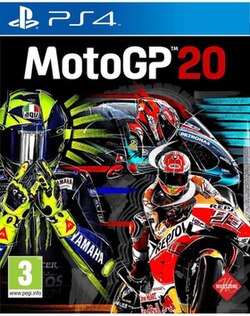 MotoGP 20 on Switch
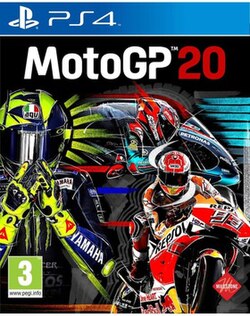 MotoGP 20 on Xbox One
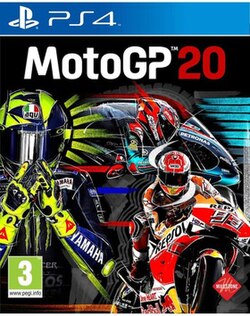 Monster Energy Supercross: The Official Videogame 4 on PS5
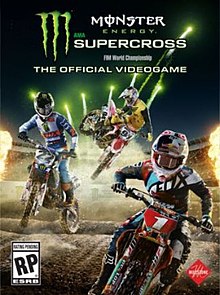 Monster Energy Supercross 4 on PS4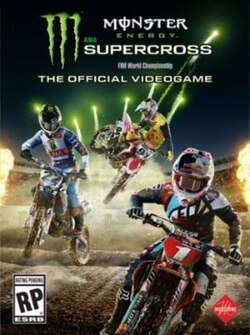










 Another SquareThought Site