

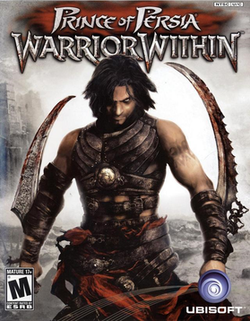

Prince of Persia: Warrior Within shows up like a Prince who decided that being charming and mildly remorseful was no longer working, so he adopted a leather jacket and a permanent scowl. Released in late 2004 for the PlayStation 2 as part of the Sands of Time continuity, this sequel picks up seven years after the last holiday postcard and replaces sunlit palace gardens with rain, rust and a very persistent existential menace called the Dahaka. If you liked the platforming and time tricks of The Sands of Time but fancied them wrapped in brooding voice lines and heavy guitars, this is your beach read. If you liked the original for its whimsy, Warrior Within will quietly inform you that whimsy is out of fashion. It doubles down on what worked mechanically - acrobatics, time manipulation and puzzles built around traversal - while offering a combat overhaul that treats enemies like inefficient coat racks: disarm them, throw their swords at them, then try not to get decapitated by a sand monster that appears to have misplaced its subtlety. The tone shift was deliberate, and as with any deliberate attempt to look tougher, it generated applause, questions and a small protest petition by nostalgia.
Warrior Within keeps the series fundamentals: parkour-style navigation, platforming puzzles and the familiar ability to rewind, slow and speed up time. The set pieces are still built to make you feel athletic, clumsy and, occasionally, clever - usually in that order. The world is more nonlinear compared to its predecessor; expect to revisit areas through time portals, take multiple routes to the same place and use the past and present as level design tools rather than wallpaper. There are hidden pockets of extra health and weapons for compulsive explorers, and finding the mythical Water Sword even influences the ending, which is an elegant way of rewarding curiosity and hoarding tendencies. Combat is where Warrior Within truly wants to shake your hand and then break it. The Prince is now forced to carry a sword as his primary weapon and must scavenge secondary weapons from the battlefield or racks. These off-hand options number in the dozens and come with changing stats and limited durability, which encourages experimentation - and occasional disappointment as your favorite axe shatters mid-combo. Dual-wielding and two-hand stances open up combo trees that feel satisfying in a way that only a well-animated dismemberment can. Enemies can be disarmed, knocked down, thrown into environmental hazards or finished with gory, optional executions that can be toggled for the faint of heart. The sand powers return but are integrated into an easier-to-manage shared pool; you still rewind to correct bad jumps, slow time to create melodramatic bullet-time swordsmanship, and later unlock area-of-effect sand abilities that clear rooms like a very patient broom. A new circular wave of sand knocks nearby enemies over and deals damage, which solves many combat puzzles and the occasional hallway of existential dread. Enemies are mostly various sand creatures and bosses; encounters are more frequent and less segregated than before, so combat punctuates exploration rather than sitting politely off to the side. Some foes respawn as you backtrack, which is good for grinding and slightly less good for your patience. The game also peppers in Dahaka chases: sections where the Prince is pursued through trap-filled corridors and must sprint, jump, and generally be on time. These sequences are an effective way to translate narrative pressure into sweaty palms, and they punctuate the slower moments of puzzle-solving with an appropriate dose of adrenaline. There are also more traditional boss fights than in the previous game, designed to give the finale some theatrical closure rather than leaving you to wonder whether the credits are a prank. Occasional glitches and uneven difficulty spikes show the game was ambitious for its one-year production cycle, but the fundamentals - acrobatics, exploration and the new, more dynamic combat - mostly deliver.
The art direction traded saffron sunsets for a palette of desaturated stone and rain-slick metal, which is to say the game looks like several people agreed that gloom would sell better than sunshine. This was intentional: the team wanted a darker, more oppressive aesthetic to match the Prince's new attitude and the increased presence of sand demons. Character models were more detailed than in the previous game, with improved lighting tricks and armor made of interlaced leather straps so the Prince could both look dangerous and still perform impossible flips. Technically, the team pushed the PlayStation 2 harder than the console politely expected. The developers found ways to squeeze extra performance from the Jade engine to render larger environments and more ambitious camera work, which means you get the occasional sweeping vista that suggests a real place and a lot of close-up swordplay that suggests you should stop peeking into the enemy's rib cage during combat. Cutscenes take inspiration from live-action pre-vis and draw on Jackie Chan-style camera movements for dramatic effect, keeping the cinematic moments energetic even if the tonal choices are blouse-and-leather heavy. The lighting and texture work age in a comforting way: you can still see the effort, even if a later console would make it prettier. If you play on an original PS2, expect frame-rate prioritization at 30 fps by design, which was meant to free cycles for AI and scene complexity. It mostly does the job; the world feels cohesive, a touch grimy, and convincingly ancient - like a cityscape whose job title is 'imposing and slightly offended'.
Prince of Persia: Warrior Within is a sequel that knows what it wants to be: darker, bloodier and mechanically broader than The Sands of Time. It delivers improved combat systems, more open-ended level design and tense chase sequences that translate the Prince's desperation into gameplay. The tonal shift will either be your new favorite thing or a betrayal of a previously sunny aesthetic, depending on whether you consider coming-of-age to be 'tweens to leather-clad brooding'. Critics responded with mostly favorable scores, fans were divided, and sales suggested the world was, at least, interested. If you want polished platforming with an upgraded fighting system and a soundtrack that occasionally swaps oud tones for heavy guitars, this is worth your time. If you preferred the original's lightness and charming narrator, prepare for an aggressively moodier Prince who will still save the day but will do it with a very low tolerance for optimism. In short: mechanically strong, tonally loud. Play it if you like your puzzles with a side of existential crisis.
 XCOM: Enemy Within on PS3
 Battles of Prince of Persia on DS
 PlayStation Home on PS3
 Ōkami on PS2
 Gaelic Football '25 on Xbox Series X/S
 Unearthed: Trail of Ibn Battuta on PS3
 Prince of Persia: The Sands of Time on PS3
 Assassin's Creed: Brotherhood on PS3
 Assassin's Creed II on PS3
 Far Cry 3 Classic on PS4
 Tom Clancy's Rainbow Six Siege on Xbox Series X/S












 Another SquareThought Site