



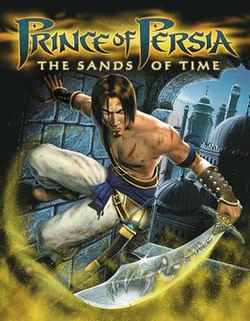
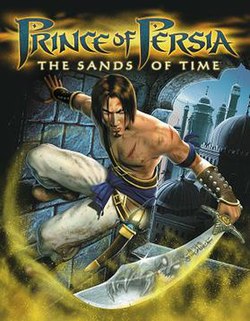
Prince of Persia: The Sands of Time is the rare video game that wears its mechanics like a costume and its story like armor. On PS2 it arrived in 2003 looking like an Arabian-night circus act and sounding like a slightly dramatic indie film, and it turned the old 2D flicker-parkour of the 1989 original into a full-bodied, voice-acted romance-thriller. This review takes a scalpel to the three characters at the story's heart - the Prince, Farah and the Vizier - and asks how well the game translates their arcs into jumps, stabs and that neat little rewind trick. Spoiler-level: the Dagger does more than save your life; it rewires character motivation.
If you play Sands of Time purely for the gameplay you'll be happy: the PS2 version combines precise platforming with smooth, contextual combat and a handful of magical toys. But the game shines when you read those toys as extensions of character. The Dagger of Time is not just a convenience button - it's the Prince's moral gym membership. Rewind lets you unmake mistakes, and the narrative uses that permission as an engine for guilt, choice and responsibility. The Prince is literally offered second chances in gameplay and story, and the player feels that burden when they slide back ten seconds to undo a misstep that once led to a death. You learn to rely on it, and the designers make you feel the weight of that reliance by framing moments where you must decide to trust Farah or reach for the dagger. Platforming is the Prince's personality in motion. Ubisoft Montreal created an acrobat with over seven hundred scripted movements, and those animations do character work: wall-running and pole-swinging read as cocky improvisation, the somersault attack is swagger, and the way he grabs a ledge when you panic says more about him than half the cutscenes. The palace of Azad is built around verticality and theatrical traps, and many puzzles exist to test cooperation between the Prince and Farah. Those cooperative puzzles are tiny essays on trust. They force the Prince to depend on her, not purely mechanically but narratively - a lever pulled by Farah opens a path, and a shared puzzle becomes a conversation without words. Combat is concise and, thematically, narratively meaningful. The Prince fights with a sword that wounds and a dagger that finishes. Enemies infected with the Sands become monsters you hack at with the blade, but the Dagger is the moral scalpel that extracts the Sands and restores power. This creates a loop in which violence is both necessary and reversible, which suits the game's anti-war undercurrent: you can unleash brutal force, gather Sands, then reverse the damage. The Sand Powers - slow time, freeze single enemies, or freeze time around you - feel like temporary ego boosts for someone who has just been offered what amounts to divine interference in mortal decisions. Using them is gameplay catharsis; story-wise they are the Prince's temptations. Farah's role in gameplay is the most interesting from a character-analysis perspective. As an AI companion she actually hits you sometimes, which is a deliberate design choice to keep her realistic and not a perfect, infallible helper. That fallibility breeds tension. If Farah dies, you get a game over, and that stakes the player's protective impulse. Her moments of agency - the night in the bathhouse, the theft of the dagger, and later the sacrifice above the hourglass - are mirrored in gameplay sequences that required the Prince to accept that other people have their own aims. The AI is not perfect, but it does its narrative job: it forces the Prince to negotiate trust while parkouring across blades and arrows. The occasional camera annoyances reported on PC and sometimes on consoles are peccadilloes against otherwise elegant platforming, and on PS2 the setup is typically forgiving enough that story beats land without the camera stealing the joke. Design-wise, the team's decision to make the whole adventure feel like a single day in one palace stresses unity of place and the idea that you cannot escape consequences by moving on. Large environmental puzzles and save points disguised as sand columns are clever touches that keep the world coherent and keep the player's attention on the relational stakes rather than a string of disconnected levels. When the game slows to allow a story beat, you sense the writers' desire to let gameplay and narrative sing in harmony instead of shouting over one another.
The PS2 presentation trades photorealism for a stylized Arabian-night palette that still looks lovely. Raphael Lacoste's art direction gave Azad a blue-tinted, layered look with extensive set dressing that made the palace feel lived-in and vertical - a massive playground with class divisions stacked floor upon floor. The Jade engine, originally used for Beyond Good & Evil, was tuned for seamlessness: long S-shaped corridors hide room loads and keep you moving through an environment that wants to feel continuous. That trick kept immersion intact and made the palace feel like a single organism. Animation is a big win here. Motion capture and bespoke animation routines gave the Prince fluidity you can feel when you run along a wall or bounce off a pillar. There are little movement flourishes that hint at personality: the Prince's sprint, the limp after a wound, the way he hesitates at a ledge. Those flourishes elevate otherwise routine tasks into character moments. The enemy design - the people corrupted by the Sands - uses sound and visual touches to make them disturbingly organic yet uncanny. Sound design is sharp: Stuart Chatwood mixed Middle Eastern melodic elements with rock undercurrents and percussion to create a soundtrack that is both anachronistic and emotionally apt. Yuri Lowenthal's voice work as the Prince grounds the narration in a voice that manages charm and regret; Joanna Wasick's Farah is practical, wounded, and believable. The game deliberately doesn't pause gameplay for dialogue, which means you can miss lines, but this also keeps the pacing taut and forces players to pay attention to both the action and the claim of the narrative. There are minor rough edges. The camera can be tricky in tight platforming spaces, and the PS2's technical limits mean draw distance and texture fidelity are not modern-level spectacular. These are forgivable because the composition, lighting and animation do the heavy lifting in creating mood and character.
Prince of Persia: The Sands of Time is a rare case where gameplay mechanic and story motif are one and the same. The Dagger of Time is more than a gimmick; it's a dramatic device that lets the writers explore remorse, temptation, and the cost of starting over. The Prince's arc - from roguish soldier looter to a man who refuses eternal life because of the weight of those he loves - is told through jumps, choices, and rewinds rather than monologues alone. Farah's arc moves from captive skeptic to partner to tragic catalyst and finally to someone whose memory is the thing the Prince must prove to her, an elegant twist that recasts the whole tale as both a love story and a morality play. The Vizier is a classic manipulator: he is a tempter who wraps political ambition in occult power, and his offer of immortality presents the Prince with a mirror of selfishness the player can fight against. On PS2, the package is polished, the combat crisp, the puzzles satisfying, and the lead performances memorable. It also left a legacy: a darker sequel, a cinematic influence that filtered into games that followed, and even the germ of Assassin's Creed. If you care about characters and how mechanics can embody theme, Sands of Time remains essential. Play it for the platforming and combat, stay for the way it makes you feel awkward about rewinding a bad choice the same sentence in which the Prince is learning to live with his. It's a love story with a dagger in it, and it knows exactly when to use the blade.
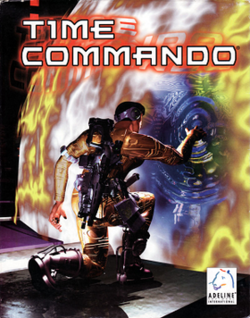 Prince of Persia: The Sands of Time Remake on PS4
 Time Crisis on PlayStation
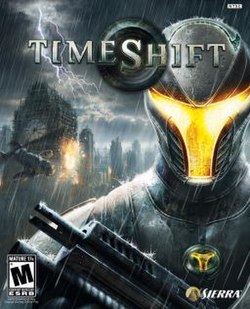
 TimeShift on PS3
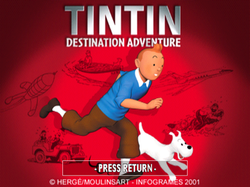
 Tintin: Destination Adventure on PlayStation
 Disney's Chicken Little: Ace in Action on PS2
 One Piece Grand Adventure on PS2
 Onimusha: Dawn of Dreams on PS2
 Assassin's Creed: Brotherhood on PS3
 Assassin's Creed II on PS3
 Far Cry 3 Classic on PS4
 Assassin's Creed: Origins on PS4
 Tom Clancy's Rainbow Six Siege on Xbox Series X/S












 Another SquareThought Site