

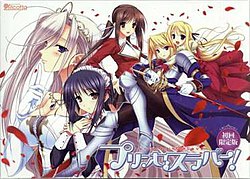

If you sat me down in a dimly lit Arcade in 1996 and asked which modern visual novel would read like a glossy romance novel dropped into a corporate boardroom, I'd hand you Princess Lover! Eternal Love for My Lady and tell you to stop feeding quarters to Street Fighter. Released for PlayStation 2 in 2010 as an all-ages polish of Ricotta's earlier 2008 Windows eroge, this title is the studio's first effort and wears that apprenticeship like a tailored suit. It presents a melodramatic, soap-operatic tale of heirs and heiresses - swords are sharpened, fortunes are transferred, and teenagers with impeccable cheekbones resolve ancient family grudges by means of awkward small-talk and fencing lessons. For fans of visual novels who prefer their romances with a side of pomp and aristocratic entanglement, this is a respectable port with a smirk of ambition.
Princess Lover! is not a game in the twitch sense; it is a reading experience that expects you to behave like an attentive novel reader who occasionally presses a button. The core gameplay loop consists of long stretches of narrative accompanied by static character portraits and background art, punctuated by decision points. These 'forks' appear at irregular intervals - sometimes after a minute of exposition, sometimes after a scene - and steer the plot toward one of four main heroine routes. Each route is essentially a self-contained novella: choose Charlotte and you'll get princessly teasing and cross-border pride; select Sylvia and you head into arranged-marriage fencing duels and quiet revelations; Seika's path trades rivalry for fashion-industry resentments turning to affection; Yū's path is the household-heart thread, all loyalty and gentle care. On PS2 the package is expanded: graphics are remastered, voice work is present for many characters, and an additional heroine route for Ayano Kaneko (a supporting character elevated to full heroine status) is included. That extra material gives the console release genuine value, since the principal criticism of single-disc visual novels is repetition - replay is part of the design - and new content softens the fatigue. The structure enforces linearity. There are no stats, no inventories, no minigames, and certainly no branching labyrinth to get lost in. Instead, the player is invited to replay the story multiple times, making different choices to reveal alternate scenes and endings. For some players this is liberation - you can savor a route as you would a favorite paperback - while for others it feels like a polite trick: the same dialogue engines and scene scaffolding are recycled to produce different emotional beats. Voice acting varies in its gravitas, with veteran seiyuu appearances adding gravitas in cutscenes. The game's pacing mimics a late-night drama: slow starts, steady middle, and an ending that attempts to tie the loose threads of social class, honor, and teenage devotion into a tidy bow. If you prize agency over authorship, this title will test your patience; if you relish being guided through a carefully written romance, it will reward you handsomely.
The PS2 incarnation touts remastered visuals, and that is where Ricotta's illustrative pedigree - led by Kei Komori - is most clearly on display. Character portraits are rendered with the kind of soft shading and hair highlights that flirt with the line between anime poster and oil painting. Clothes are detailed, expressions exaggerated in all the delicious ways romance writers demand, and backgrounds deliver a consistent, if static, sense of place: private school gardens, gilded drawing rooms, and corporate offices that smell faintly of money. The transition from PC to console cleans up jagged edges and rebalances color palettes for TV viewing, producing a warmer presentation than the Windows original. It is not, however, a fireworks show. Animations are minimal - a blink here, a mouth-sprite there - which is faithful to visual novel conventions but occasionally leaves the eye wanting. Sound design complements the art. The PS2 release benefits from full character voicing for principal cast members; the performances are competent and often charming, though some lines land with the stoicism of a period drama rather than naturalistic conversation. The soundtrack leans cinematic: swelling piano cues, airy strings, and the occasional bombastic motif when family secrets are revealed. Overall the package looks and sounds like a high-quality late-2000s visual novel given the careful house polish that a console port can provide. Fans of character art will find a lot to admire; fans of animation will need to temper expectations.
Princess Lover! Eternal Love for My Lady is not a revolutionary title, nor does it claim to be. It stands as a well-made example of its genre: a linear, character-driven visual novel that trades action for emotional composition. Ricotta's first project shows confidence in its writing team - with Shōta Onoue supplying scenario work - and in Kei Komori's character design; the PS2 version's remastering and the addition of Ayano's route make it the definitive way to experience this particular story on a television screen. The game's strongest suit is its cast: Sylvia, Charlotte, Seika and Yū are archetypes done with care, each route rewarding patience with a satisfying if predictable payoff. The weaknesses are those inherited from the format: limited interactivity, repetitive scene scaffolding across routes, and graphics that prioritize illustration over motion. If you are the sort of player who enjoys replaying narrative branches to collect every confession, duel and compromise, you will find this a tasteful and comfortable listen to accompany an evening on the couch. If you require gameplay variety or cinematic animation, the title will feel like reading a lovely book with the occasional still-life painting. It earns a solid 7.5 out of 10: an accomplished port with heart, a few theatrical flourishes, and all the courtly intrigue you could want when a large inheritance and a fencing match can resolve everything. In short: bring patience, a soft spot for aristocratic melodrama, and a willingness to let the story hold your hand to the last page.
 True Love Story 2 on PlayStation
 True Love Story ~Remember my Heart~ on PlayStation
 Otometeki Koi Kakumei * Love Revo!! on PS2
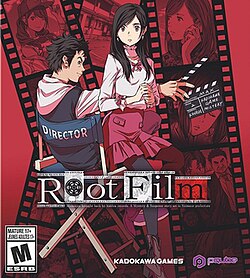
 Root Film on PS4
 Tokimeki Memorial Drama Series Vol. 3 Tabidachi no Uta on PlayStation
 Oshiete! Popotan on PS2
 Princess Princess on PS2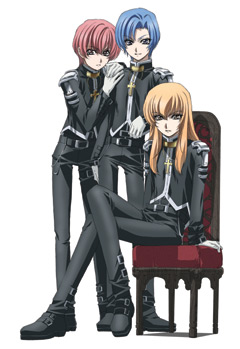












 Another SquareThought Site