

 Jul 2020
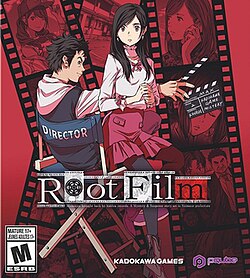

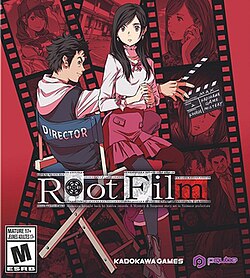
Root Film calls itself a murder mystery visual novel and, on a mechanical level, it mostly delivers exactly that. The game is the spiritual successor to Root Letter and the second entry in the Kadokawa Mystery Games series, trading in grand revelations for slower, investigation-first pacing. If you want nail-biting real-time platforming or physics puzzles, you are in the wrong soundstage. What you will get is an investigation loop built from location selection, targeted scene probing, and a debate mode that converts argumentation into a small reflex-and-choice mini-game. For a technical-minded player, Root Film is interesting because it leans hard into systems that make a text-heavy narrative feel like an interactive production: map navigation, clue memorization, and a fight-style interrogation mode that borrows theatrical presentation from courtroom games. It is tidy and focused, and that focus is both its virtue and its limit.
Root Film's core gameplay is textbook visual novel investigation. The engine spends most of its cycles rendering text boxes and managing the state of story progression, but the way it branches between passive reading and active investigation is worth unpacking. Players select locations on a map to advance the plot; inside each location there are sectional hotspots that represent areas of interest or characters you can interrogate. This is not an open sandbox with physics or emergent systems. Instead, think of each scene as a finite state machine: enter location, probe a fixed set of nodes, trigger dialogue or evidence flags, and transition onward. Two mechanical flourishes lift the repetition inherent in reading. The first is the Synesthesia ability for protagonists Rintaro Yagumo and Riho, which highlights statements and claims that matter. In sections where Synesthesia is unavailable, the function is replaced by a similar Magari Memo mechanic. Both are essentially attention filters layered over the text stream: the game signals important lines and prompts you to press a button to 'memorize' a clue. Technically, this is an elegant way to make the player participate in evidence collection without inventing elaborate minigames. It reduces cognitive load while preserving a tactile interaction: the requirement to hit the memorize prompt acts as a soft gate, ensuring the player engages rather than passively skims. The second notable system is Max Mode, Root Film's interrogation sequence. The designers translate debate into a duel-style interface: stimuli from the suspect are met with player-selected clues, and the interface tracks two implicit gauges, true revealed and unresolved. Present correct evidence, and you fill true revealed; present incorrect or mismatched evidence, and unresolved inches up. The UI communicates stakes with these two meters and a looping dialogue tree; presentation-wise, Max Mode swaps the usual static sprites for more dynamic portraits and animated facial beats to sell confrontation. Mechanically it resembles Ace Attorney's objection-driven rhythm, but Root Film keeps things simpler: the challenge is less about deducing some cryptic logic puzzle and more about matching flagged statements to the right pieces of evidence. That makes the mode approachable, but also tends to flatten difficulty spikes - it's about execution rather than deep deductive complexity. The interaction density in Root Film is deliberately low. Outside of memorization prompts and Max Mode decisions, you will mostly be absorbing text. That is an explicit design choice rather than an oversight: the game treats investigation as script-reading and conversational inference, which fits thematically with a story about film production. From a systems perspective, the single-player loop is lean: read, memorize important lines, interrogate, and repeat. Repetition risk is mitigated somewhat by writing beats and character interplay, but players wanting highly branching, systemic investigations may find the whole affair narrower than expected. Localization and voice-acting choices, implied by the series' history of recurring voice actors, give the text weight, but these are supplementary to the core mechanical scaffolding rather than replacements for it.
Root Film's visual approach adheres to visual novel conventions with a few technical pivots. The bulk of in-game rendering is composed of background environments and character sprites; most scenes use static backgrounds with layered 2D portraits for characters. This conserves performance headroom on PS4 and keeps the engine simple, predictable, and stable. The one place the game widens its visual vocabulary is in Max Mode, where the portraits receive extra frames, more expressive posing, and animated overlays to heighten the confrontation. That selective animation is a smart cost-benefit tradeoff: the engine only spends GPU and animation budget where it matters most for gameplay tension. Because Root Film is presentation-driven rather than GPU-driven, evaluating its graphics means judging composition and clarity over shader complexity. Backgrounds are serviceable and set the scene in Shimane Prefecture with recognizable visual cues that anchor the narrative. Character art is consistent and readable, which is crucial in a game where you must parse expressions during interrogations. The limited animation states can make the rest of the game feel static by comparison, but this is a deliberate stylistic choice aligned with many story-first JRPGs and visual novels. There is also a meta-graphic artifact worth noting: the Western limited edition includes a 100-page art booklet. From a production perspective that signals confidence in the game's concept art and character design - something collectors and analysts can read as the developer investing in clean, reproducible assets. Those assets pay dividends in promotional materials and menu UI, which are crisp and maintain a coherent visual identity across the experience.
Root Film is a technically competent visual novel that makes clear, intentional decisions about where to invest interactivity and visual dynamism. Its mechanics are clean: a map-based investigation flow, memorize prompts via Synesthesia or Magari Memo, and a debate-style Max Mode that converts evidence presentation into an approachable mini-game. Those systems reduce friction and let the story drive engagement, but they also limit systemic depth; the game is about scripted uncovering more than it is about emergent detective work. On PS4 the experience is stable and visually coherent, with dynamic interrogation portraits providing welcome contrast to otherwise static scenes. Critical reception reflects this middle ground - solid but not revolutionary, with a Metacritic score around 70/100 for PS4 and healthy Famitsu marks. If you enjoy character-driven mysteries, efficient interface design, and procedural simplicity that keeps focus on pacing and dialogue, Root Film is well worth your time. If you crave branching, simulation-like investigations or mechanical novelty, you may find the game's economy of systems a little too conservative. For anyone who wants a tidy, technically tidy murder mystery that occasionally flexes expressive animation where it matters, Root Film earns a respectable 7 out of 10. Consider this recommendation the director's cut: competent direction, good framing, just not a blockbuster visual-tech spectacle.
 The Princess and the Frog on DS
 Coraline on PS2
 Tintin: Destination Adventure on PlayStation
 One Piece Grand Adventure on PS2
 Taiko no Tatsujin: Don to Katsu no Jikū Daibōken on Switch
 Taiko no Tatsujin: Dokodon! Mystery Adventure on Switch
 God Wars: Future Past on PS4
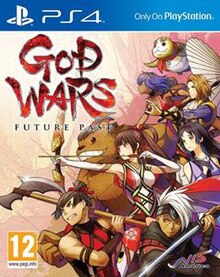 Root Film on Switch
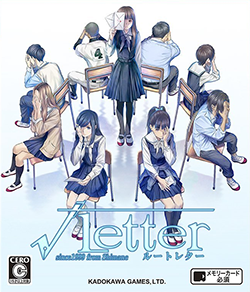
 Root Letter: Last Answer on Switch
 Demon Gaze II on PS4
 Demon Gaze Extra on PS4










 Another SquareThought Site