

 Apr 2013
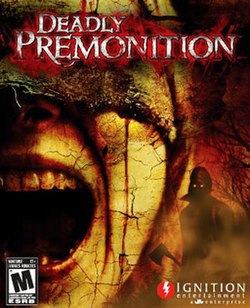

Deadly Premonition: The Director's Cut is a weird, wonderful splicing of Twin Peaks-flavored narrative and budget-era technical compromises, rebundled for PS3 with a few modern niceties. The original concept - a reboot of the cancelled Rainy Woods - was always ambitious: a living small town, NPCs with 24-hour schedules, a dynamic weather and day/night system, and a detective sim glued to occasional otherworldly combat. The Director's Cut brings updated controls, stereoscopic 3D, PlayStation Move support and HD post-processing, plus a new framing story and minor scenario additions. This review looks at the game like a forensic developer: systems first, spectacle second, and, yes, the occasional unhinged detective monologue third.
Deadly Premonition is equal parts open-world systems sandbox and scripted supernatural setpiece. From a design perspective it aspires to 'real time, real scale, real life' - the team tracked real-world signage widths, sun angles and the hourly wages of diner staff to ground Greenvale. That attention to environmental detail feeds directly into gameplay systems: NPCs operate on individualized 24-hour schedules, places of business have opening hours, and many interactions are gated by time. Mechanically this is implemented as a town-wide scheduler and time-query system; if you miss an NPC's slot you simply retry the next day - a forgiving design that avoids dead-ends while reinforcing temporal immersion. York's avatar is more than a damage number and a spawn point. The game surfaces hunger and sleep meters that influence core loops: exhaustion accelerates hunger and increases the heartbeat multiplier while running, hunger drains health at zero, and sleep restores both health and tiredness. This is an uncommon welfare loop for an action-horror title - essentially an RPG-style resource sub-system grafted onto detective beats. It introduces resource planning (food purchases, sleep scheduling) and forces players to treat traversal as a budgeted activity rather than a mindless sprint. Vehicle mechanics are light on simulation but heavy on consequences. Cars consume fuel, accumulate damage and require maintenance or replacement. Importantly, there's a persistent vehicle state machine exposed to the player: fuel level, damage thresholds leading to failure, and a cost function for repair. That ties into the game's economy, which is curiously granular (York earns small sums for shaving, suit changes, and can be fined for filthy clothes). The result is a ludic loop where logistical overhead - fuel costs, repair bills, sleep and food - coexists with investigation and combat. Combat was added relatively late in development and wears that history: melee weapons break with use, firearms exist but combat often lands between Resident Evil 4-styled over-the-shoulder shooting and clumsy, animation-heavy brawling. York's pulse mechanic (heartbeat increases when running or holding breath) creates a stamina-like constraint on sprinting and stealth, and quick-time-events or chase/hide sequences manage the Raincoat Killer encounters. The otherworldly combat arenas detach from the overworld: inside the Other World you switch objectives to evidence collection and profiling. The photography/evidence system functions as a logic puzzle - you take photos, tag clues, and reconstruct events to progress the investigation - a good example of narrative mechanics that reward observational play rather than twitch skill. From a technical design viewpoint, the game is an ambitious mixture: open-world streaming, scheduler-driven NPCs, physics-driven objects (a PhysX integration), a day/night/weather simulation and a separate otherworld combat engine. Those subsystems place competing demands on CPU, GPU and memory. Development notes reveal the team struggled with memory allocation, lighting and physics fidelity; the budget meant 'sloppy' initial data management and several cancellations during production. In practice that translates into variable LOD pop-in, occasional collision and ragdoll oddities, and a frame-rate budget that the team defends by cutting objects from PhysX (hair, clothing, fishing rods were among the casualties). Director's Cut changes are practical: updated controls tighten input mapping (including Move support), and HD visual filtering smooths jaggies. However, the port didn't rewrite core systems: the open-world scheduler, the heartbeat/stamina math, the vehicle state machine and the Other World sequences remain largely intact. Some technical debt remains visible in frame pacing and voice processing (an 'echo' artifact was noted in some ports), but the new control layer and small QoL fixes make the gameplay loop more tolerable for modern players without changing the game's DNA.
The graphics are a textbook case of aesthetic ambition outrunning resources. Original development notes cite lighting, shadow balancing and PhysX as major pain points - those are the same trouble spots players see on the PS3 release. Models are low-poly by late-PS2/early-PS3 standards: thin silhouettes, sparse animation keyframes and limited blend shapes. Textures are often low-resolution with noticeable tiling, and normal/bump details are minimal. The outdoor scenes try to compensate with scale: long sightlines, named streets and environmental placement convey the feeling of a real town, but the engine wears that realism thin when LOD thresholds trigger pop-in or when shadow maps flicker during dynamic weather. Lighting is inconsistent. The development team struggled to balance desired aesthetics with processing constraints; shadow cascades and sun-angle math were tuned for a look rather than performance. As a result, you'll see both beautiful golden-hour compositions and harsh, flat lighting in the same scene. PhysX added 'dynamic expression' (objects react to forces), but the engine's honest simulation tanked frame rates unless objects were removed from simulation - a classic tradeoff between simulated fidelity and steady framerate. The Director's Cut applies HD post-processing and cleaner filtering that softens edges and reduces aliasing, but the base models and animations still betray their origin. Audio is a double-edged sword. The soundtrack is a highlight: whistled themes and jazz-tinged motifs provide a memorable sonic identity, and the York/Zach monologue music cues are well matched to narrative beats. Where audio falters is in mix and placement: whimsical jazz sometimes plays over serious scenes in a way that breaks immersion, and some ports introduced an echo on voice tracks. Voice direction was recorded professionally (6,000 lines over two weeks was the stated figure), and Jeff Kramer's York performance is a core strength, but the post-processing hiccups in the Director's Cut occasionally undercut that performance.
Deadly Premonition: The Director's Cut on PS3 is a fascinating engineering artifact: a game whose systems are full of clever choices (24-hour NPC schedules, vehicle persistence, hunger/sleep resource management, photo-profiling) and whose execution is hamstrung by mid-development compromises and a tight budget. The Director's Cut irons out some control and UI roughness and adds polish in presentation, but it doesn't - and arguably shouldn't - change the game's core identity. If you care about systems and how game subsystems interact under constrained resources, DP is a case study in trade-offs: which simulated elements to keep, which to drop from PhysX, and how much LOD and post-process can conceal asset limitations. If you prioritize tight combat loops and modern visuals, this will be frustrating. If you want a memorable narrative delivered through systems that occasionally buckle under the strain of ambition, it's worth your time. The cult status and polarizing reviews are deserved: this is not a pristine technical achievement, but it is one with personality and deliberate (if messy) systems design. Score: 7.0/10 - an imperfect, technical curiosity that rewards players who enjoy poking under the hood as much as following a bizarre murder mystery.
 Wasteland 2: Director's Cut on PS4
 Raiden V: Director's Cut on Switch
 Project Awakening on PS4
 Tennis World Tour on Switch
 Rage 2 on PS4
 Harvest Moon: One World on Switch










 Another SquareThought Site