

 Feb 2014
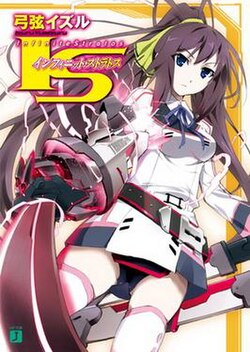

If you came to Infinite Stratos 2: Ignition Hearts expecting a mecha simulator that will teach you how to pilot an exoskeleton while simultaneously performing a tea ceremony, you either misread the box or unknowingly purchased a very specific kind of anime-themed therapy session. Developed by 5pb. and released for PS3 (and Vita), Ignition Hearts is less 'pilot school' and more 'memory scrapbook' - its plot is explicitly described as focusing on memories from Ichika Orimura's school festival. That puts the game's nose squarely in the soft underbelly of the Infinite Stratos franchise: its characters. This review goes in deep on that underbelly. I'm not here to enumerate frame rates or to scream about unlockable trophies (though those exist and will make completionists twitch); I'm here to map how Ignition Hearts uses gameplay, dialogue and episode-like scenarios to massage, twist, and sometimes actually finish the story arcs of a cast that, in the anime and novels, reads like a textbook for the modern harem-mecha hybrid. Expect talk of Ichika's awkward-but-not-unappealing passivity, Houki's kendo-shaped jealousy, Cecilia's aristocratic pride, Lingyin's gut-level warmth (and cooking trauma), Charlotte's gendered spy-gimmick, Laura's protector trope, and the rest of the kitchen-sink ensemble that makes Infinite Stratos so loudly communal.
Ignition Hearts frames its narrative as a festival of recollections: Ichika walks, he talks, and the world around him provides vignettes - some slice-of-life, some conflict-driven - that spotlight a single girl or small group. Based on the description in the official material, the game is a 5pb. narrative product first and an IS toy second: it reads like a visual novel that sprinkles in light action sequences and event-driven combat to separate routes and keep things from turning into an endless stream of picnic blanket conversations. The core loop is straightforward: a festival event triggers a memory route; you choose options during conversations; those choices steer which memory blooms into a full episode. Unsurprisingly, this structure plays to the franchise's greatest strength - its characters - and the developer leans into that. Each heroine receives a focused chapter that allows the game to parse her motivations in ways the anime only hinted at. If you enjoyed the original material, this is the part where you hear your favorite voice actor say the line they've always deserved and then cry about how underused their katana was. Ichika Orimura's arc benefits from being the connective tissue. In the series he's the only male who can pilot an IS, the trope-magnet who can't seem to make firm romantic decisions without accidentally breaking something nearby. The game reframes him as less dense and more restrained - a conscious choice to avoid turning every encounter into a slapstick declaration. Ignition Hearts uses Ichika's memories as a subtle engine for agency: his recollections are where he finally clarifies why he avoids entanglement, and the player's choices influence whether he continues skirting feelings or takes one tiny step forward. This is handled with the gentle awkwardness fans expect: not sudden, sweeping romance, but a slow, believable inch. Houki Shinonono gets the festival's kendo-and-heart chapter. Her jealousy is the show's combustible device and the game treats it like a dance rather than a nuclear blast: training sequences, flashback scenes of her dojo upbringing, and a handful of honesty-check dialogue options allow her to confront the shame and pride that's been boxed into her character since childhood. The payoff here is a quietly earned reconciliation with the sisterly legacy and an acknowledgment that her love for Ichika isn't just possessive ownership but something that can be matured. It's the most satisfying moment for fans who wanted Houki's character to be more than a blushing sword-wielder. Cecilia Alcott's narrative strand is the aristocratic arc with teeth. In the anime she's haughty, then humbled; the game gives her a chance to rewrite the middle scenes. Her memory route unpacks the bargain she made with the British government and the loneliness that accompanied it. Choices let you nudge her toward vulnerability - learning to rely on peers instead of protocol - and the game stages a few delightful misunderstandings about class that, for once, end in meaningful growth rather than comic fodder. Lingyin Huang (Rin) and Charlotte Dunois get chapters that exploit the franchise's emotional payoffs. Lingyin's route is a slow warm-up around the 'forgotten promise' trope and family cooking lore; the game uses small domestic beats - a forgotten lunchbox, a shared kitchen disaster - to repair a friendship that the series sometimes glossed over. Charlotte's story leans into her masquerade as 'Charles' and the ethical fallout of being used for espionage. The route allows her an emancipation moment: she steps out from being someone's tool into someone who can choose her identity. These are both fairly standard visual-novel devices, but Ignition Hearts executes them with a sincerity that reads as intent rather than checklist. Laura Bodewig's protector arc gets one of the more interesting mechanical translations. In the anime, her genetic engineering and cybernetic edge make her a walking crisis; the game stages an early memory where Laura misinterprets Ichika's gestures, goes berserk, and is calmed - not by hand-wavy exposition, but by a playable interlude that simulates her railgun's overheating and the player's quick-time responses. It's brief, but mechanically it suggests she isn't just 'stoic tsundere with a gun' - she is someone whose control systems can fail, and that failure is humanized. Secondary figures like Tatenashi and Kanzashi, Tabane and Chifuyu, and the antagonistic-but-complicated Phantom Task operatives (Madoka, Squall, Autumn) are used as narrative cliffs and mirrors. Tatenashi's and Kanzashi's sibling dynamics are explored with playful, theatrical flair; Tabane's eccentric genius is background music to the emotional beats; Chifuyu is the silent axis whose former glory and current guardianship of Ichika remain a touchstone. Phantom Task's presence in festival memories gives the game a chance to juxtapose ordinary school idol-drama with the darker ramifications of IS technology - particularly through Madoka's tragic creation-as-succession storyline. The game doesn't solve the series' larger geopolitical questions, but by collapsing a few of Phantom Task's high-stakes moments into festival flashbacks, it demonstrates how personal trauma scales up into global threat. Where the game stumbles is in ambition vs. time. There's a lot to cover - twelve main girls and a fan-canvas of supporting cast - and some routes feel like the director called cut before the chorus hits. Choices sometimes funnel back to the same beats, and if you're expecting dramatic divergences that rewrite the franchise, you'll be disappointed. The trade-off is that most routes finish with a meaningful micro-arc: a confession avoided, a sister healed, a promise remembered, a pride abandoned. For fans who wanted emotional closure of the slice-of-life variety, Ignition Hearts is generous; for players wanting branching dystopian outcomes, it's a bit parsimonious.
On PS3, Ignition Hearts looks like a lovingly animated love-letter to the anime: character portraits are crisp, expressions are over-delivered in the best way, and the festival backgrounds are awash in saturated festival-lights and sakura petals that make you want to buy a scarf. Mecha (IS) models are shown mostly in cutscenes and combat interludes; they're faithful to the series' designs - by Takeyasu Kurashima and Takeshi Takakura in the original anime - and when the game digs into IS combat it does so with flashes and camera cuts that sell speed more than polygonal fidelity, which is appropriate for the material. The soundtrack borrows thematic tone from the anime's composer (Hikaru Nanase), leaning on swelling, orchestral-pop pieces during big moments and light motifs for each heroine. Voice work is a major plus: the same cast listed in the series - Ichika's reserved tones, Houki's kendo-snapped lines, Charlotte's tentative 'boku' - are present, and hearing them deliver lines in intimate visual-novel setups makes small moments resonate. Frame rate and detail-wise, PS3-era visuals show their age in certain PQ edges, but the art direction is good enough that you'll forgive pixel economy for the sake of charm.
Infinite Stratos 2: Ignition Hearts is a game for people who collect feelings the way some fans collect model kits. It's earnest and sometimes structurally repetitive, but it uses its festival framing to give characters the breathing space they often lacked in faster-paced media adaptations. If you came for IS dogfights, you'll get intermittent taste-bites - pretty and cinematic, but not the main course. If you came for character work, especially quieter insights into where Houki's heart went, why Cecilia behaves like a duchess with a troubled Wi‑Fi connection, or how Charlotte learns to be Charlotte rather than a corporate asset, the game will repay your attention. As a 5pb. narrative project, Ignition Hearts succeeds at being small and sincere. It doesn't revolutionize the franchise or answer grand questions about IS technology and world order, but it isn't trying to. It's a festival scrapbook where each card is a heroine's face and each scribble is a memory that matters. For Infinite Stratos fans who want to spend a dozen hours holding court with personal arcs, that's gold. For everyone else, it's an amiable, occasionally touching visual novel with flashy IS cameos. Final verdict: a solid 7.1 out of 10 - recommended if your heart already sits in Sector Houki, but approachable enough for anyone curious about how a franchise can be made human again, one festival memory at a time.
 Kingdom Hearts HD 2.8 Final Chapter Prologue on PS4
 Kingdom Hearts IV on Xbox Series X/S
 Onimusha: Dawn of Dreams on PS2
 Action Man: Operation Extreme on PlayStation
 Project Sakura Wars on PS4
 Combat Elite: WWII Paratroopers on PS2
 Robotics;Notes on PS3
 Memories Off Historia Vol. 1 on PS4
 Chaos;Head Noah / Chaos;Child Double Pack on Switch
 Robotics;Notes Elite on Switch
 Dunamis 15 on PS3










 Another SquareThought Site