

 Aug 2025
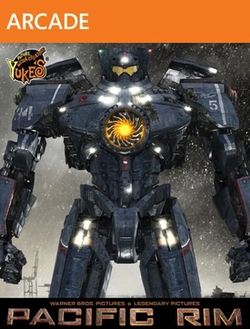

Pacific Rim: The Video Game arrives like a cinematic giant stepping off the silver screen and onto your PS3 - loud, metallic, and with all the narrative subtlety of a two-ton robot arm. Developed by Yuke's and published by Warner Bros., this digital tie-in tries to bottle Guillermo del Toro's monster-versus-mega-robot spectacle and sell it in bite-sized fights on the PlayStation Network. Unfortunately, the game mostly captures the film's look and not its soul. It gives you Jaegers and Kaijus, plasma and chain swords, and the intriguing mechanical fact that Jaegers need two pilots - represented mechanically by two health bars - but it rarely gives players the human stories that make the film's giant-on-giant brawls mean anything beyond 'punch big monster until it dies.' The game was delisted in 2016, which feels appropriate: you can still remember the movie, but the video game is now a conveniently forgettable memory.
On paper, Pacific Rim's combat is exactly what a movie-to-game translation should be: face-to-face melee battles between Jaegers and Kaijus, each character bringing a handful of special attacks to the ring. Gipsy Danger gets the obvious toys - a plasma cannon and chain swords - while Kaijus like Leatherback are given disruptive tricks such as an electromagnetic pulse to ruin your day. The PS3 version keeps the core idea simple: fights are one-on-one affairs, progression is earned through victories and achievements, and the upgrade loop promises incremental power increases if you put in the hours. Where this title tries to be clever - and where it fails in character terms - is in the Jaeger-as-duo mechanic. Jaegers carry two health bars because they require two pilots. This is one of the few places where the game admits that a Jaeger is not merely metal and hydraulics but a shared human vessel. Mechanically, it changes the rhythm of combat: sustaining damage feels like two lives tethered together, and the visual shorthand of two health pools implies two people fighting inside the same suit. It's an evocative idea that could lead to meaningful narrative exploration - does one pilot sacrifice themselves to keep the other alive? Do conflicting neural links cause staggered controls? - but the actual game treats the dual-bar mostly as a statistic. The emotional undercurrent of shared sacrifice that made the film's drift concept resonant is reduced to a gameplay quirk. This leads into the game's broader failure on character arcs. The potential is obvious and tantalizing: Jaegers as characters, each embodying the histories and traumas of their pilots, facing Kaijus that are more than props - rampaging living threats with origins and threat philosophies. Instead, the missions in the single-player campaign reduce these possibilities to repetitive objectives and mission blurbs. The fights are often stand-alone encounters, designed to grind achievement points or earn upgrades rather than to develop evolving relationships between pilots or to let Jaegers learn and change. IGN called the story missions 'repetitive and nonsensical,' which is a generous way to say the game rarely bothers with meaningful arcs. Despite that, there are glimpses - tiny scraps of character in the way abilities are framed. Gipsy Danger's plasma cannon and chain swords evoke its film role as the stalwart veteran, the reliable workhorse. Leatherback's EMP suggests a Kaiju designed to undermine coordination - thematically consistent with an enemy that wants to sever the human link inside the Jaeger. But these are all theme-by-association moves; the game never builds the pilots' backstories into playable sequences, never stages a mission where your actions force a pilot to make a tragic choice, and never uses the two-health mechanic to craft a dramatic moment where one pilot gives up control to save the other. In short: the pieces for nuanced story arcs are present, but the developers left the owner's manual at home. Multiplayer mode exists, and on paper it gives players a chance to embody their favorite mechs and monsters in direct conflict. The appeal is obvious - nothing beats the catharsis of controlling a hulking Jaeger and clocking a Kaiju into next week. Yet the multiplayer ends up being an extended showcase of special moves and balance issues rather than a forum for character growth. The upgrade systems and achievement points feed a loop that rewards grind more than role-playing; the feeling is closer to 'collect-power-ups-to-win' than 'earn your Jaeger's scarred reputation through trial and failure.' The mobile tie-in, not the PS3 release but relevant to franchise fans, attempted a prequel stance with 30 missions and upgrade economics that strapped a freemium model to the IP. Critics saw the mobile game as a paywall-riddled preface; the console product suffers from a different ailment, a lack of ambition in storytelling while leaning hard on punchy combat. Both versions were ultimately delisted in 2016, leaving little room to revisit what might have been. In short, the gameplay loop is functional: fight, earn, upgrade, repeat. It's competent enough for a handful of satisfying robot-on-monster bouts, but it rarely surprises you with narrative consequences. The characters - Jaegers, Kaijus, and their unnamed pilots - are treated as skins and stat packages rather than living entities with arcs. For a license as rich as Pacific Rim, that's a squandered opportunity.
The PS3 translation presents the Jaegers and Kaijus in a way that will feel familiar to fans: big, noisy, and anatomically convincing enough to make you want to play. Promotional screenshots that leaked early showed robots and monsters duking it out across a variety of environments, and what the game delivers is true to that promise - recognizable silhouettes, punchy particle effects for plasma blasts, and enough mechanical detail on the Jaegers to make their limbs feel weighty. That said, the graphical fidelity on the PS3 is bound by the era and the title's scope. Textures can feel thin at close range, and environments sometimes read as generic battle arenas instead of immersive, lived-in cities. Where the visuals do work, they sell the fantasy. When a Jaeger swings a chain sword or fires a plasma blast, the camera and effects convey weight and heat, and impact frames feel cinematic. The problem is, the presentation is surface-level cinema. The game rarely uses visual storytelling to hint at the histories inside the metal - no persistent battle scars that evolve with your progress, no pilot-centric cutscenes that age the Jaeger or its crew. The result is a roster of fighters that look the part but don't visually narrate an inner life. If you approach the game as a set of cool, large-scale toys, the graphics are satisfying. If you hoped the visuals would complement deep character arcs, you'll be left wanting more.
Pacific Rim: The Video Game on PS3 is a curious mix of potential and inertia. It gets the basics right: you pilot Jaegers, you fight Kaijus, Gipsy Danger still slashes and blasts, Leatherback still interrupts you with an EMP, and there are enough special attacks to keep individual encounters interesting in the short term. The two-health-bar mechanic nods at the fascinating idea that a Jaeger is really a shared human story - two minds in a metal body - but the game treats that idea as an arithmetical quirk rather than a storytelling foundation. Critics noticed, and Metacritic's 39/100 (roughly a 3.9/10) reflects how many reviewers felt the tie-in skimmed the spectacle without delivering the emotional heft of the film. If you want a weekend of stompy robot fights and don't care much about narrative payoff, the PS3 release offers disposable fun. If you want an in-depth analysis of characters and story arcs - pilots who change after loss, Jaegers that accumulate scars and reputations, Kaijus with terrifying motives beyond 'eat city' - you'll be disappointed. The game flirts with interesting ideas (shared pilot lives, thematic special moves) but never arranges them into a compelling arc. In that sense, it's more of a 'movie highlights' album than a new story in the Pacific Rim canon. Final verdict: play it if you crave robotic catharsis and have low expectations about narrative depth. Treat it as a novelty showcase rather than a meaningful addition to the franchise's lore. The film is still worth your time; the game is an optional appetizer that never becomes a full meal.
 Game Dev Story on PS4
 Press Your Luck on PS3
 Mom Hid My Game! on Switch
 ACA Neo Geo: Art of Fighting 2 on Xbox One
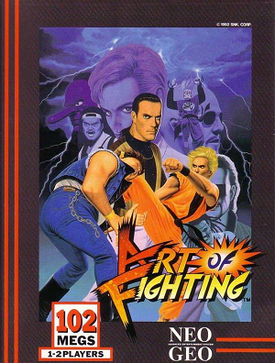 ACA Neo Geo: The King of Fighters '98 on Xbox One
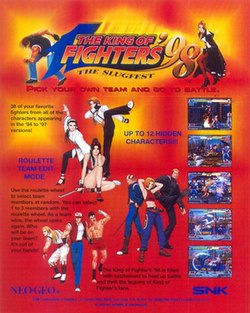 Art of Fighting Anthology on PS2
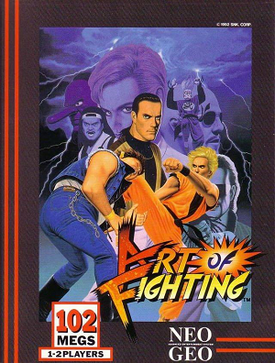 ACA Neo Geo: Art of Fighting on Xbox One
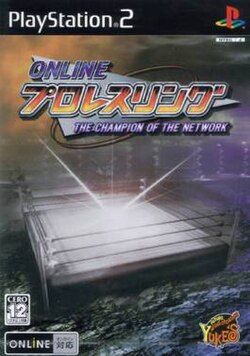
 Online Pro Wrestling on PS2
 AEW Fight Forever on Xbox Series X/S
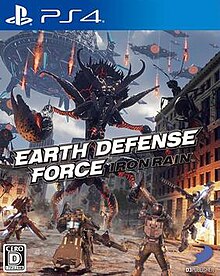
 Earth Defense Force: Iron Rain on PS4
 Earth Defense Force: World Brothers on Switch
 Hermie Hopperhead: Scrap Panic on PlayStation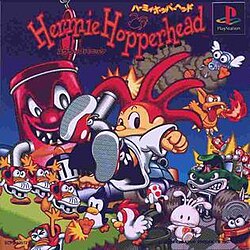










 Another SquareThought Site