

 Aug 2025
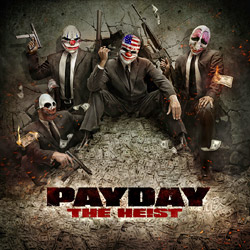

Payday: The Heist arrived on the PS3 in late 2011 like a crew of competent criminals who can pick a lock but occasionally trip over their own loot bag. It isn't a blockbuster spectacle dressed in next-gen gloss; it's a lean, multiplayer-focused FPS that prioritizes emergent team interactions and tightly scripted heists over flashy single-player storytelling. On the technical side it runs on the Diesel engine and offers a design that clearly aims for replayability with a relatively small asset set. The result is a game that feels coherent, occasionally ingenious in systems design, but also a touch constrained by platform limitations and the era's online expectations. If you care about how systems interact, how mission randomization is implemented, and what that means for performance and playability on PS3, this is where the fun begins.
At the core of Payday's gameplay loop is a set of seven (expanding to nine with DLC) scripted heists that play like compact, interconnected puzzle boxes. Each mission is built from deterministic geometry and deterministic AI scripts, but the designers layered randomized triggers on top of that base - think of fixed set dressing with variable 'spice' events. The Diesel engine executes these random events at runtime: manager locations, spawn points for civilians and guards, and the timing of certain scripted sequences can change between runs. That technique gives small levels outsized replayability without multiplying memory or asset costs, a practical decision for a PS3 release where memory budgets were tight. Mechanically, Payday is less about twitch-dueling and more about system interactions. The player characters - Dallas, Hoxton, Chains, and Wolf - are primarily cosmetic vehicles for loadouts and roles rather than bespoke tech-laden classes early on. Core mechanics include hostage-taking, a custody/revive system, and a limited-resurrection economy that forces teams to make tactical choices. The hostage-custody trade is particularly elegant from a systems perspective: instead of respawning arbitrarily, a downed player's release requires sacrificing a discrete resource (a hostage). That converts a health-and-respawn problem into an inventory-and-decision problem, and encourages cooperative resource management. Technically it's a lightweight state machine: player states (active, downed, in custody) are globally visible to teammates and the server enforces transitions triggered by actions like releasing a hostage. The AI is deterministic but behaves believably thanks to good use of state transitions and cover logic. Guards respond to player aggression, hostages have scripted behaviors, and patrol routes can be varied by random event toggles. On PS3 you notice the balance developers struck between CPU-driven AI and GPU-rendered visuals - the AI routines are smart enough to create tension but not so computationally expensive that the game sacrifices framerate or network responsiveness. Networking is where the game's design really earns its keep. Payday was always pitched as a co-op title first, and the PS3 version reflects that: heists are tuned for four players, and several mechanics (hostage trade, revives, loot bag management) are multiplayer-first systems. The netcode needs to keep player state, hostages, AI positions, and random event outcomes synchronized between clients. Diesel's multiplayer stack on PS3 is fairly efficient: developers used authoritative server logic for key game states to prevent desyncs and client-side prediction for movement and weapon fire to hide latency. The end result is a PS3 multiplayer experience that feels mostly solid, though the era's variable PSN connection qualities mean you sometimes meet stuttering peers or sudden reconnect prompts. Those are not technical failings of Diesel per se, but realities of the platform and the online ecosystem in 2011. Progression and DLC mechanics are worth dissecting too. The Wolfpack DLC introduced a Technician skill tree, deployable sentry guns, and new weapons like the AK and GL40, shifting the meta by adding more modular loadout choices. Implementing a player upgrade tree on top of a pre-existing progression system required Overkill to expand the player's state model: new skill flags, level caps, and weapon unlocks had to be stored server-side for multiplayer consistency. On PS3 this meant more save synchronization work and compatibility checks between PS3 and PC players (where patches and DLC schedules differed). No Mercy, the hospital DLC, adds a neat cross-franchise nod to Left 4 Dead and demonstrates how downloadable content can be integrated without altering core systems - it slots in as a new mission with associated masks and assets. From a design-debugging standpoint, Payday's save and matchmaking flows on PS3 are efficient but minimal. The game uses a lobby-based session system where the host's machine often acts as the authoritative coordinator. That is a pragmatic choice given console architecture and the cost of maintaining dedicated servers, but it means host migration and peer-host issues are present. For players focused on technical cleanliness, it's a tradeoff: excellent latency behavior when the host has a good connection, and occasional hiccups when they don't. Overall, Payday: The Heist's gameplay technical design is a study in constrained engineering: small level sets, randomized event overlays, and cooperative state mechanics combine to create a product whose replayability is amplified by systems rather than sheer volume of content.
Visually, Payday on PS3 doesn't pretend to be a next-gen showcase. It runs on the Diesel engine, which is efficient and flexible but not built to gin up photorealism on a console with 256MB of RAM for games (the PS3's memory constraints are well-documented). Overkill's art direction wisely leans into stylized realism, using lighting, particle effects, and shader tricks to mask polycount and texture resolution limits. Level geometry is compact and reuse-friendly. Interiors like First World Bank are tightly authored with modular pieces - banks, vaults, and street-front props are tiled through levels, which reduces memory churn and allows the engine to cache render resources more predictably on PS3 hardware. Dynamic lighting is used to sell atmosphere and contrast; muzzle flashes, sparks from thermite, and spotlights all contribute to readable combat spaces even when texture fidelity is modest. The Diesel engine's material system handles specular highlights well for the era, and the designers exploit that to make metal surfaces, money stacks, and weapon models pop under scene lighting. Performance-wise, the game targets stability over flashy frame rates. On PS3 you can expect steady but conservative rendering: geometry LODs switch earlier than modern titles, textures are compressed to fit the limited VRAM, and shadow resolution is tuned to maintain consistent framerate. Those are sensible tradeoffs: the gameplay relies on precise positioning, system events, and synchronized enemy behavior more than it relies on buttery 60 FPS action. In practice that means Payday looks coherent and readable during heists, with occasional texture streaming or pop-in if you're in a hectic firefight while assets load. Particle effects are kept economical, which helps preserve both GPU and CPU headroom for AI and networking tasks. Animations are serviceable and focused on readability. Downed states, hostage animations, and weapon-handling are all distinct and communicative - important for a game where you need to know at a glance if a teammate is out of action or if a guard is alarmed. The character rigs are not exceptionally complex, but they are optimized for the PS3 pipeline: limited bone counts, simple blending, and event-driven ragdoll triggers keep the animation system performant. Finally, texture streaming and memory management on PS3 are textbook examples of platform-aware optimization. The Diesel engine on console often preloads critical assets for the active mission, and nonessential assets remain in a lower-resolution state until needed. It means the visual fidelity is a mix of crisp focal elements (faces, weapons, vault doors) and lower-res peripheral geometry - a deliberate choice to keep the experience smooth on hardware with tough constraints.
Payday: The Heist on PS3 is a textbook lesson in pragmatic game engineering. Overkill took a small number of well-crafted levels, wrapped them in randomized event systems, and layered cooperative mechanics that encourage emergent gameplay. The Diesel engine, while not glamorous, provides a solid technical backbone: it lets mission randomization, AI state machines, and multiplayer synchronization coexist without eating the PS3's limited RAM and CPU cycles. The PS3 build sometimes wears its platform-era compromises on its sleeve - texture LODs trade detail for stability, and host-based multiplayer implies occasional session fragility - but those are tradeoffs you can accept if you're there for the tense, tactical co-op. Critically, the game's focus on systems over spectacle makes it feel lean, purposeful, and often more fun with teammates than alone. The DLC additions (Wolfpack, No Mercy) demonstrate a thoughtful approach to expanding gameplay systems without breaking the underlying architecture. If you want a polished single-player narrative or photorealistic fidelity, Payday will disappoint. If you want mechanically interesting heists, deliberate risk-reward systems, and a technically coherent multiplayer experience on PS3 hardware, it's a strong pick. For these reasons I score the PS3 version a solid 7 out of 10: not flawless, but cleverly built, technically competent, and still capable of delivering some gloriously chaotic bank-robbing moments when the server, the host, and your teammates all behave like professionals.
 Payday 3 on PS5
 PixelJunk Shooter 2 on PS3
 Primal Carnage: Extinction on PS4
 Tower of Guns on PS3
 Commandos: Strike Force on PS2










 Another SquareThought Site