

 Aug 2025
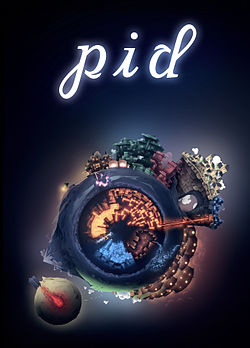

Pid greets you like a melancholic children's book that's been dropped in a scrapyard and then lovingly fixed with duct tape and gravity wells. You play Kurt, a small boy with an even smaller profile photo on the poster, who finds himself stranded on an alien planet where the flora looks like it went to art school and the fauna has a suspicious fondness for robot aggression. The surface-level plot is tidy: survive, make a friend or two, punch through an alien conspiracy, and get home. Underneath that, the game is a miniature odyssey about agency, awkward cooperation, and how learning to use a magical jewel that spawns 'beams' is basically therapy for a kid who just wants to go to bed. This review is an in-depth look at characters and their story arcs, told through the lens of gameplay and design. Pid doesn't bombard you with lengthy dialogue trees or complicated lore dumps - it tells a lot of its story through mechanics, level layout, enemies, and the soundtrack. If movies taught us to analyze human arcs by their choices, Pid teaches us to analyze its protagonist by where the beams make him land and whether the boss fight will make him cry into his controller. The game is artistically confident: little exposition, a neat mechanical conceit (gravity beams), and a soundtrack from Retro Family that gums the world together like sonic superglue. Critics liked the presentation and music; they grumbled at repetitive puzzles and occasionally obtuse solutions. I'm here to walk you through Kurt's emotional map and how the game scaffolds his progression - and yours - from stranded kid to clever escape artist.
Kurt's arc in Pid is inseparable from the game's central mechanic: the white jewel that produces beams. Calling it a tool is accurate, but reductive. The jewel is Kurt's tether to agency in a world that constantly wants to shove him off the screen. Early on, Kurt is dropped into the environment like a social awkward loner at a playground; he wanders, then discovers that planting a beam creates a gravity well that can catapult him out of danger or into a new area. Two beams can be active at once, which is where the game starts whispering about relationships: one beam anchors your past, the other drags you toward unknown possibilities. Learning to juggle them - to place them with intention rather than panic - is Kurt's first arc. The sparse narrative invites you to project: every successful switch of beams is a small moment of growth. On the micro level, the game scaffolds Kurt's skills by layering tools: blue and red bombs, burst beams, smoke bombs, and a damage-absorbing vest. Each new item is a mini-lesson in adaptation. The smoke bombs are practically a trust exercise; they let Kurt slip past spotlights, which narratively reads as learning to hide your rough edges when dealing with strangers on a strange planet. The vest is a literal buffer between Kurt and pain, and its gradual availability mirrors his increasing confidence. The burst beams that reach higher places are the game handing Kurt a ladder to maturity: you don't always get to brute-force your way upward; sometimes you need a new approach. Enemies and bosses act as both obstacles and mirrors for Kurt's internal state. The regular robot enemies are predictable threats whose defeat often requires clever beam placement or a well-timed bomb. They are the small daily frustrations that test whether Kurt has truly learned the basics. Boss fights, which reviewers often flagged for excessive difficulty, are narrative crucibles - if Kurt's story is about learning control and resilience, then bosses are the moments where that learning is stress-tested. Their brutality can be frustrating in practice, but they also make the stakes feel real. When Kurt finally survives a boss, it's not just another tick on a checklist; it feels like walking out of a smoke-filled room having found yourvoice. Pid's levels are structured like chapters, each with puzzles that iterate on the beam mechanic. The world design often forces you to think in vectors and momentum: where can I place beams to arc into that platform? How do two simultaneous gravity wells combine to give me an unexpected trajectory? Those questions translate into Kurt's character growth: inventiveness, patience, and sometimes a stubbornness that borders on masochism. Critics described puzzles as 'occasionally wonky' and 'obtuse', and that's true - some solutions are the mental equivalent of a joke where you need to appreciate the punchline before you understand why it was funny. That obtuseness can get in the way of narrative flow; when a puzzle doesn't feel telegraphed, Kurt's arc stalls because you're no longer learning - you're guessing. The cooperative mode deserves its own paragraph of character analysis. In co-op, Pid becomes a relationship simulator. Players are mutually dependent: you literally need the other person's beams to progress, which turns every puzzle into a negotiation. It's wonderfully on-brand for a game about learning to rely on others. Co-op transforms Kurt's solo arc of self-reliance into a duet about trust and timing; it reveals how the story can be read not just as an internal journey, but as a social one. The game's design choices - two active beams, tools that affect space and sightlines, and puzzles that require coordination - make cooperation feel narratively meaningful rather than tacked on.
Pid's visual language reads like an art-school take on retro platforming: layered 2D side-scrolling with backgrounds that could have been painted on a rainy afternoon by someone who listened to throwback synth and still cried at old cartoons. Character silhouettes are simple but expressive; Kurt is small and easy to root for. The environments do a lot of storytelling with little: an attic level that looks like someone's half-forgotten memory, cityscapes that feel both industrial and whimsical, all lit as if the planet's daylight was slightly shy. The game's presentation earned praise in reviews, and for good reasons. The color palettes and parallax layers lend depth to a world that could otherwise feel like a flat puzzleboard. Animation is functional and charming: enemies have just enough personality to be annoying, and particle effects from beams and bombs are satisfyingly tactile. It's the kind of graphics that don't scream for attention but quietly convince you to keep looking. The soundtrack from Retro Family complements this aesthetic perfectly, giving Kurt's journey an emotional undercurrent that elevates small moments into scenes. If the visuals are the stage, the score is the lighting director - subtle but instrumental in selling the emotional beats.
Pid is a thoughtful little puzzle-platformer that tells most of its story through mechanics rather than cutscenes. Kurt's arc - from stranded, bewildered child to a resourceful, if occasionally battered, survivor - is written in beams. Every new tool and puzzle is a sentence in a sentenceless novel about learning to navigate a strange place, to trust others, and to master awkward physics. The game's strengths are its presentation, its soundtrack, and the elegant way mechanics echo the protagonist's emotional development. Those strengths won it praise and even a European Games Award for Innovate Newcomer. The game's weaknesses are also part of its personality. Repetitive pacing and some obtuse puzzle solutions can interrupt the flow of Kurt's growth, turning what should be narrative forward movement into a frustrating re-run of stuck points. Boss fights that veer into punishing territory occasionally undermine the satisfaction of progression. For players who love mechanical storytelling and are patient with trial-and-error puzzles, Pid is a rewarding short odyssey. For players who prefer a clearer hand-holding narrative or more forgiving boss design, the trip can feel rough. On PS3 via PlayStation Network, Pid is best enjoyed as a compact, atmospheric experience. It isn't flawless, but it's sincere, stylish, and surprisingly deep for a game with so little explicit dialogue. If you're in the mood for a puzzler that treats mechanics as character development and don't mind a few teeth-gnashing moments along the way, Kurt's little adventure is worth the price of admission. If nothing else, you'll come away with a new appreciation for gravity - and possibly a new favorite track from Retro Family to haunt your playlist.
 Alba: A Wildlife Adventure on PS4
 Puzzle by Nikoli 4: on PS4
 Professor Layton and the Last Specter on DS
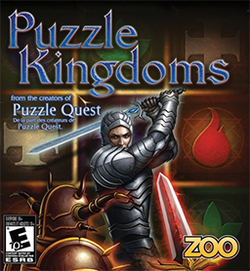
 Puzzle Kingdoms on DS
 Puzzle de Harvest Moon on DS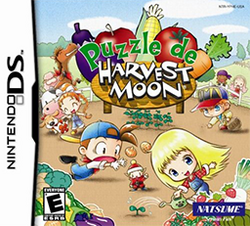










 Another SquareThought Site