

 Aug 2007
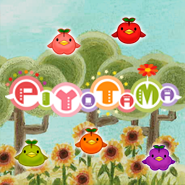

Piyotama lands on PS3 like a cheerful, pastel-toned brain-teaser wearing tiny bird pajamas. On the surface it is a tidy match-four puzzle game with cutesy egglings called Piyos and a clear objective: manipulate colored eggs, align four or more, and hatch them before the nest overflows. That description understates the mechanical neatness of the design. Underneath the kawaii shell there is a surprisingly engineered system of input mappings, state transitions and temporal windows (the "hatch" timer) that reward precise timing and a firm grasp of how the game's queues and gravity mechanics interact. This review unpeels Piyotama's technical layers: controls and input affordances, match detection and gap-filling logic, Sixaxis motion integration, UI feedback, and how those systems combine to create emergent combo play and competitive skirmishes.
Piyotama reduces the puzzle space to two tightly specified operations: extract a contiguous trio of eggs from the nest and reinsert them, and tilt/shake the entire playfield via the Sixaxis. The extraction mechanism is implemented by sliding an entire row to push three eggs outside the nest; once outside, that three-egg queue can be cycled left or right with the "X" and "O" buttons respectively. Selecting which row to pull from is done with the up/down d-pad, and horizontal d-pad input slides the current row in or out. This control vocabulary is small but well chosen. From a technical standpoint the game exposes the internal order of the three-tile buffer (the eggs outside the nest) as a manipulable queue, which means spatial planning becomes queue management: you are not swapping single tiles, you are rotating and re-inserting a 3-tile vector into a mutable grid. Match detection follows a conventional tile-matcher rule: four or more contiguous eggs of the same color in a straight line trigger the hatch process. The interesting part is the hatch timer, a short temporal window that turns the usual destroy-on-match mechanic into a reactive combo opportunity. When a hatch begins the engine enters a temporary state where additional matches formed during this window will be scored into a combo before any hatching resolution occurs. Technically this is a multi-stage transaction: (1) detect matches and flag involved eggs, (2) start hatch timer, (3) allow player actions to modify the grid while flags persist, (4) upon timer expiry or forced trigger (via Sixaxis shake) resolve flagged eggs, spawn Piyos, and apply gravity/fall-fill to the remaining eggs. Because flagged eggs still count toward combos even if displaced before resolution, the game rewards predictive manipulation-players can set up multi-row cascades that are only scored if they maintain the timing relationship with the hatch window. Gravity and gap-filling are deterministic: once flagged eggs hatch and disappear they leave vacancies that are filled by eggs above falling straight down, with no lateral shifting unless the player explicitly manipulates rows. The Sixaxis adds two distinct mechanical interactions: shaking side-to-side makes eggs fall into gaps earlier than natural gravity would (a forced settle), and shaking up-and-down causes a jitter or jump that offers limited reordering beyond the base three-at-a-time manipulation. There's also an immediate hatch trigger tied to shaking once a hatch is underway. From a systems perspective the motion input acts as a global override-an asynchronous event that bypasses the normal input pipeline and forces specific physics updates and state transitions, which is clever because it gives players a one-button-equivalent emergency tool without adding control complexity. Modes and networking integrate cleanly with the mechanical core. Timed mode ("Piyo Coop") imposes a time constraint and unlocks leaderboard uploads over PlayStation Network, which layers a latency-insensitive competitive element (score racing). The untimed "Free-Range" mode is a sandbox for maximizing combo finesse without a ticking clock. Local two-player "Battle Mode" leverages the same core mechanics in a head-to-head format; the document indicates local competitive play only, which implies the multiplayer code likely runs as a shared-state split-screen or alternately as competitive buffers rather than online netplay synchronization. For a downloadable PS3 title that keeps complexity low, local multiplayer is the pragmatic choice: it avoids the need for rollback or latency compensation systems and lets the game concentrate resources on input responsiveness and deterministic physics. The game's progression loop is straightforward: scoring hatches and combos increases points; points trigger level-ups which presumably increase pressure in the nest (more eggs, faster spawn rates, or similar escalation). The design here relies on a feedback loop between scoring and board density. Strategically, optimal play involves juggling the three-egg buffer, manipulating rows to create simultaneous multi-line matches, and deploying the Sixaxis at critical moments to force hatch resolution or to clear dangerous columns when the nest is close to overflowing. The result is mechanically deep without being overburdened: players can learn low-level techniques-queue rotations, hatch-timing, forced-settles-and graduate to higher-level strategies like bait-and-trigger cascades and risk-managed row pushes.
Piyotama's visual stack is intentionally minimalistic and communicative. The aesthetic choice-bubbly, brightly colored eggs and small Piyo sprites-serves gameplay clarity, which is the correct priority for a puzzle game. Each playable element is distinct by hue and silhouette so the match detection system never runs into ambiguous input from the player. Iconography for the three-egg buffer is straightforward: eggs outside the nest are visually offset and rendered with a subtle depth cue to indicate they are currently in the manipulation state. The game offers four seasonal skin packs that alter the graphical theme: beach, Halloween, Christmas and Valentine's. These are cosmetic overlays that do not change hitboxes or the core visual language, but they are useful from a usability standpoint because they provide contrast adjustments for different lighting conditions or player preferences. From a technical UI design perspective, offering skin packs as downloadable content is a low-cost way to extend longevity and keep player attention without altering game balance. Animation is functional rather than flashy: eggs hatch into Piyos that fly offscreen to collect on either side, giving a satisfying visual reward loop. The hatch timer needs to be legible and it is: the combination of a clear timer cue and the flagged visual state for matched eggs ensures the player always knows whether the game is in the hatch window or normal state. This makes the timing mechanic feel fair-no surprises, just tight windows you can learn to exploit. Particle effects and jiggle physics from Sixaxis interactions are likely lightweight, keeping the focus on frame-coherent responsiveness rather than visual spectacle. For a downloadable PS3 title, this prioritization of clarity and responsiveness over raw GPU drama is the smart engineering tradeoff.
Piyotama is a compact exercise in mechanical purity. Its core systems-the three-egg buffer, linear row extraction/reinsertion, match detection with a hatch-window state, deterministic gravity and Sixaxis as a global override-compose into a puzzle experience that rewards learning compact, repeatable techniques. The technical choices favor determinism and player agency: matches are flagged and resolved in discrete transactions, motion inputs are single-purpose overrides, and leaderboards are online for timed runs while multiplayer remains local to avoid networking complexity. That engineering philosophy yields a game with low friction and surprisingly deep emergent play. If you want a cerebral, timing-heavy puzzler with a charming coat of paint and solid input design, Piyotama is worth the download. It isn't trying to be Tetris with fireworks; it's a careful, well-implemented ruleset that gives you enough knobs to master without burying you in complexity. For players who appreciate clean feedback loops, deterministic interactions and the occasional frantic Sixaxis-slap to save the nest, Piyotama delivers a satisfying hatch-and-repeat loop. Score: 7.5/10-charm, clarity and mechanical elegance, albeit with a scope commensurate with a PSN downloadable of its era.
 Professor Layton and the Last Specter on DS
 Puzzle Kingdoms on DS
 Puzzle de Harvest Moon on DS
 Astro's Playroom on PS5
 Everybody's Golf on PS4
 Gravity Rush 2 on PS4
 Echochrome II on PS3
 Echochrome on PS3










 Another SquareThought Site