

 Apr 2011
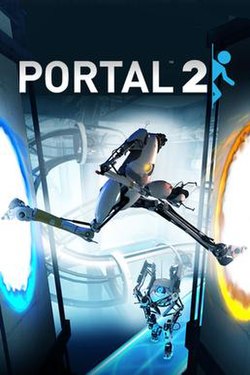

There are sequels and then there are sequels that remind you why the first game mattered in the first place. Portal 2 sits squarely in the latter category. Borne of a studio whose name is synonymous with careful design, Valve's follow-up to its 2007 triumph expands the original's deceptively simple conceit - a gun that makes two linked doorways - into an anatomy of puzzles, timing, and mordant humour. This is not a mere content update; it is a careful reweaving of mechanics, narrative and tone that results in a fuller, richer experience. On PlayStation 3 the game arrives with features Valve engineered to bridge platform divides: Steam-integrated features, online co-operative play with other platforms and PlayStation Network trophies alongside Steam achievements. If you remember the first Portal as a clever exercise in restraint, expect Portal 2 to feel like the same brainy engine with a proper chassis and a louder, more human voice.
Portal 2 keeps the first game's elegant core intact: you fire two portals and use conservation of momentum, clever angles and spatial trickery to navigate test chambers. From the moment Chell opens her eyes in a dusty motel-like stasis room, the game sets out to teach and then to surprise. Valve's design mantra is evident in every puzzle: new elements are introduced in a safe, checklisted manner before being recombined into lateral-thinking challenges. The titular Aperture Science Handheld Portal Device remains your primary instrument, but the toolbox has expanded. Lasers (Thermal Discouragement Beams) and their redirection via prismatic cubes demand line-of-sight and forethought; Aerial Faith Plates fling you through space; Excursion Funnels act as tractor beams that can be transmitted through portals; and Hard Light Bridges provide walkways that can likewise be bent through portals. Those additions could have cluttered the formula; instead they increase the vocabulary of solutions without abandoning the clarity of the language. Of the new toys, the gels are perhaps the bravest. Borrowed from the indie experiment Tag: The Power of Paint, metallic-sheen gels that flow across surfaces alter properties in tactile ways: orange Propulsion Gel grants speed, blue Repulsion Gel turns floors into trampolines, and white Conversion Gel allows portals to be placed on previously inert surfaces. Valve renders these gels with fluid-dynamics routines and integrates them into puzzles so that they augment player agency rather than override it. They can be transported through portals and washed away by water, which makes for satisfying physical puzzles where the environment itself is malleable. The single-player campaign unfolds in acts that alternate between tightly choreographed test chambers and sprawling, exploratory sequences in pre-GLaDOS Aperture. Valve deliberately creates a middle act set within an older, less-structured industrial facility to evoke a sense of history and scale. These sections are the game's most daring: they strip back the formalized classroom of the test chamber and demand that players improvise, argue with their intuition and occasionally consult the map of the complex. Where some players might languish, others will revel in discovery. A new co-operative campaign is not tacked on as an afterthought; it is a fully realised, separate experience. Two players assume the roles of ATLAS and P-Body, robots built for testing. Each has its own portal gun, and puzzles are created expressly to require coordination - simultaneous actions, portal chaining between both players' placements, and timed manoeuvres that reward trust and communication. On PS3 this mode supports split-screen and cross-platform online play (with Windows and OS X), and includes tools like 'ping' markers, synchronized countdowns and non-verbal gestures to foster cooperation. Valve's designers recognised that co-op puzzles are a different animal: they are, by necessity, harder and more social, and the cooperative campaign embraces that. The game also takes pains with pacing. Small 'experiences' - scripted moments that advance the plot and develop characters - are interleaved with puzzles so the player is not fatigued by continuous problem solving. Voice acting and a larger script supply character-driven beats. GLaDOS returns, now with deeper internal conflict after being briefly replaced by Wheatley, a comic personality core whose voice actor brings manic energy to the role. Cave Johnson's recorded monologues (voiced by J.K. Simmons) are a masterclass in environmental backstory: they fill in Aperture's decades, provide dark context and offer moments of genuine, old-fashioned rhetorical flourish. For those who enjoy developer commentary, Valve includes unlockable nodes containing behind-the-scenes notes, which speak to the game's deliberate, iterative construction. There are small missteps. Some of the more free-form segments can confuse players used to the strict boundaries of test chambers, and the gels - while inventive - sometimes feel underused compared to the rest of the toolkit. Still, the balance between challenge and fairness is one of Portal 2's finest achievements: puzzles look ornate and forbidding but tend to yield to a clever, concise solution, delivering that rewarding sensation of discovery that designers chase but rarely capture so consistently.
Portal 2 uses Valve's Source engine to full effect. Where the first game traded detail for a clinical aesthetic, the sequel layers higher-resolution textures, improved animations and environmental decay to communicate a facility that has aged and been repurposed. Test chambers from the original Portal return, but they wear the patina of time: grime, discoloured tiles and invasive plant growth all serve world-building rather than mere ornament. The sections set in Aperture's twentieth-century facilities borrow architectural cues from real industrial sites-there is a tangible sense of size and machinery that contrasts with the pristine geometry of the testing rooms. Character animation deserves special mention. The personality cores, particularly Wheatley, are small on screen but rendered with expressiveness that reads through tone, tilt and subtle motion. Voice performances are matched by these animations so that the cores feel like distinct personalities, not just lines of script. The robots of the co-operative campaign are deliberately designed as double acts; small gestures and the ability to hold hands underscore their personalities and emphasise teamwork rather than competition. On the PlayStation 3, Valve integrated a subset of Steamworks features, which allowed them to deliver automatic updates and community features that keep the game fresh. Visually, the PS3 rendition is faithful to the PC versions: textures, lighting and effects are preserved carefully, and the platform differences are largely invisible during play. Load times between certain levels can be noticed; they are longer than earlier Valve titles, but rarely enough to break immersion. In short, Portal 2 looks the part: it is neither ostentatiously photoreal nor quaintly pixelated - it is thoughtfully designed, and that always reads well.
Portal 2 is the rare sequel that does not merely enlarge its predecessor, but refines and deepens it. Valve has taken a simple, brilliant mechanic and given it room to breathe: new tools that expand ways of thinking, a co-operative campaign that demands social intelligence as much as spatial reasoning, and narrative stakes that make you care about the machinery and the people who built it. The writing and voice work lift the game into genuine narrative comedy and occasional poignancy; the design education Valve built into the pacing makes even the fiendish moments feel like lessons you were meant to learn. On PlayStation 3, Portal 2 is every bit the polished product it is elsewhere. Steam integration, cross-platform play and the inclusion of the co-op experience on the console make the PS3 release a sensible and welcome home for the title. The few quibbles - a sometimes bewildering middle act and the gels' occasionally marginal role - are small compared with the game's consistent ingenuity. For those who prize games that think as cleverly as they play, Portal 2 is essential: it is smart, humane, and designed with the steady hand of people who understand how to make players feel clever. In an industry of sequels that often compromise, Portal 2 is a reminder that a sequel can still be an improvement - not just bigger, but better. Score: 9.5/10.
 Bridge Constructor Portal on PS4
 Portal Knights on PS4
 Puzzle by Nikoli 4: on PS4
 Professor Layton and the Last Specter on DS
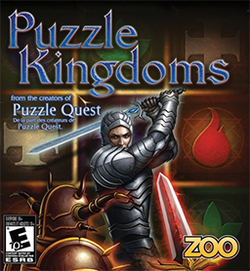
 Puzzle Kingdoms on DS
 Puzzle de Harvest Moon on DS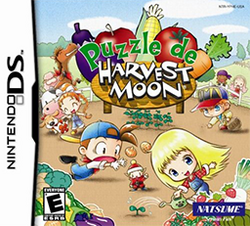










 Another SquareThought Site