

 Mar 2013
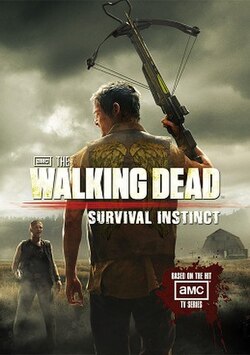

Duty calls in the apocalypse, but so does common sense - which, regrettably, did not arrive on time for The Walking Dead: Survival Instinct. This tie-in, marketed with the full weight of AMC's television brand and the promise of playing as Daryl Dixon, arrives as a first-person shooter that wants to be a survival sim and an odyssey of brotherhood, but spends most of its runtime tripping over its own shoelaces. Terminal Reality handed Activision a package that wears the name of a great property and the faces of its stars, Norman Reedus and Michael Rooker, and asked the player to be impressed. The player, after about an hour, asks only that the game be less embarrassed for itself. This is not the cinematic, choice-driven Walking Dead many hoped for. Instead, the product is an austere, sometimes punishing exercise in resource accounting - fuel, food, ammo - stitched to a linear prequel narrative that sends Daryl and a handful of survivors down Georgia's roads toward Atlanta. The idea of conveying desperation via necessity is sound. The execution is not. Like an old magazine demo tape that promised much and delivered static, Survival Instinct has concepts worth praising but no patience for polish.
Survival Instinct puts you in Daryl Dixon's boots from a first-person perspective and splits its DNA between stealth, scavenging and occasional gunplay. You will stalk walkers and sneak past them; you will scavenge convenience stores and small towns; you will change cars and decide whether to take the fuel-saving highway that breaks down often or the long rural roads where supplies hide like unwanted relatives. There is strategy in the resource meter - watch your fuel and your party's food, choose who to keep as you pick up survivors - and that is the game's most defensible ambition. It asks you to be pragmatic rather than cinematic: pick the people who will best extend your odds of survival, manage flares and jerry cans, and barter away pride for canned goods. Problems surface when the systems are expected to carry narratives they were never built to support. Side missions and scavenging loop through the same handful of environments until the repetition becomes a design rub that is hard to ignore. Level variety is thin, and the pacing often stalls while you hunt for ammo and batteries in depressingly familiar rooms. Combat is serviceable at best; Daryl's crossbow and the occasional shotgun work, but enemy behavior can be stilted and inconsistent. The balance between stealth and confrontation feels half-remembered - you are rewarded for careful play sometime, and penalized for odd collisions with level geometry another. Vehicles are more than window dressing, but their role - switching between truck and SUV and monitoring breakdowns - is hamstrung by clunky controls and a lack of satisfying mechanical feedback. Where Survival Instinct tries to be clever, it sometimes feels stingy. The game makes you choose who to save in moments that should sting, yet the characters around Daryl remain thin sketches. These choices have emotional weight on paper, but the script and pacing rarely let them land. This is a game of systems without the connective tissue needed to turn those systems into a living, breathing story. In the end, scavenging becomes a chore and decisions become checkboxes rather than harrowing dilemmas.
If this were 1998, Survival Instinct's presentation might have qualified as a competent low-budget title; in 2013 it reads as a mismatch between ambition and technical follow-through. The Infernal Engine powers blocky environments, bland textures and character models that lack the subtlety required to sell the small emotional beats the narrative expects. Walkers shamble with the occasional convincing gore, yet much of the world looks flat and underworked - the towns are drab backdrops, interiors repeat like cheap theatre sets, and lighting is used more to hide faults than to highlight mood. Animation quality is inconsistent: Daryl's movements can feel weighty in one cutscene and rubbery in the next. Voice talent is a bright spot - having Norman Reedus and Michael Rooker reprise Daryl and Merle lends the game authenticity and aural gravitas - but even good acting cannot entirely rescue wooden facial animation and the low fidelity of many character models. Critics called the graphics
The Walking Dead: Survival Instinct is a cautionary tale in licensed entertainment: a decent premise and strong source material do not inoculate a game from poor design choices and rushed production. Terminal Reality attempted to build a stripped-down survival game that emphasized logistics and dread, but the final product feels rushed, repetitive and technically wanting. Fans who wanted to feel the weight of scavenging Georgia's backroads will find a skeletal imitation of that tension, while players hoping for the rich character drama seen in other Walking Dead adaptations will feel shortchanged. There is a kernel of honor in Survival Instinct's design - resource scarcity, vehicle management and the odd moral choice - and there are flashes of atmosphere when the lights, the lines and the audio align. Most of the time, however, the game is an exercise in missed opportunities. For those who value Daryl's voice and a few hours of scavenging, it can provide cheap thrills; for anyone expecting a fully formed Walking Dead experience, this is not the helicopter you hoped would arrive. The label on the box promised a prequel road trip through the apocalypse. The reality is a rough, undercooked drive that stalls in a gravel lot and asks you to leave the engine running while it figures out what to do next. Score: 3/10 - an idea with merit, a licence with weight, and a game that ultimately forgets the fundamentals of execution.
 Cube Life: Island Survival HD on Switch
 Survival Kids on Switch 2
 Warhammer 40,000: Boltgun 2 on Xbox Series X/S
 PixelJunk Shooter 2 on PS3
 Primal Carnage: Extinction on PS4
 Tower of Guns on PS3
 Def Jam Rapstar on PS3
 BloodRayne 2: ReVamped on Switch
 BloodRayne: ReVamped on Switch
 4x4 EVO on PS2
 Æon Flux on PS2










 Another SquareThought Site