

 Nov 2006
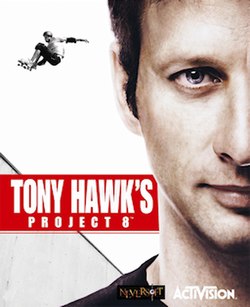

Tony Hawk's Project 8 arrives with a title that sounds like a top-secret government program, but it's actually a talent search where Tony Hawk, part skateboard god and part talent show judge, assembles eight of the best skaters from your very own town. On the PlayStation 3 this felt like a next-gen attempt to give the Tony Hawk formula a little narrative backbone: a player character who begins ranked 200th and must claw, grind, and 'Nail the Trick' their way up into Project 8. What follows is a game that stages an oddly operatic coming-of-age for not just the player avatar but the small ensemble of skateboarders around them. The mechanics-especially the close-up, OCD-friendly 'Nail the Trick' mode-double as character tools: they let you shape how this protagonist grows, fails, and occasionally breaks bones for cold, hard cash (or 'Stokens,' as the game calls them). It's a sports game that politely asks you to care about arcs, even if most of those arcs are expressed through flip tricks and hospital bills.
If Project 8 were a TV drama, its pilot episode would be a montage: Tony Hawk sees undiscovered talent, announces his new team, and the player wakes up figuratively (and sometimes literally, if you bail a lot) in 200th place. The player's arc is simple and satisfying: the ranking system turns the open-world and challenge structure into a personal ladder. Each challenge you complete, each combo you land, nudges the protagonist higher in the municipal pecking order. By design this is a classic underdog story-one part training montage, one part humble brag reel-so the gameplay decisions double as moments of character development. When you grind a rail mid-boardwalk and trigger a crowd 'stoke,' those spectators are not just background decoration; they are your potential fans. The more you stoke them, the more Stokens you accrue, and in the game's logic, popularity buys gear, and gear helps you perform bigger, louder arcs. The cast-45 skaters, including unlockables-reads like an ensemble cast with their own mo-cap driven temperaments. Neversoft's choice to use unique motion-capture for each character is more than a technical boast: it's a storytelling device. Different animation styles make each skater seem like a person with a backstory and a preferred way of expressing themselves on a board-some skaters are tight and economical, others loose and theatrical. While the game never publishes novella-length bios for every unlockable, the distinct motion styles allow players to infer personalities. Choosing to play as an aggressive, flailing skater versus a smooth, clinical one is tantamount to choosing a role in a roster of high school archetypes: the hothead, the virtuoso, the street poet who ollies over picnic tables like it's a declaration. 'Nail the Trick' is the game's emotional close-up. Technically, it zooms the camera toward the board and hands control of each foot to the analog sticks. Dramatically, it's the equivalent of a character monologue-those quiet, sweaty seconds in the air where everything can go right or disasterously wrong. Mastering it feels like your protagonist learning to center themselves under pressure. Conversely, the new ability to control the skater during bails and thereby rack up a colossal 'Hospital bill' turns failure into a darkly comic plot beat. You can intentionally bail to score broken bones-Project 8 treats physical catastrophe with a wink, awarding bonus money for mangled limbs. This turns the morality of risk into a gameplay choice: do you perform cleanly and win friends, or do you spectacularly fail to win money (and maybe a few concerned onlookers)? The seventh-generation versions, which includes the PS3 build, introduced a new engine and an openly connected world. Unlike the loading-tunnel approach of American Wasteland, Project 8's neighborhoods are visibly linked; you skate from plaza to park and feel the town as a continuous stage. This architectural continuity supports the narrative: your climb through the ranks is literally traversed through the same urban geography. There are hidden sections and skate parks to discover, each secret acting like a subplot-a side-quest that develops the player's local celebrity. The PS3 version also tries to animate the community: knocking over pedestrians can spark a chase if you linger, acting like a chorus of townsfolk suddenly offended by your audacity. That little feature adds stakes to your misbehavior; the city is reactive, and that reactivity helps the player feel like part of a living story. If the game has an Achilles heel in its storytelling, it's omission rather than contradiction. Several earlier franchise features were removed, and the lack of online functionality across PlayStation versions felt like cutting away scenes where the supporting cast could otherwise grow. The Project 8 narrative dreams of community and notoriety, but then refuses to let players broadcast those triumphs to real friends online. That absence turned the game's ensemble drama inward and sometimes lonely-like staging a town parade and forbidding guests. Critically, the PS3's ambitions were also tempered by practical issues: reviewers noted unstable frame rates that undercut dramatic moments. When a trick's cinematic close-up is fighting to maintain 30fps, the emotional timing suffers. Even so, the core progression loop-rank, challenge, reward, upgrade-remains emotionally understandable and mechanically rewarding.
Project 8 on PS3 pushed a visual upgrade compared to its sixth-gen cousins. The new engine lets character animations breathe; the mo-cap variety means the skaters don't look like carbon copies. That variety reads as personality cues-subtle shoulder quirks, different pop styles, the way each skater's hair reacts to wind-all small details that make the ensemble feel more lived-in. The open world is rendered with the kind of photoreal grit you'd expect from mid-2000s next-gen work: sun-bleached plazas, shiny rails, and the occasional dramatic lens flare to remind you you're still in a game and not a thrift-store skate doc. 'Nail the Trick' also benefits visually. The camera's tight focus on the board and feet affords choreography: you see the board rotate, catch, and respond to your thumbs with clarity. For players who like to tinker with trick physics like an obsessive director, the visual feedback is enormous and satisfying. On the flip side, the PS3 frame rate issues sometimes undercut the glossy veneer. When the framerate stutters mid-combo, it feels like a theater projection hiccup during the climax of a film. Reviewers mentioned this, and from a character-arc perspective it's like watching the protagonist trip right before hitting the big speech-intended tension becomes frustrating interruption. Overall, the PS3 visuals do a lot of narrative heavy lifting. Characters look distinct, the townscape feels continuous, and the close-up modes allow for micro-expressions of style. Technical hiccups keep the experience from achieving perfection, but the game largely succeeds at using visuals to tell a skateable small-town soap opera.
Tony Hawk's Project 8 is a curious hybrid: half sports sim, half character study in flip tricks. As a tale of an underdog rising from 200th to contender, the story is not deep in dialogue, but it's surprisingly effective because the game uses gameplay systems as narrative shorthand. Ranking up feels like personal growth; 'Nail the Trick' is your protagonist's quiet focus; bails and the hospital bill are the tragicomic setbacks every hero needs to be interesting. The ensemble of 45 skaters-brought to life through distinct mocap-functions as a community cast that the player both competes with and eventually joins. Unfortunately, the PS3 release carries the twin burdens of missing online features and periodic frame-rate instability that sometimes puncture the dramatic beats. Critics noticed, yet the game's new engine, the ambitious open world, and its innovations (especially the 'Nail the Trick' system) earned it mostly positive reviews and even the Academy of Interactive Arts & Sciences' Sports Game of the Year nod. If you come in primarily for tricks and scoring, Project 8 delivers a robust toolkit that rewards experimentation. If you come in for character and ensemble drama, you'll be surprised how well the game choreographs personality through animation and progression despite a scarcity of spoken lines. For the PS3 player who wants to feel like the protagonist of a gritty, metal-scented coming-of-age film-one where street cred is a currency and the boom of applause is measured in Stokens-Project 8 is a worthy, if imperfect, stage. It doesn't reinvent the skateboarding genre, but it does give it a heart and a cast big enough to merit a curtain call.
 Time Crisis: Project Titan on PlayStation
 Project Awakening on PS4
 Project Cars on PS4
 Accolade Sports Collection on Xbox Series X/S
 Deca Sports DS on DS
 Alan Hansen's Sports Challenge on PS2
 EA Sports MMA on PS3
 Band Hero on PS3
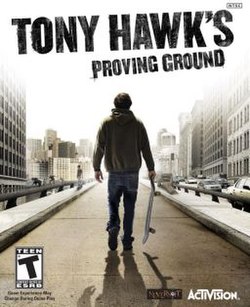
 Tony Hawk's Proving Ground on PS3
 Apocalypse on PlayStation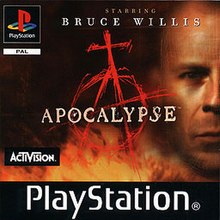










 Another SquareThought Site