

 Aug 2025
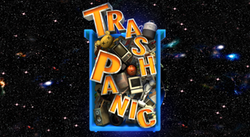

If you have ever stared at a junk drawer and wondered whether a stapler and a bowling ball could make peace inside a trash can, Trash Panic is the therapy session you didn't know you needed. Developed by Japan Studio and dropped onto the PlayStation Network in 2009, this puzzle game turns waste management into a frantic Tetris-adjacent experiment in compression, destruction and slightly ethical decision-making. It's cute, a little gross, and oddly zen - like Marie Kondo with a wrecking ball. Trash Panic's central hook is simple and gloriously ludicrous: a conveyor belt feeds random garbage into a central trash can and your job is to keep it in, reduce it, or otherwise manipulate it so three pieces of undamaged rubbish don't fall out and end your run. The premise is charmingly silly on paper and, in practice, it turns into a surprisingly deep puzzle game wrapped in the sleeve of a municipal sanitation PSA gone rogue.
Gameplay boils down to a delightful mix of logic, improvisation, and the occasional panic-fueled button mash. Garbage items arrive in a steady stream - pencils and erasers at first, eventually graduating to entire buildings, meteors and things that make you question where this game's recycling budget came from. The trash can itself grows with you, eventually sitting on top of an entire planet when the stakes are cosmic enough. The conveyor never stops, and neither does your inner voice yelling, "DON'T LET THE TELEVISION FALL OUT!" Mechanically, Trash Panic encourages you to interact with items in a few satisfying ways. Some pieces can be burned if they're flammable, certain biodegradable items will decompose if placed near compatible substances, and heavy objects can smash lighter or fragile ones to create more compact matter. This leads to an emergent chemistry of trash: place the right two things next to each other and they'll do half your job for you. Place the wrong two things together and you're rewarded with penalty trash - those annoying unbreakable lumps that magically appear and make your life harder. The game also injects personality with special pieces. Mottainai items (Japanese for a sense of regret at waste) are valuables mistakenly tossed out - like jewelry - and must be rescued, not compacted. If you destroy one, your Ego score takes a hit and, yes, you get penalty trash. Then there are the occasional boss items in Main Dish difficulty: a large junk hunk that must be compacted within ten seconds or the game retaliates by dumping impossible-to-break penalty trash on you. It's the video game version of "do the chores now or the house gets angry." Scoring is a neat twist that turns simple survival into a moral tug-of-war. You have two meters: Eco and Ego. If you compost and smash responsibly, your Eco rating climbs - that apparently unlocks extras and keeps your conscience clean. If you prefer to be fast and scorched-earth, burning things raises your Ego. The score doesn't block progress - so you won't be punished for trashy choices in a mechanical sense - but higher Eco ratings help unlock extra levels and modes. It's an amusing attempt to gamify moral choices without being preachy: you're as rewarded for being tidy as you are tempted to be gloriously reckless. Modes add variety. Main mode has six stages with three difficulty settings-Sweets (easy), Main Dish (medium), and Hellish (hard, which you unlock). Unlimited mode is your endurance run: compact trash until you finally, gloriously, fail. Versus mode offers split-screen two-player matches, which are perfect for the friend you secretly dislike; nothing says friendship-testing like jamming an opponent with penalty trash. Mission mode gives you specific waste-management tasks, which feel like tiny logic puzzles inside the larger chaos. Online features round things out with leaderboards, trophies, and a neat option to upload up to 10 minutes of gameplay to YouTube, should you want to immortalize your greatest compacting failure or triumph. Trash Panic's learning curve is friendly: early levels teach decomposition and smashing basics, later ones layer in boss items, mottainai and the pressure of filling a can that now resides on a miniature Earth. The strategy isn't just placement, it's timing, prioritization, and the occasional gamble. Do you risk smashing a fragile item under a bowling ball to save space, or do you burn a whole stack and watch your Eco bar suffer for speed? Both work. Both are fun. Both might make you feel slightly guilty in a way only a game about trash can accomplish.
Graphically, Trash Panic is less about photorealism and more about clarity and personality. The visuals serve the mechanics well: items are instantly readable - a television looks like a TV, a building looks like an inconveniently bulky building - which matters when decisions must be made in a few frantic seconds. The trash animates with comedic flair; things crumple, burn and explode in a manner that's satisfying without becoming grotesque. When the garbage grows to cosmic proportions and your can lands on the planet, there's a pleasing scale shift that makes the absurdity of the premise click. Because the game leans into a playful aesthetic, it never pretends to be a next-gen graphical showcase (it's from 2009, after all), but that's fine when the core joy comes from strategic chaos rather than texture detail. UI elements like the Ego and Eco meters, special-item indicators and on-screen warnings are clear and unobtrusive, which keeps the focus where it should be: on preventing the trash from staging a mass breakout. The split-screen in Versus mode remains readable and the presentation keeps matches snappy. Trophies and online leaderboards are integrated cleanly for those who enjoy the carrots dangled on PSN.
Trash Panic is a charmingly weird little puzzle game that turns the grimy concept of trash disposal into a tight, quirky and occasionally cutthroat experience. It excels at emergent problem solving: the joy comes from discovering combos, improvising under pressure, and watching the pile shrink in ways that feel earned. The Eco/Ego scoring adds an amusing layer of moral play without bogging things down, and the variety of modes - especially the split-screen bouts - gives it replay value beyond the initial novelty. It isn't flawless. The premise is niche, and some players might find the repetition of compacting endless streams of filth to be less "Zen recycling" and more "watching mold grow in fast-forward." The graphics are functional rather than flashy, and certain advanced mechanics only fully reveal themselves after a few play sessions. Still, for puzzle fans who enjoy games with personality and a little chaos, Trash Panic hits the sweet spot between mindless and mindful. Final verdict: satisfying, silly, and smarter than a game about stuffing planets with rubbish has any right to be. If you like your puzzle games with a side of darkly comic environmentalism and occasional multiplayer salt, give Trash Panic a spin. It's a solid 7.5 out of 10 - entertaining, inventive, and gloriously odd, even if it won't replace your favorite marathon puzzler. Keep the mottainai safe, and for the love of all that is recyclable, don't let three pristine items tumble out. Your in-game city relies on you.
 City Shrouded in Shadow on PS4
 Full Metal Panic! Fight! Who Dares Wins on PS4
 Puzzle by Nikoli 4: on PS4
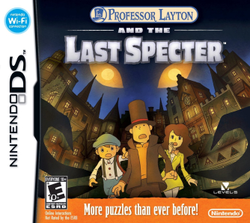
 Professor Layton and the Last Specter on DS
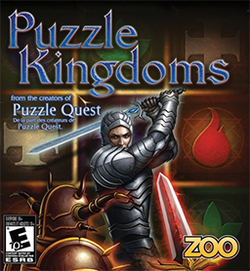
 Puzzle Kingdoms on DS
 Puzzle de Harvest Moon on DS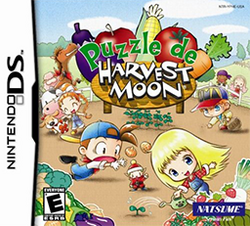
 Astro's Playroom on PS5
 Everybody's Golf on PS4
 Gravity Rush 2 on PS4
 Echochrome II on PS3
 Echochrome on PS3










 Another SquareThought Site