

 Sep 2025


WRC: FIA World Rally Championship is Milestone's 2010 take on officially licensed WRC action - the first game to carry the official WRC licence since 2005's Rally Evolved. On PS3 it ships with the 2010 season roster, three support classes, 13 rallies and a chunk of stage real estate credited at 550 km split across 78 special stages. That raw scope is the game's headline stat: it promises breadth and authenticity. The implementation, however, is where things get interesting for someone who cares about polygons, frame budgets and network middlewares that were already starting to creak in 2010.
From a mechanical perspective the game leans heavily on the license: every official car, driver and co-driver from the 2010 season is present, alongside the Production WRC, Super 2000 WRC and Junior WRC classes. That means you get a fairly realistic roster and class differentiation on paper, which is useful to a technically minded player who likes to compare front- vs. four-wheel drive behavior or the relative weight and power envelopes of different classes. The stage list - 13 rallies, 78 special stages - gives a real sense of content density. Simple math: 550 km across 78 stages averages out to roughly 7.05 km per special stage, which is a substantial average length for rally segments in this era and affects how the game handles level streaming, vegetation culling and audio occlusion for long runs. Technically, Milestone had to balance fidelity against the PS3's relatively fixed performance budget. The team reports car models of around 50,000 polygons each. For 2010 console hardware that is a respectable per-car tessellation, and it pays off in silhouette and cockpit detail when camera angles are close. However, high per-car polycounts impose constraints elsewhere: environmental LODs, shadow map resolution, particle counts for dust and mud, and texture pool sizes all compete for the same memory and fill-rate resources on the RSX GPU and Cell processor combination. Those trade-offs are visible in practice - the cars themselves are detailed, but environmental density and texture sharpness vary between stages as the engine juggles resources. Multiplayer and networking are part of the experience, but with caveats. The game supports multiplayer on consoles (local and online) and on PC it abandoned LAN play, instead offering local party mode and online multiplayer via GameSpy. That reliance on a third-party middleware for online services was standard in the era but left players vulnerable to later lifecycle issues when third-party services shut down. For PS3 players in 2010 there was the comfort of Sony's unified PSN layer, but the cross-platform reality was fragmented and reviewers at the time noted the netcode and matchmaking experience as uneven across platforms. On the gameplay fidelity front, critics' scores clustered in the 6-7/10 range. That 'mixed or average' reception tends to reflect a pattern: strong fundamentals and a licensed breadth of content, but holes in polish and edge-case behaviour. For the technically inclined, it's clear this is a title where the architecture favored scope (lots of stages, official cars, DLC Group B pack) and model fidelity over some higher-end system-level refinements like advanced physics simulation, adaptive streaming, or fully robust multiplayer persistence. The downloadable Group B car pack is a nice technical and nostalgic add-on - Group B machines bring different handling envelopes - but it's an add-on rather than part of the core balance of the product.
On PS3 the visual presentation is a wash of competent asset work plus the inevitable platform-era compromises. The headline figure - ~50k polygons per car - is worth unpacking. That budget allows for a convincing exterior and respectable cockpit geometry, which helps in replays and close-up crashes. Rigging and normal mapping can hide a lot of polynomial thrift, so the car models read significantly better in motion than a raw triangle count might suggest. Environmental fidelity is where the engine has to economize. With long average stage lengths (7 km), streaming becomes a meaningful technical problem: draw distance tuning, progressive texture LODs and vegetation density must be carefully tuned to avoid frame drops. Milestone's choices result in decent mid-range detail with occasional texture pop and simplified distant geometry. Shadowing quality and particle effects (spray, dust kicks) are serviceable but not cutting-edge - they convey the important visual cues (grip loss, surface change) without frying the GPU. Color grading and lighting are functional; day/night or weather transitions exist as part of the rally formula, but the documentation doesn't indicate any advanced physically based rendering pipeline, so you shouldn't expect photoreal lighting or global illumination sophistication. Performance-wise, reviewers at the time were generally accepting: the PS3 version landed around the same critic scores as Xbox 360 (Metacritic ~68/100 for PS3). That similarity suggests parity rather than a native-optimized PS3 edge. Texture resolution, LODs and shadow resolution trade-offs are consistent with a multiplatform target: conservative choices to ensure stable frame rates across different hardware. The upshot is a product that looks good in stills and close-ins (thanks to car polycounts and shader work) but sometimes reveals its budget when you scan broad vistas at speed.
WRC: FIA World Rally Championship on PS3 is best understood as a technically earnest, scope-first rally package. Milestone delivered the licensed content fans wanted - full 2010 rosters, three support classes, 13 rallies and a hefty 550 km of stages - and backed it with detailed car models that read well close-up. The technical trade-offs are visible: a strong per-car asset budget but conservative environmental detail and system-level polishing. Multiplayer dependences (GameSpy on PC and platform-specific matchmaking) and the lack of certain networking features on PC illustrate era-specific middleware risks, though PS3 players were less affected thanks to PSN. Critics' average scores around the high 60s reflect that mix: admirable in ambition and roster realism, but middling where execution and polish matter. If you value authentic car models, a large roster, and long special stages, the game will reward your attention. If you are chasing top-tier physics, next-level environmental realism, or flawless online systems, you'll notice the compromises. For a technically minded 18-year-old who enjoys inspecting polycounts and deducing engine trade-offs, WRC 2010 is an interesting case study: it shows how a developer prioritizes scope and licensing muscle and then makes practical, visible compromises to ship on console hardware and within the limitations of 2010's online ecosystem. Score-wise, it's a solid 6.8/10 - respectable, occasionally impressive, but not the technical benchmark the WRC license could aspire to be.
 Harvest Moon: One World on Switch
 Tennis World Tour on Switch
 Nobody Saves the World on Xbox Series X/S
 Roary the Racing Car on DS
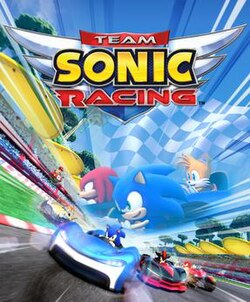
 Team Sonic Racing on Switch
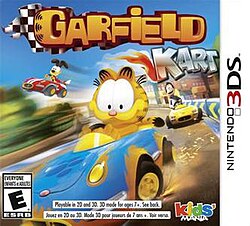
 Garfield Kart: Furious Racing on Switch
 Ben 10: Galactic Racing on PS3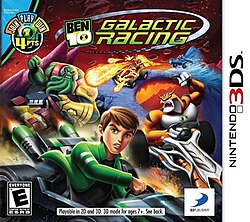
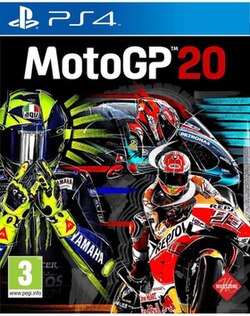 Ride 3 on PS4
 MotoGP 20 on Switch
 MotoGP 20 on Xbox One
 Monster Energy Supercross 4 on PS4
 Monster Energy Supercross 2 on PS4










 Another SquareThought Site