

 Oct 2013


Who Wants to Be a Millionaire? Special Edition for PS3 arrives like a tidy little quiz suit - it looks the part, sits in the right chair, but you can still tell where the tailoring was cost-cut. Based on the long-running TV franchise and listed among other video adaptations in the franchise timeline, this edition is the 2013 Doublesix-produced port that shipped for PC, PS3 and Xbox 360. It leans hard on the hallmarks that made the show an audiovisual textbook example of tension: the Strachan-inspired music cues, the hot-seat set geometry and the lifeline mechanics. If you care about technical execution as much as whether the audience votes for B, read on. This review focuses on the nuts and bolts that concrete whether the PS3 version actually feels like you are under the studio lights, or more like you are under your living room lamp with a less-than-perfect emulation of drama.
The core gameplay is stubbornly faithful to the format described across the franchise: a ladder of multiple choice questions, progressively tougher, with the standard lifelines as your tools. On PS3 the mapping is straightforward - face buttons map to choice A/B/C/D, and shoulder bumpers or D-pad hold lifeline shortcuts. That mapping is sensible and responsive; button debounce and input polling feel tight enough that accidental presses are rare. Doublesix kept the decision flow intact: read, deliberate, final answer. The presentation of lifelines mirrors television practice - 50:50 eliminates two options, ask the audience spawns a poll, phone a friend simulates an external call - and the game gives clear visual feedback for each lifeline state. If you played earlier millionaires on PC or PS1, the logic will feel familiar, which is both a strength and a weakness: there are no wild innovations to the core loop, but the classic loop remains compelling. Under the hood you can see sensible design choices for a quiz adaptation. The question database is shuffled and draws from multiple categories so repeat plays rarely feel identical; the engine randomizes order and difficulty buckets so that difficulty scales roughly with money ladder position. The life cycle for a single question is deterministic and well instrumented: a timer tick, lifeline pause, and answer lock-in. The PS3 implementation correctly pauses any clocks during lifeline use, which avoids the annoying race conditions seen in some lower-effort ports. Timing mechanics are therefore trustworthy, which matters because this show is an exercise in time and pressure as much as trivia. AI for Phone-a-Friend and Ask the Audience is where the game shows its budget. The audience poll is a statistical model rather than a neural-level insight - it weights answers by question difficulty and injects randomness. That produces realistic but sometimes predictable audience behavior; on easy questions you sail, on mid-tier questions the audience is plausible but not infallible. Phone-a-Friend is simulated with pre-written friend profiles that vary knowledge coverage; it won't Google for you, and that is actually the right call given the intent of the lifeline. There are also a few expanded lifelines and modes in the special editions family historically, such as switch the question or clock formats, and this edition includes a few optional variants you can toggle. The inclusion of multiple formats is a technical win: it shows the game's rule engine is flexible and modular, not hard-coded to a single money ladder. Multiplayer and meta features are executed as expected for a 2013 console release. Local pass-and-play multiplayer is serviceable; it is the sort of mode you hand to a group on a couch and let chaos ensue. Online leaderboards are present but not the focal point - the implementation is a lightweight REST-backed leaderboard rather than a heavy persistent multiplayer service, which means low overhead but also few hooks for social competition beyond high scores. The PS3 trophies are straightforward and tied to reaching set milestones or using lifelines creatively. Save states are instantaneous and reliable, with autosave between questions, so crashes or restarts do not cost you progress. For players who judge a quiz game by stability and predictable state transitions, Special Edition ticks the boxes.
Graphically the PS3 game is conservative and pragmatic. The studio set is recreated using mid-range shaders: bloom to simulate the hot spotlights, directional lights to create the tunnel-of-darkness feel around the hot-seat, and a particle-based haze system to hint at the vaporized oil effect TV designers use for beam visibility. The result is recognizably 'Millionaire' without being a GPU showpiece. The game targets 720p on most PS3 hardware with a consistent 30 fps playback; animations for the host, contestant avatars and cutscenes are functional but occasionally stiff, which is typical for a trivia title that prioritizes UI clarity over mocap fidelity. Where the game shines is in audio design. The Strachan-esque cues and heartbeat ticks play nicely against the UI states, and the mixing preserves dynamic range so the cue build-ups actually create tension. Voice-over is used sparingly and often relies on stock host phrases rather than bespoke performance, but that keeps focus on the question and answer readouts. The UI fonts and color contrasts are tuned for TV distances; answers are legible on a 40 inch screen from the couch, and the HUD avoids clutter. Accessibility is serviceable: there's subtitle support and clear lifeline icons, but there is no extensive colorblind mode beyond toggling high-contrast UI elements, which is a minor shortcoming given how visually coded the franchise is. From a performance standpoint the port is stable. Load times are respectable for the platform, caching question batches ahead of time to avoid stutters between rounds. Memory footprint is moderate and the engine uses streaming assets for audio cues to avoid long delays. If you are a technical nitpicker, there are occasional texture pop-ins on lower-end PS3 models and a few UI aliasing edges, but nothing that breaks immersion in normal play.
Who Wants to Be a Millionaire? Special Edition for PS3 is not trying to reinvent the wheel; it is trying to be a faithful, technically competent digital incarnation of the franchise, and it mostly succeeds. The developer built a robust rule engine that supports different formats and lifeline behaviors, mapped controls cleanly to the DualShock layout, and delivered a presentation that leans on the franchise hallmarks - music, lighting and the hot-seat psychology - to create tension. Where it loses points is in ambition: graphical fidelity is conservative, AI for simulated lifelines is predictable rather than brilliant, and online features are modest. For the aimed audience - players who want a polished, stable quiz experience that recreates the show without drama about itself - this Special Edition is an excellent couch companion. If you are a technical fetishist looking for bleeding-edge engine work or deep online integration, this will feel like a trimmed-down, competent port rather than a showcase. Trophies, clean UX, reliable timing and the preserved audio cues are enough reason to pick it up if you like trivia and want a TV-accurate quiz with reasonable polish. In short, it puts you under the lights, gives you the lifelines, and rewards a calm thumb on the X button. Final answer: it gets the money ladder right. 7.5 out of 10.
 My Hero: One's Justice 2 on Switch
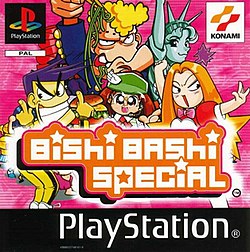
 Bishi Bashi Special on PlayStation
 Press Your Luck on PS3
 Coloball 2002 on PS2
 TV Show King on PS3
 Trivial Pursuit on PS3










 Another SquareThought Site