

 Aug 2025


Think of Wonderbook: Book of Spells as the videogame equivalent of showing up to magic class armed with a highlighter and the confidence of someone who once beat a tutorial boss. Released in late 2012 as the inaugural Wonderbook title for PS3, it pairs the PlayStation Move and PlayStation Eye to turn a physical, AR "book" into a screen-bound spellbook authored (in lore) by Miranda Goshawk and shepherded into the real world by J.K. Rowling herself. The whole package is charming, clearly made with fans in mind, and surprisingly clever in how it turns wand-waving into input. Where it trips up is less about imagination and more about skill calibration: the game demands steadiness, pattern recall, and spatial awareness in a way most TV-based games politely avoid. If you own the Wonderbook add-on and Move, Book of Spells can be a short but satisfying test of hand-eye coordination, pattern memory, and patience-occasionally to the point where you'll suspect the book is judging you.
At its core, Book of Spells is a gesture-recognition game dressed in Hogwarts robes. The PlayStation Move becomes your wand and the PlayStation Eye makes the Wonderbook visually appear on-screen via augmented reality. Each chapter teaches a spell and then tests you by asking you to trace shapes, draw patterns, and aim precisely at targets. The challenge is less about twitch reflexes and more about three overlapping skills: accuracy of motion, spatial orientation, and procedural memory. Accuracy of motion: The Move wand is tracked as an on-screen pointer, and most spells require drawing a line, loop, or shape with the controller. The detection tolerances are forgiving at beginner levels, but as you progress the game expects cleaner strokes and consistent speed. The trick here is to learn how much of your real-life movement translates to on-screen motion; a slow, deliberate arc that looks graceful in your living room can register on-screen as a jagged mess if your camera placement or lighting is off. In short: steady hands and a calm wrist earn you repeatable results. Spatial orientation: Because the book is a physical marker for the camera, your play area becomes part of the puzzle. You'll find yourself rotating the book, shifting your stance, and occasionally crouching to line up a trajectory. Later encounters force you to visualize how the wand will appear in augmented space and to correct for the parallax between the Move, the book, and the screen. This develops a real spatial muscle: players who can mentally map their physical gestures to the AR display will consistently outperform those who treat the wand like a fancy remote. Procedural memory and pattern recall: Each spell has a signature pattern. You don't just flick and hope; you learn shapes and then reproduce them under pressure. The game encourages - and then tests - memorization of gesture sequences. That's a skill that sounds nerdy but is oddly satisfying to develop: memorizing a curve, committing it to muscle memory, and then executing it cleanly with the Move is the closest thing the PS3 gives to learning a real-life manual skill. Timing and rhythm: Not a rhythm game per se, but some spells are rhythm-sensitive. Speed matters. Too slow and your flourish looks like a sleepy sloth; too fast and the camera misses junctions. Timing also matters in target-based challenges where you must hit moving objects. Reaction time is secondary to timing control: lots of small corrections win over raw speed. Environmental and technical variables: The challenge is not only the content but the setup. The PlayStation Eye's tracking quality fluctuates with lighting and clutter. Poor lighting can turn a neat O into a tragic squiggle. The game implicitly asks you to optimize your environment: clear a little floor space, angle the camera correctly, and treat the Move's glowing orb like a laser pointer in a windstorm. Calibration and occasional recalibration are part of the meta-challenge, and if you're the impatient type, this will feel like being forced to sweep a broom before you can fly. Difficulty curve and replay value: Book of Spells generally starts accessible and ramps up to tests that will humble even confident players. The added tension comes from the game's brevity; once you've memorized the spells and perfected your gestures, there's not a huge amount of new mechanical content to keep you challenged. The game does sprinkle in optional brief spell uses (like the Oppugno Jinx) that aren't fully taught but offer short diversionary tests. These feel like appetizers rather than menu staples. Consequently, while the individual challenges are well-designed and rewarding, the overall package doesn't sustain a long-term competitive or mastery loop by itself. Learning curve and appeal to different players: Younger players or those new to motion controls will find the immediate tactile feedback addictive-there's intrinsic joy in seeing your wand leave a glowing trail and in hearing the book approve your success. Experienced gamers or anyone chasing a prolonged challenge will likely finish the mechanical mastery portion quickly and then hit the replayability ceiling. The single-player nature means there's no direct PvP skill competition, so the challenge is personal: beat your own clean-run times and perfect your gestures for bragging rights. Accessibility note: The reliance on motion tracking can be a barrier for players with limited mobility or in cramped living spaces. There's also an element of camera-dependent frustration; poor tracking can be mistaken for player failure, which is an annoying but real part of the game's difficulty profile.
The augmented reality effect is the star of the visual show. Wonderbook's AR makes the physical book convincingly 'pop' into the scene, and London Studio did a neat job with animated page elements, spell effects, and little environmental dioramas that spring from the pages. Visual feedback for your gestures-glowing trails, sparks, and impact flares-is immediate and satisfying, which helps when you're learning a new spell. However, the fidelity is inherently limited by the PS3-era hardware and the simplicity of the camera-based overlay. Textures on 3D set pieces are serviceable but not jaw-dropping, and the whole presentation leans more toward storybook charm than blockbuster realism. For a game whose primary challenge is physical precision, the graphics do a supporting job admirably: clean, readable visuals make it easier to parse targets and trace patterns, which is crucial when the game is testing you.
Wonderbook: Book of Spells is a well-intentioned hybrid that turns motion control into an exercise in accuracy, spatial thinking, and memory. The real challenge comes from mastering the PlayStation Move as an extension of your hand-clean strokes, steady wrists, calibrated lighting-and from learning to map your real-world gestures into the AR space. It's playful and occasionally brilliant, and it rewards practice with genuine moments of mastery. The downside is the overall shortness and the sometimes fickle nature of camera tracking: technical hiccups can feel like unfair difficulty spikes. If you're after a long skill ladder, this isn't the mountain. If you want a satisfying climb that ends with a triumphant spell flourish and a sense that your wrist has levelled up, Book of Spells is worth the ride. Metacritic scores landed it in the low 70s and it even snagged a BAFTA nod for innovation, which feels about right: inventive, fun, and a touch fleeting.
 Wonderbook: Walking With Dinosaurs on PS3
 Wonderbook: Book of Potions on PS3
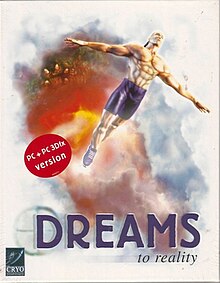
 Dreams to Reality on PlayStation
 Superliminal on Switch
 PlayStation Home on PS3
 The Trials of Topoq on PS3
 Operation Creature Feature on PS3










 Another SquareThought Site