

 Oct 2011
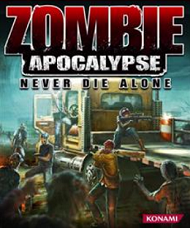

Zombie Apocalypse: Never Die Alone arrives with the modest fanfare of a downloadable shooter in 2011: lean, cooperative, and unapologetically arcade. The official blurb (and the sparse encyclopedia entry we're working off) tells you the essentials - Konami published it, Backbone built it, and it stars four new heroes defending themselves against the undead. What the documentation politely skips is any real talk of personality, motive, or emotional development. That's a shame, because a squad-based zombie romp that cares about how characters intersect could have been nasty, touching, and hilarious in equal measure. Instead, the game leaves much of the 'who they are' to the player and to the mechanics. This review takes that absence as a feature to interrogate: how do mechanics, cooperative systems, and level design do the heavy lifting of storytelling when the script is thin? And what kind of character arcs emerge when the only narrative engine available is lead, follow, resurrect, and loot?
On paper the game is simple: pick one of four heroes, shoot everything with a pulse, and survive. The Wikipedia-sourced facts are concise - you control one of four heroes, you defend against zombies, items dropped by survivors can be used, and the game emphasizes cooperative play with squad-based mechanics and resource distribution. Those dry bones are actually fertile soil for character work once you start reading the systems as storytelling devices. The squad mechanics force players into social roles. Someone has to be the scavenger, darting into rooms for dropped items; someone has to hold the chokepoint and play the tank; someone has to babysit downed teammates. This creates emergent arcs. The reckless scavenger can be a tragic figure who overreaches for loot and gets bitten, only to be revived and hardened into the team's reluctant guardian. The steady chokepoint-holder's arc is quieter: confidence grows when their defensive playstyle keeps the squad alive and crumbles spectacularly when they fail, prompting either teamwork or a hilarious blame game. Never Die Alone doesn't hand you scripted dialogue to narrate these changes; instead it hands you resource distribution and respawn mechanics that make interpersonal dynamics unavoidable. Items dropped by survivors are more than just ammo and health pickups in this context. They are bargaining chips. Passing a medkit across the screen is a dramatic act equivalent to saying "I trust you". The game's emphasis on shared resources subtly scaffolds arcs of trust, selfishness, and sacrifice. A selfless player who shares everything becomes the moral center; a hoarder becomes the antagonist of the match, slowly alienating teammates until the next wave of shambling doom enforces a reconciliation (or a hilarious betrayal). Because matches can end abruptly if cooperation fails, arcs can compress into fifteen-minute tragedies or comedies, depending on how your group behaves. Where the original Zombie Apocalypse (2009) was content with pure arcade waves, Never Die Alone attempts to be a social deathmatch with cooperative heart. The problem is that without explicit character bios, voice acting, or cutscenes, these arcs only form if the players let them. For single-player, the characters are personality shells. The developers rely on archetypes familiar from zombie media - the stoic leader, the wisecracking sidekick, the sorrowful survivor, the wildcard - but they stop short of codifying those roles. The result: a game that can generate meaningful character development through play, but only if your co-op partners role-play, improvise, or at least rage-quit in entertaining fashion. On the systems side, respawn and resource mechanics create a rhythm that mimics soap-opera beats. A downed teammate followed by a timely revive is the arcade equivalent of a reconciliation scene. Repeated deaths of the same character feel like a repeated tragedy that can push players into more protective behavior. The replay loop encourages you to try different social strategies: be a martyr, be the hoarder, be the silent tactician. These choices and their consequences - real-time judgment calls under pressure - are the game's primary storytelling engine. This approach yields a curious meta-arc. Over a string of sessions your playstyle itself develops. You may start as an adrenaline-fueled looter, then, after a few costly mistakes, evolve into a disciplined support player. Those are genuine arcs - albeit player-authored ones. If you come to Never Die Alone hoping for a canned story about who the four heroes are and where they came from, the game will disappoint. If you come looking for community-driven narratives and for mechanics that make cooperation emotionally resonant, it occasionally delivers with surprising force, especially when played with friends who lean into the drama.
The source material doesn't detail the visuals, but the context - a 2011 downloadable title on PS3 and XBLA - sets expectations. Never Die Alone presents the sort of competent, budget-aware art directorship common to mid-era downloadable releases: clear silhouettes for enemies, readable levels to support frantic action, and effects that prioritize gameplay clarity over photoreal polish. This serves the game's emergent-character intent well. When your teammate is a blur of muzzle flash and sprinting limbs, you can still tell if they're the scavenger or the tank at a glance. Where graphics could have been a narrative amplifier - unique character models, expressive faces, or cinematic vignettes to reinforce arcs - the game opts for functional assets. That choice keeps load times down and the action crisp, but it also contributes to the sense that the characters lack prewritten lives. In other words, the visuals do their job in service of the gameplay, but they don't do much to invent backstory. The art is a well-cut stage, not an autobiography. One upside of the modest visual ambition is that the level of viewer imagination required actually helps the player-author arcs flourish. Sparse details mean your mind fills in the blanks. When your teammate drops a medkit and says nothing, you can imagine the motives - charity, strategy, or guilt - and the moment becomes yours. It is hard to claim that is a superior design choice, but it is a defensible one.
Zombie Apocalypse: Never Die Alone is a weird little experiment: a co-op shoot-'em-up that punts on canned storytelling and instead encourages narrative through mechanics. The result is uneven. Critics' aggregated scores landed in the mid-60s, which feels right: the core gameplay loop is satisfying when you have partners who will play into the drama, and the squad-based systems can manufacture emotional beats out of resource-sharing and resurrecting. If you want a tightly scripted character drama, you will be frustrated. If you want to invent your own arcs with friends - to cast someone as the tragic hero whose hubris costs the team a round, or the steady hand that earns quiet respect - then Never Die Alone can be unexpectedly rewarding. Play it with a crew you like, and the game's emptier narrative spaces become a canvas. Play it alone, and it plays like a competent but forgettable arcade shooter. Either way, the characters that matter in this game are not drawn on a concept sheet; they're drawn by you and the people you choose to trust with your medkits. That concept alone earns it a few points for ambition, even if the execution keeps it from being indispensable. For a Halloween party with friends or a short burst of cooperative chaos, it's worth a download. For a long, curated character saga, you're better off opening your own storytelling session and pretending to be the hero.
 Never Stop Sneakin' on Switch
 Orcs Must Die! 3 on PS5
 Disney's Chicken Little: Ace in Action on PS2
 Onimusha: Dawn of Dreams on PS2
 Action Man: Operation Extreme on PlayStation
 Door Kickers: Action Squad on Switch
 Age of Empires: The Age of Kings on DS
 Lego Rock Band on DS
 X-Men on PS3
 Wolf of the Battlefield: Commando 3 on PS3
 1942: Joint Strike on PS3










 Another SquareThought Site