

 Sep 2018


Kakuro on PS4 takes a classic pencil-and-paper logic puzzle-one that in print is usually called Cross Sums or, if you're feeling cosmopolitan, kakasu kurosu-and ports it to your living-room TV with all the confidence of someone who just discovered that numbers can be zen. If you know Sudoku, you know the flavor: fill in digits 1-9 into white cells so horizontal and vertical runs add up to the clue numbers printed in the black squares, with no repeats per run. PuzzleWorks' console adaptation doesn't try to remake the rules; instead it focuses on how those rules survive controller input, resolution scaling, and a generation engine that promises near-infinite combinations. The end result is less flashy game and more toolbox - a precision instrument for players who like their logic puzzles with a side of UI ergonomics and algorithmic elegance.
Gameplay is intentionally austere: the core loop is selecting entries and entering digits until the grid resolves into a valid state. PuzzleWorks implements the canonical grid layout: black cells with slash-separated clues, white cells that accept digits 1-9, and rules enforcing both the sum constraint and the no-duplicates constraint within entries. The default grid sizes skew toward the puzzle tradition-most puzzles feel like they inhabit the 10×10 to 16×16 band-so the designers had to think carefully about cursor traversal, candidate notation, and how to present combinatorial metadata without overwhelming a 40" display. Control mapping is critical for a logic puzzle on a gamepad. PuzzleWorks' choice is pragmatic: the left stick moves the cursor, R1/R2 toggles between horizontal and vertical focus (an essential affordance for shifting entry context), and the face buttons map to digits in drum-grid fashion (square = 1-3, triangle = 4-6, cross = 7-9 by default, with a radial mapping option in settings). That numeric mapping never feels quite as fast as pen-on-paper, but the implementation smooths the friction with a hold-to-enter quick-fill and a configurable input buffer for players who prefer rolling inputs. The DualShock touchpad is used for a quick-toggle candidate pencil mode, which is functional but never mandatory. The game nails candidate notation: corner-pencil marks appear as small glyphs inside cells, scalable for 4K mode and clearly legible at 1080p. You can toggle between pre-defined candidate sets and free-form corner notation. The latter is implemented as a bitmask under the hood; PuzzleWorks uses an efficient bitfield representation for candidate sets that allows the hint engine and auto-elimination routines to operate at interactive speeds even on large puzzles. In practice that means when you mark a 16×16 grid with candidate lists and ask for an auto-eliminate pass, the engine runs through combination tables and intersection checks in millisecond times-no noticeable lag. The hint system is where the port shows its intelligence. Hints are tiered: Level 1 is deterministic and harmless (e.g., reveal a single cell where the intersection of a 3-in-two and 4-in-two forces a unique digit), Level 2 shows a small subset of possible combinations for an entry, and Level 3 gives a step-by-step exposition of a box-technique or chain elimination used in harder puzzles. The hint engine refers to precomputed combination tables, and because Kakuro's combination spaces are small and well-defined, the engine can explain (and highlight) the exact combinatorial reasoning it used. It's a neat pedagogical affordance for players who want to learn techniques like the box-method or intersection elimination instead of being held by the hand. Puzzle generation and selection deserve a deep dive because they shape the game's long-term value. PuzzleWorks ships with a curated catalog of hand-tuned 'classic' puzzles and a procedural generator for infinite random puzzles. The generation pipeline enforces uniqueness by design: it claims each generated puzzle has a unique solution and at least two numbers per clue (to avoid trivial single-cell sums). Internally the generator uses an integer-programming style solver to verify uniqueness and to classify difficulty. That's appropriate: Kakuro solving is NP-complete in the abstract, and practical generation requires pruning and satisfiability checking. PuzzleWorks balances generation time and difficulty by precomputing grids overnight for their 'daily' and 'challenge' playlists and running a solver-based verification pass to ensure no accidental multiple solutions. That means the in-game 'create random' button will occasionally take a second or two while a solver validates uniqueness, but the trade-off is worth it. Where the technical chops wobble is the difficulty calibration. PuzzleWorks labels puzzles as Easy, Medium, Hard, and Extreme; the Easy/Medium boundary corresponds to puzzles solvable via combinatoric and intersection techniques, while Hard and Extreme include chain-based and pattern-based constraint scenarios akin to advanced Sudoku chain mechanics. The problem: the labeling is primarily based on measured solver time and branching factor, not on the human-recognizable techniques required. As a result, some puzzles flagged Medium demand a specific chain or box insight early on, which feels like a sudden difficulty spike and undermines the pedagogical hint system unless you pay for more hand-holding. A transparency option that shows the 'technique fingerprint' for each puzzle would have been a clean solution; in its absence, expect to toggle hint granularity more often than you'd like. Other niceties: unlimited undo/redo with a move history timeline, cloud sync for puzzle progress, and a 'replay' feature that shows your solving session compressed into a few seconds-handy for reviewing where you made mistakes. Multiplayer is limited to asynchronous leaderboards for solve time and efficiency (pencil-mark usage), which is sensible because Kakuro isn't exactly a twitch multiplayer experience. The game also exposes developer-oriented debug tools: a constraint inspector that highlights all sums and their possible combinations, and an option to dump the bitmask state for a selected entry. Those are excellent for the spreadsheet-and-algorithm crowd who like to verify their reasoning mathematically. Overall, the gameplay is a clean translation of Kakuro rules to console affordances, with careful attention to input ergonomics and solver-backed hinting. Small misses in difficulty labeling and the need for occasional solver pauses during generation are the main technical thorns.
Graphically, Kakuro makes a virtue of minimalism. The default theme is a high-contrast grid on a textured paper background, with crisp vector art for the diagonal-clued black squares. Fonts are chosen for legibility: numerals in cells are mono-spaced and hint glyphs use a tiny but clear sans serif, which helps when you scale the HUD for 4K. The UI supports several skins (Classic Newspaper, Modern Minimal, and a Night Mode optimized for HDR), and each skin toggles line thickness, shader presets, and subtle particle flourishes for 'puzzle solved' animations. These effects are eschewed rather than exaggerated, preserving the game's cerebral focus. Under the hood, rendering is lightweight-batched vector primitives, distance fields for fonts, and a single-layer post-process for bloom in the celebratory solves. The result is consistent 60fps on base PS4 hardware with no frame drops even on the largest grids. On Pro hardware the UI scales cleanly to 4K and uses higher-resolution raster fonts, which makes corner-pencil marks and bitmask indicators almost impossibly neat. There is no dynamic lighting or complex shaders to speak of; that's a feature, not a bug. Kakuro's visual fidelity serves its information density requirement: the grid must be legible at a glance, the candidate marks must be distinct, and the clue typography must be unambiguous. PuzzleWorks hits all those marks. Accessibility considerations are well handled. The color palette includes high-contrast modes and colorblind-friendly palettes, and there is an option to enlarge corner-pencil glyphs independently of the main font. Audio is minimal and functional: soft UI clicks, a subdued ambient track for concentration mode, and gentle chimes for completion. You won't mistake this for an AAA audiovisual demonstration, but the graphics are exactly what a logic puzzle needs-clarity, consistency, and no cruft.
Kakuro on PS4 is a technically disciplined adaptation of a beloved logic puzzle. PuzzleWorks' strengths are in interface engineering and solver integration: candidate bitmasks, tiered hints that can explain combinatoric reasoning, and a generation pipeline that aims for unique, nontrivial puzzles. The port respects Kakuro's mathematical character-integer-programming style checks, bitwise representation of combinations, and attention to NP-complete complexity where it matters-without turning the game into a computer-science lecture. For players who love methodical puzzle-solving, the game offers an excellent toolset: precise controls, readable graphics, and developer-oriented inspection tools. Its weaknesses are practical rather than philosophical. Difficulty labeling can mislead, forcing players into chain-heavy territory without warning, and the randomness generator occasionally pauses while validating uniqueness. If you prize transparency in puzzle design, you'll want a visible technique breakdown for each puzzle. Still, those are relatively small complaints against a solid translation that elevates Kakuro into a living-room-friendly experience. If you enjoy combinatoric reasoning, bitmask logic, and slowly watching a grid collapse into order, Kakuro on PS4 is a reliable companion. It won't reinvent the genre, but it won't get in the way of your solving either. Score: 8.5/10 - a precise, well-engineered port that will satisfy number-nerds and logic junkies, provided you're comfortable asking for hints when the generator gets cleverer than you'd like.
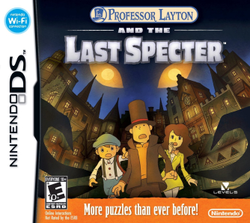
 Professor Layton and the Last Specter on DS
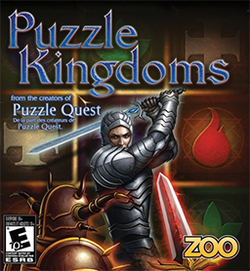
 Puzzle Kingdoms on DS
 Puzzle de Harvest Moon on DS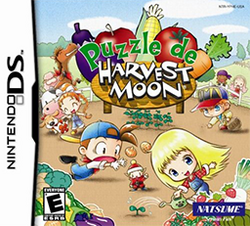










 Another SquareThought Site