

 Sep 2025
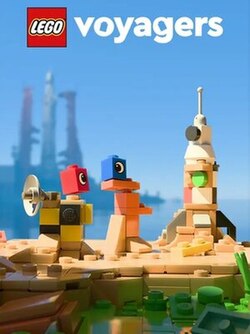

There is a particular joy in watching very small things behave with dramatic intent, which is why I welcome Lego Voyagers with a mixture of old-school skepticism and genuine grin. This is not a blockbuster action spectacle or a sandbox for frustrated gods; it is a finely tuned two-player puzzle-platformer in which you play as actual 1x1 Lego bricks named, with admirable economy, Red and Blue. Light Brick Studios - the team behind the understated charm of Builder's Journey - has taken the humble plastic widget and given it agency, personality and a mission: rescue an abandoned spaceship. The game arrives on PlayStation 4 as a cooperative experience that insists on conversation without many words, a design choice that feels like the sort of bold, slightly eccentric editorial line a 1990s magazine would have underlined in red pen. Approachability is the watchword. Creative director Karsten Lund tells us the pillars were puzzle-platforming, friendship and co-op, and you can see that prescription in the bones of Voyagers. It is designed to be playable by nearly anyone who can hold a controller, yet the puzzles steadily raise their eyebrow as you progress. For those who remember the era of demo discs and magazine previews, Voyagers is the kind of title that would have gotten a long, approving sidebar praising its subtlety and cooperative focus. For modern players, it offers a sincere alternative to the grabby spectacle of many multiplayer releases: a game about working together, not about one player carrying the other.
Gameplay in Lego Voyagers is disarmingly simple to describe and deliciously complex to execute. Each player takes the wheel of a 1x1 brick - Red or Blue - and their moveset is tiny but expressive: roll, jump, attach to other pieces and rotate when perched atop them. The core loop is cooperative problem solving. Think of it as a mechanical duet: one brick presses a lever, the other becomes a counterweight; one sings, the other takes notice. There is no heavy-handed narration; instead, the game relies on movement, geometry and that little repertoire of interactions to communicate intent. That minimalist approach rewards players who pay attention to rhythm and spatial relationships rather than button-mashing bravado. Puzzles are built from Lego logic. You will connect to plates, form temporary structures with other environmental pieces, and combine both bricks into larger assemblies that must be moved as a single, sometimes unwieldy, object. These moments where two players must coordinate to shift a structure - aligning rotations, timing jumps, keeping balance - are the game's delight. They trade spectacle for choreography: successful solutions feel like a small ballet in which both performers deserve applause. The difficulty curve is gentle at first, easing new players into the peculiar physics of sentient bricks, but it tightens later when precision, sequence and communication are demanded in equal measure. Voyagers supports both local and online cooperative play, and this is where the Friend Pass is a pragmatic masterstroke. The player who buys the game can invite a friend to join for free, an olive branch for couchless teenagers and long-distance pals alike. This design reduces friction and encourages the very cooperation the game celebrates. Light Brick's insistence that every set-piece could be reconstructed in real Lego is an invitation to tactile imagination; you will find yourself looking at the in-game arrangements and thinking about buying a tub of bricks just to re-enact a solution in your living room. The writing - such as it exists - is economical. The bricks 'sing' to draw attention, a charming bit of diegetic signalling that functions as both a gameplay prompt and a comic flourish. There is personality without verbosity: the bricks are characters because of what they do, not what they say. In an era where co-op games often lean on constant chatter, Voyagers feels refreshingly disciplined. The consequence is that cooperation becomes the language itself; you learn to coordinate with pitch, timing, and the silent understanding that your partner might be holding the fulcrum while you do the awkward shimmy. If the game has a weakness in its mechanics, it is that some later puzzles can verge on fiddly. When a structure becomes large and the physics insist on near-perfect alignment, frustration can creep in. These moments are rare, and they are offset by the consistent design philosophy of incremental challenge. For veterans of cooperative puzzle-platformers, Voyagers will not surprise in scope, but it will please in execution: small systems layered with care to produce emergent teamwork.
Visually, Lego Voyagers is the kind of thing that would have inspired a 1990s graphics comparison chart - not because it competes for photorealism, but because it uses its palette and materials with such clarity. The environments are decidedly Lego: crisp edges, glossy plastic surfaces and the satisfying sheen that makes every rivet legible. The art direction favors clean silhouettes and playful set-pieces, which matters when your protagonists are centimetre-wide blocks and you need to tell a story with geometry. On PlayStation 4 the presentation is perfectly serviceable; textures are clean, lighting is soft and the camera is a benign, helpful presence. There is an honest charm to the way light glances off a stud or the shadow of a rotating structure. The developers have made the plastic aesthetic an expressive tool rather than an indulgent gimmick. It gives the game an almost toy-like tangibility, a quality that invites you to reach for a literal brick and attempt to reproduce what you see. Animation is straightforward but expressive. The bricks' movements convey effort and personality without resorting to over-voiced cutscenes. Particle effects and small flourishes - a tiny puff of dust when a piece lands, the satisfying click when two parts mate - give the experience tactile feedback. The sound design is equally economical: functional cues where they are needed and a few well-chosen musical moments that underscore successful cooperation. This restraint keeps the focus where it belongs: on the puzzles and the partnership required to solve them.
Lego Voyagers is a study in disciplined constraint: small controls, a simple premise, and a steady escalation of challenge that insists players speak through actions more than through words. Light Brick Studios has created a cooperative puzzle-platformer that feels handwritten rather than corporate-signed, a welcome oddity in a market that prizes spectacle. For players who enjoy thoughtful coordination, quiet charm and the peculiar thrill of manipulating Lego logic in virtual space, Voyagers is a recommendation I make without equivocation. It is not perfect. A handful of late-game puzzles risk testing patience with fiddly alignment, and the scale is modest compared with the sprawling co-op epics on the market. Even so, the Friend Pass, the tactile presentation and the steady, clever puzzle design make this release a bright spot on the PS4 library. If you remember the white-gloved seriousness of 1990s reviews - the ones that judged a game's soul as much as its frame rate - Lego Voyagers would have earned a respectable cover blurb. In 2025 terms: this is a smart, affectionate little co-op that rewards cooperation with joy. Buy it for a friend, or buy it alone and whisper the controls into a headset; either way, you will leave feeling like you accomplished something together.
 Lego Games
 Lego Battles on DS
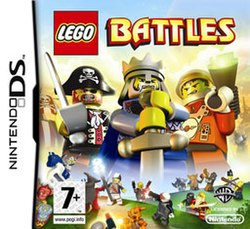 Puzzle by Nikoli 4: on PS4
 Twinbee Taisen Puzzle Dama on PlayStation
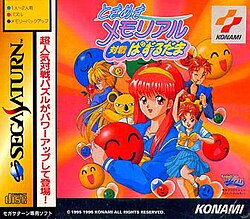
 Tokimeki Memorial: Taisen Puzzle-Dama on PlayStation
 Professor Layton and the Last Specter on DS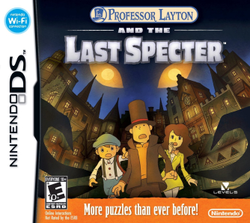









 Another SquareThought Site