

 Mar 2018


Q.U.B.E. 2 wakes you up in the kind of abstract puzzling void that makes you suspect your last meal was a bad idea. You play as Amelia Cross, a British archaeologist whose waking-up skills are top-tier: she opens her eyes and immediately gets handed-virtually, in gameplay terms-the sort of problem set that used to be reserved for astronauts and underpaid lab rats. The game politely explains that instead of running away, you will be making and manipulating cubes. A friendly entity named Emma offers guidance, which in developer-speak means you will have just enough narrative rope to hang a feeling of purpose on, and not so much that you trip over it while solving a staircase made of sentient blocks. Developed in Unreal Engine 4 by Toxic Games and released on March 13, 2018 for PC, macOS, PS4 and Xbox One, Q.U.B.E. 2 promises the best parts of the original-sterile rooms, colored puzzle elements, and satisfying mechanical clicks-wrapped in a shinier 3D package and an attempt at a stronger narrative backbone. It mostly delivers both, with a dry wink and a faint whirring sound.
Gameplay in Q.U.B.E. 2 is the sort of mathematics-adjacent exercise that rewards careful observation and a willingness to accept that some puzzles are solved by thinking and some are solved by being willing to build a cube ladder and call it art. Where the original Q.U.B.E. had you interact with pre-existing blocks in the environment, the sequel gives Amelia the power to create cubes of different functions. Those cubes are the game's vocabulary: each colour and type means something practical, like extend/retract cubes, stair-cubes, springy cubes, rotators, or physics objects you can push around. The introduction of cube-creation changes the dynamic from reacting to a pre-set world to composing tiny mechanical poems. It is a nicer way to say the game expects you to be patient and to enjoy small, quiet victories. The puzzles are introduced in a politely pedagogical fashion. Toxic Games kept the original's design philosophy of isolating mechanics before combining them into larger, more cunning constructs. Early chambers are essentially tutorial rooms where the game gives you a single tool and then watches like a bored but hopeful teacher as you learn how it behaves. Later areas remix the tools, and the pleasure comes from discovering combinations that feel inevitable in hindsight. There is a pleasing cadence to that design: a trick is taught, practiced, then compounded. When you finally assemble a sequence of cubes that rotates, extends and flings you in the exact direction you need, your brain celebrates like it has been fed a small, logical biscuit. Narrative is more than window dressing here. The original Q.U.B.E. suffered a little from personality deficiency; it was an excellent puzzle box but not especially chatty. Q.U.B.E. 2 tries to fix that by giving Amelia a voice-less character arc and introducing Emma, an entity who guides, teases and occasionally reassures. The story doesn't elbow its way to the front, but it supplies a credible reason to keep solving rooms beyond pure curiosity, which is helpful because curiosity can be exhausting if your only companionship is a chorus of obedient geometric solids. The game also leans into non-linearity more than before; you are sometimes given multiple puzzle paths or optional challenges, including time-trial style speedrun rooms added to earlier releases in the series. That flexibility is a smart move-it lets players set their own pace and keeps the kitchen-sink approach to puzzle types from overheating. Q.U.B.E. 2's physics are competent, mostly, and deliberately tuned. The team at Toxic Games learned to avoid punishing randomness: objects behave in a way that rarely feels like they were conspiring against you, which is a relief when your progress depends on a ball bouncing into an ideal crevice. That tuning is a double-edged sword. On the one hand, it prevents sad hours spent chasing a ricochet; on the other, it occasionally makes physics feel a little too obedient, as if the laws of motion are being gently massaged to ensure player success. That choice is intentional-Q.U.B.E. 2 is less about chaotic trial-and-error and more about lateral thinking and mechanical choreography. If you like your puzzles to be fair and your cube logic to be discoverable rather than lucky, you will appreciate it. The learning curve is forgiving without being insulting. The game rarely tells you what to do in plain language; it demonstrates, then nudges. This approach respects the player's intelligence, which is always a pleasant surprise in an industry that often mistakes hand-holding for accessibility. Optional speedrun rooms and branching sections mean replay value exists for the completionist or the mildly obsessive. Pacingwise, the game can hit a rhythm where chamber design repeats a little, but the variety of cube functions and the gradual ramping up of complexity help maintain engagement. Q.U.B.E. 2 is not trying to reinvent puzzle design; it refines and expands it, giving you a tidy toolbox and the chance to be clever with it.
Visually, Q.U.B.E. 2 takes the original's clinical aesthetic and dresses it in nicer lighting and more interesting geometry. The sterile rooms and clean surfaces remain, but Unreal Engine 4 gives them depth and texture in places the original's engine could only hint at. Surfaces gleam just enough to make you feel like you're operating inside a museum of engineered minimalism rather than a cardboard diorama. Environmental art from contributors like Harry Corr adds subtle touches that keep the spaces from becoming monotonous: a distant silhouette, a shaft of light, a puff of dust-all the small details that suggest a world beyond the immediate puzzle. The coloured cubes are bright and readable, which matters because the game leans on colour-coding to communicate function. That clarity is a small victory in interface design: you should not have to squint to figure out which cube will make a stair and which will make a trampoline for your feet. Animations are functional and satisfyingly mechanical; rotating wall sections, extending prisms and springing blocks move with a purposeful cadence that communicates information as well as spectacle. There is a quiet elegance to how the world explains itself visually. There isn't much in the way of character models to critique-Amelia mostly stands where you tell her to and looks suitably archaeologist-ish when she occasionally interacts-but voice work and narrative beats are supported by competent direction. Music and sound design, while not bombastic, do exactly what they need to: underscore the puzzle without stealing the scene. If you were hoping for photorealism or sweeping vistas, Q.U.B.E. 2 is not selling those. If you appreciate thoughtful rendering that prioritises clarity and mood over texture porn, it will please. The game's visual identity is intentionally restrained, and that restraint is mostly a virtue because it keeps your attention on what matters: cubes doing clever things.
Q.U.B.E. 2 is a tasteful sequel that understands why people enjoyed the first game: the pleasure of solving tidy mechanical problems in an environment that makes every click feel meaningful. By giving players the power to create different kinds of cubes, adding a bit more narrative scaffolding with Amelia and Emma, and upgrading the whole experience into Unreal Engine 4, Toxic Games produced a sequel that improves on the original without betraying it. The puzzles are fair, the teaching is smart, and the visuals are clean enough that you never lose track of the important bits. It is not flawless. Sometimes the sterile aesthetic becomes a little too sterile, and the pace can lull into repetition if you are not invested in the mechanical logic. The decision to keep physics tightly controlled ensures fewer rage quits at the expense of occasional wonder at truly unpredictable bounces. But those are minor gripes in a game whose principal job is to make problem-solving feel rewarding rather than punishing. If you like Portal-adjacent, head-scratching puzzle work that prizes design and clarity over fanfare, Q.U.B.E. 2 on PS4 is a tidy, polite companion. It will not yell, it will not insult you, and when it finally opens a door for you it will do so with the calm satisfaction of a lock that knows it did its job well. That is precisely what this sort of puzzle game should be.
 Tokimeki Memorial: Taisen Puzzle-Dama on PlayStation
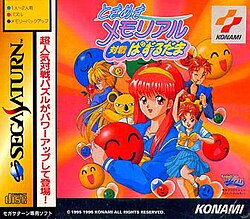 Professor Layton and the Last Specter on DS
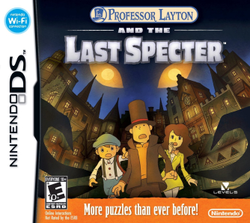 Tokimeki Memorial 2 Taisen Puzzle Dama on PlayStation
 Q.U.B.E. Director's Cut on PS4
 Q.U.B.E. Director's Cut on PS3










 Another SquareThought Site