

 Aug 2025
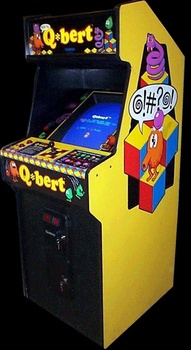

Q*bert Rebooted is the modern dusted-off cousin of the 1982 arcade we all know: same orange ball-of-ambition, same Escher-ish pyramid concept, and a fresh coat of polish that sometimes helps and sometimes just shows up the wrinkles. If you played arcade Q*bert, Rebooted does two things you care about as a challenge-seeker: it keeps the ruthless logic of changing tiles into target colors, and it fiddles with the rules enough to demand new skills. There are two modes: a faithful classic port for nostalgia and a 'Rebooted' mode that expands movement into hex-based boards and throws a grab-bag of enemies and level gimmicks at you. What you get from Rebooted depends on what kind of player you are. If you came for a casual hop-and-smile you might be surprised by how frequently the game demands precise planning and cold reflexes. If you love being tested on spatial reasoning, timing, and controlled panic, this little package will sting in a very satisfying way. This review is mostly an ode to the ways the game tries to make you earn your hops. Expect breakdowns of the core mechanical challenges, the mental and physical skills Q*bert Rebooted asks of you, and how the PS4 implementation supports-or sometimes hinders-those tests. Spoiler: it's more about skills and less about cinematic bells and whistles.
At its heart Q*bert Rebooted is two puzzles: the original pyramid and a new hex-based Rebooted mode. The classic portion is exactly what arcade veterans remember: hop diagonally, change cube colors by landing on them, avoid punishing enemies, and use side discs as escape routes. The rebooted variant is where the challenge design really leans in. By moving from square pyramids into hex arrangements, the movement space expands from four diagonal directions to six radial directions. That sounds like math homework, but the practical effect is a whole new layer of pattern recognition and route planning. Where the original is mostly about sweeping through an orderly pyramid and avoiding predictable enemy paths, Rebooted asks you to map complex trajectories, anticipate multilateral threats, and manage more escape routes-not because they make things easier, but because more routes mean you will be tempted into riskier plays. Enemies are the real teachers here. The old-school foes return in spirit: Coily (the egg-then-snake), Ugg and Wrongway (those Escher-mad bastions that travel along sides), and the annoying color-reverters Slick and Sam. Rebooted spices the roster with new antagonists like a boxing glove that can literally punch you off a level and a treasure chest that runs away instead of eagerly mangling your day. The consequence is that threat reading becomes a core skill. You have to learn movement signatures: which creatures track you aggressively, which traverse edges in predictable patterns, and which introduce chaos. Learning those signatures is how you progress from beginner to competent. Timing and rhythm are evergreen skills in Q*bert. The original's diagonal joystick and arcade momentum meant a lot of deaths came from misreading the input. On PS4, the controls are polished to modern sticks and D-pad input, but the timing window for safe hops remains tight. You will find yourself retraining your muscle memory: outward jumps that looked trivial in pixel form suddenly require micro-delays because enemies and bouncing balls interact across multiple frames. The game rewards cadence. Move too hurriedly and you overcommit into enemies; move too slowly and color-reverting green critters will undo your progress. Spatial awareness and mental mapping are probably the most underappreciated skills Rebooted tests. Levels are larger than the nostalgic arcade screens, and objectives sometimes require multiple passes, or hitting tiles in a specific order because later rounds change color rules (hit twice, hit until it cycles, etc.). You must hold in your head: my current path, where the green balls will bounce, whether Coily's egg is about to hatch into a snake that will chase along my last known vector. That cognitive juggling is what transforms simple hopping into a puzzle about trajectories. Resource management shows up in two forms: lives and stage-specific bonuses. You have five lives to finish worlds, and levels come in chains (three rounds plus a bonus round) where mistakes compound. There are gems, stars and score/time goals that gate further levels or cosmetic unlocks. The motivation structure subtly pushes you toward mastery: a casual playthrough nets you access to most stages, but performance goals force repeats. If you're playing for completion, you might glide through; if you're aiming for stars and deep completion, get ready to practice speed-runs on single levels until your path is muscle memory. Risk versus reward is handled with classic arcade elegance. Side discs are the great equalizer: they teleport Q*bert to safety but may send Coily plummeting for a bonus (or the opposite, depending on timing). Hitting a disc when an enemy is close can net big points but also immediate peril if you mistime it. Slick and Sam revert tiles rather than kill you, which is important-chasing points can cost you the solved pattern and force an extra pass. Good players learn to trade short-term score greed for long-term stage completion, and that yields consistently better runs. Rebooted's level design variety-five stage themes across 40 levels-means the learning curve doesn't rely solely on faster enemies. Instead it layers in environmental puzzles that require flexible thinking. Some levels force you to think like a chess player, planning several moves ahead so you don't strand yourself on unrecoverable tiles. Others are pure reaction tests where split-second decision-making rules. The bonus rounds provide a delicious break: they reward clean execution and give a chance to earn gems used for skins. Skins are aesthetic, but collecting them is another carrot that nudges players to replay levels with more skillful runs. Where Rebooted occasionally stumbles is in pacing. Some of its latter levels demand the same precision repeatedly, which can feel like grinding rather than meaningful skill checks. That said, the design rarely feels unfair. Death usually lands on you because of a predictable mistake-bad position, misread enemy, or overambitious move. In other words, failure teaches you. If you don't enjoy trial-and-error learning, this will get annoying; if you do, it's a tidy ecosystem of small lessons and cleanly communicated rules. To excel you'll want to sharpen a short list of practical skills: spatial mapping (visualize where you'll be three hops from now), controlled panic (execute micro-decisions under pressure), timing (coordinate hops against enemy arrivals and bouncing balls), route optimization (pick an efficient order of tiles), and patience (accept a slower methodical clear to avoid repeated reverts). Q*bert Rebooted turns what looks like an arcade game into a compact graduate course on these abilities.
Rebooted spruces up Q*bert's world with clean, modernized visuals that still respect the original's bright, blocky charm. The pyramid and hex boards are rendered with smooth edges and visual clarity that helps gameplay: tiles change color clearly, enemies animate distinctively, and particle effects are tasteful rather than distracting. On PS4 the frame-rate is stable enough that timing windows feel consistent-this is important because one of the oldest gripes with ports is input/frame mismatch. The game's aesthetic choices favor readability over spectacle, which is the right call for a title that depends on split-second decisions and pattern recognition. The new enemies are visually communicative: you know at a glance which ones will chase and which will be obstacles, which undercuts confusion and puts the emphasis back on skill. Texture and lighting choices won't wow anyone chasing photorealism, but that is irrelevant here. The interface is uncluttered and menus keep things quick; unlocking skins is instant gratification, and the reward icons feel meaningful. If you want a game that looks good while forcing you to think, Rebooted does its job well. A few levels add background noise and effects that can obscure long-range visibility, but they are the exceptions rather than the rule.
Q*bert Rebooted on PS4 is a compact lesson in how to modernize a classic while keeping the original's core challenge. It's not trying to be an epic, open-world rebirth; it's a focused arcade-puzzle hybrid that asks the player to level up in spatial reasoning, timing, and risk management. The hex-based Rebooted mode is the star: it expands movement options and makes every hop feel like a choice rather than a reflex. The learning curve is honest-sometimes steep-and the game rewards practice with satisfying mastery rather than cheap difficulty spikes. If you enjoy games that teach you to think in movement-mapping routes, reading enemies, and optimizing clears-then Q*bert Rebooted will be a welcome bite-sized challenge. If you want a hand-holding nostalgia machine or an action romp where mistakes are forgiven, you'll find the repetition and precision punishing. For a PS4 experience that asks you to be smarter than the enemies rather than faster than the cutscenes, this reboot is a nimble, witty test of old-school skills recast for modern thumbs. Hop wisely.
 Q*bert on PS3
 Q*Bert on PlayStation
 Onimusha: Dawn of Dreams on PS2
 Puzzle by Nikoli 4: on PS4
 Puzzle Quest 2 on DS
 Action Man: Operation Extreme on PlayStation










 Another SquareThought Site