

 Jan 2018


Rad Rodgers arrives waving a neon bandana and a laundry list of 90s energy drinks, which is exactly what you want from a modern retro platformer. Birthed out of a Kickstarter campaign that beat its modest goal and announced in a 2016 reveal alongside 3D Realms, Rad is the kind of game that wears its influences-Commander Keen, old-school Apogee humor, and Saturday-morning cartoon bravado-right on its sleeve. The blunt mechanics and bright levels are an obvious callback, but the game's real trick is turning hardware into a character: Dusty, Rad's console-come-to-life sidekick (voiced by Jon St. John), is not just a gimmick. He's the heart of the buddy dynamic and the primary engine behind Rad's emotional beats. This review dives deep on the characters, their arcs, and how the platforming shapes the story, while using the PlayStation 4 build as our benchmark.
On paper, Rad Rodgers is a fairly straightforward platformer: run, jump, shoot, and navigate themed stages while hunting secrets and visceral boss encounters. The way those mechanical bones are dressed, however, directly feeds into character development. Rad himself is designed like the archetypal plucky kid-hero-impulsive, loud, and prone to trash talk-so the level design rewards exactly that kind of energy. Tight, fast segments let you barrel through enemies with reckless joy, and the checkpoint rhythms accommodate a learning curve that feels less like punishment and more like a comic beat: fail, wisecrack from Dusty, then try again. That pattern becomes part of Rad's arc. He starts as a cartoonish hothead and the gameplay gradually teaches restraint; later sections ask you to plan a bit more, read enemy patterns, and combine platforming with shooting in ways that force a tempering of that initial brashness. Dusty's role is twofold: narratively, he's the wisecracking console that grounds Rad's idiocy with sardonic commentary; mechanically, he's often the source of gadgets, upgrades, and comedic dialogue that telegraphs new abilities. Those upgrades are not just stats on a menu-they mark milestones in the relationship. Early power-ups are punchy and pure: more bullets, bigger jumps. Midway through, abilities start opening pathways that require cooperation between player-skilled platforming and Dusty-provided gizmos. The result is a gameplay arc that mirrors a buddy-comedy plot: they bicker, learn to rely on each other, and ultimately pull off stunts that neither could do alone. Boss fights in Rad Rodgers are little theatrical acts that double as character tests. A boss may punish sloppy jumping to emphasize the cost of impulsiveness, or it may require toggling between attack patterns and movement, a choreography that reads like a scene where both protagonists have to stop talking and start listening. There's a strong sense that levels are written in service of character moments-an escape sequence that reinforces Rad's hero complex, followed by a quieter puzzle section that lets Dusty shine with useful commentary-so the player's mechanical progress feels narratively meaningful. This is not to oversell it: Rad never becomes a philosophical treatise on friendship. The stakes remain mostly silly and self-aware, and the writing leans into punchlines. But the arc is there: rampaging adolescent bravado learning, step by step and checkpoint by checkpoint, how to coordinate with a very stubborn piece of hardware. For players who enjoy their platforming with a side of personality, the gameplay loop compliments the story beats in a way that feels deliberate rather than tacked-on.
Under the hood is Unreal Engine 4, and the aesthetic choices favor cartoonish resilience over gritty realism. Textures are crisp when they need to be, but fidelity is subordinate to readable silhouettes and expressive animation. Rad pops off the screen with exaggerated poses so you always know where the hitbox lies, while Dusty-despite being, essentially, a talking console-gets surprising personality through clever rigging and an expressive UI. Environments are often bright and loud, leaning into a palette that sells nostalgia without feeling like a museum exhibit; think saturated blues, oranges, and neon accents that call back to 90s platform levels but keep a contemporary polish. Performance on PS4 is stable for the most part. Frame pacing is good, which is important in a platformer where timing matters. Visual effects-screen shakes, particle bursts, and weapon flares-are used sparingly but punchily, which suits the game's cartoon sensibilities. The presentation does stumble occasionally when transitions try to squeeze too much spectacle into a single moment, but these are brief and cosmetic. The vocal casting of Jon St. John for Dusty is a stroke of meta-genius: he brings the gravelly comedic authority of a veteran action-hero into a role that's intentionally outsized, and that familiar baritone elevates otherwise throwaway lines into memorably absurd beats. Graphically and audibly, the package is cohesive: it knows what it wants to be and commits.
Rad Rodgers is a platformer with a personality the size of a CRT TV. It doesn't pretend to reinvent the wheel; instead, it polishes a specific niche: nostalgic, self-aware platforming with a buddy comedy at its core. The game's greatest success is its character focus. Rad is fun to inhabit because the levels are built to complement his temperament-fast, loud, occasionally reckless-and Dusty isn't just a quip machine but an active participant in the arc. The Kickstarter origins and the involvement of 3D Realms give the project an affectionate lineage: this is a modern homage that remembers the golden era without living in its attic. There are limits. The narrative ambition stays modest and the jokes land unevenly-some punchlines are gold, others lean into the obvious. For players who want a deep, emotionally vulnerable story, Rad will be more of a fond smile than a tearjerker. But if you want a platformer where character and mechanics are braided into a coherent, enjoyable experience-where every upgrade or level tweak feels like a moment of growth for a duo that deserves to win-Rad Rodgers delivers. It's loud, occasionally messy, and consistently charming. On PS4, the experience is slick enough that nostalgia never feels like a crutch: it's an engine. Score: 7.5/10. If you're seventeen-and-a-half or twenty-seven, if you miss the days when games shouted at you and gave you a rocket-pack for good behavior, Rad Rodgers is likely to be exactly your kind of silly, heartfelt, pixel-powered mischief.
 Rad on PS4
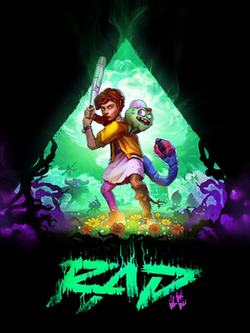
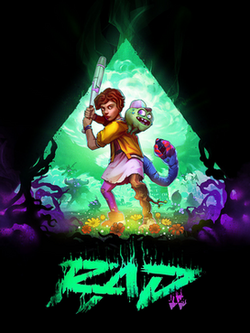 Rad on Switch
 Onimusha: Dawn of Dreams on PS2
 Action Man: Operation Extreme on PlayStation
 Door Kickers: Action Squad on Switch
 Combat Elite: WWII Paratroopers on PS2










 Another SquareThought Site