

 Nov 2024
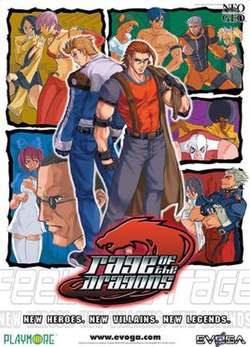

There is a particular pleasure that comes from playing a modern reissue of an unapologetically late-era 2D fighter: it feels like finding a dusty cassette tape of your favorite band in a box of VHS tapes and being amazed that the songs still hit just as hard. Rage of the Dragons, originally a 2002 Neo Geo experiment and now ported to the PlayStation 4 by QUByte Interactive, occupies that comfortingly stubborn niche. It wears its influences on its sleeve - the names Billy and Jimmy alone make the homage to Double Dragon painfully literal - but this is no cheap knock-off. It is instead a lovingly assembled tag-team fighter with roguish charm, big sprite work, and a mechanical heart that will reward anyone who still remembers how to time a super move with manic precision. As a 1990s-style critic, I am obliged to point out the lineage, the cabinet roots, and the sense that someone, somewhere, dreamed of sticking two fighters into the same ring and letting them bicker over who gets to land the final blow.
Rage of the Dragons is built around a simple, old-school conceit: two characters on a team, swap at will, and make mayhem. The tag system is the game's main selling point, and it behaves the way tag systems from the Neo Geo era tend to behave - tactile, immediate, and antagonistic to sloppy play. Each team has two fighters; one is active while the other lingers on the sidelines and slowly recovers a sliver of health. The ability to swap on the fly is more than a showpiece. Smart swapping allows you to harvest free health, bait the opponent into wasting meter, and set up powerful team combos where both characters join an assault for serious damage. The meter itself lives in the auxiliary bar at the bottom of the screen. It fills when attacks connect and unlocks counters, EX-style special moves, and the game's flashier super techniques when full. Timing the meter usage - choosing between a defensive counter or a multi-hit super - is where the game turns from button-mash therapy into a contest of wits. The roster numbers fourteen playable fighters and two bosses, which is compact but functional. Characters arrive with distinct personalities and archetypal move sets: street fighters, wrestlers, psychic girls and capoeira girls; each pairing can be chosen from seven default teams or forged by the player in custom combinations. Nearly 80 pairings are possible, which is a nice touch for people who like to experiment with synergy. There is also a reward for old-school completionists: run the single-player tournament with the Billy/Jimmy pairing and you unlock a hidden ending - a delicious wink at fans of the franchise the game lovingly references. Mechanically the game skews toward offensive flow. Characters feel weighty but responsive; normals have reach, specials are sometimes situational, and the tag-team specials can swing the momentum in an instant. The pacing rewards aggressive reads: keep pressure, force poor swaps, then punish. The counterattack system - gated behind the auxiliary meter - adds a layer of rock-paper-scissors to exchanges. It's not a fighter trying to reinvent combat; it's happy to perfect a tried-and-true formula. That said, some matchups can feel lopsided at first, especially when beginners facing a team that has complementary zoning and rushdown tools. The learning curve is forgiving to the point that casual players will enjoy matches almost immediately, but the depth is present for anyone willing to study frame traps, tag-escape timing, and the game's particular meter economy. Single-player treats are straightforward: a tournament ladder against CPU teams culminating in the two single bosses, Abubo Rao and Johann. The bosses are designed to be imposing in classic arcade fashion - they occupy the end of the ladder with slightly more oomph than regular opponents to preserve that arcade crunch. Versus mode is where the port on PS4 will spend most of its life; local head-to-head retains the spirit of Neo Geo couch battles, while online options, if present, make for a decent modern addition (performance on the QUByte port is solid across the board, though the nostalgic thrill really peaks when a friend is sitting next to you, shouting instructions like the world's laziest coach).
Graphically Rage of the Dragons is a love letter to sprite-based fighters. The characters are large, articulated sprites with an emphasis on readable silhouettes and expressive animation. In an era that often equates 'good graphics' with polygons and particle blizzards, the game's pixel artistry stands out; the frames of animation convey sweat, weight and the kind of over-the-top poses that make a super move feel like a cinematic event. Backgrounds are varied and full of personality - neon-lit urban sprawls, smoky dojo shadows, and other late-night tableau - and they never distract from the action. The aesthetic is part homage, part original flavor. Billy and Jimmy's designs - intentionally resonant with earlier brawler protagonists - sit comfortably alongside the more unique entrants like Pepe (armed with newfound powers via a Quetzalcoatl scroll) or Annie, the psychic girl who travels with her black cat. Boss design is satisfyingly unpleasant: Abubo Rao is clearly channeling an old-school arcade bruiser vibe, while Johann carries cult-leader energy and the sort of final-boss animation that makes you feel vindicated when you finally beat him. Toshikazu Tanaka's soundtrack deserves a footnote; his SNK pedigree shows. The tunes are punchy, memorable, and perfectly pitched for quarter-munching fights: upbeat rock and synth motifs that loop without becoming obnoxious. On the PS4 port, the visual fidelity is clean and the sound mixes well - nothing modern and flashy, but precisely what the game's spirit calls for.
Rage of the Dragons on PS4 is not ashamed of its origins; it embraces them. It is a late-era Neo Geo fighter that has been treated with care for modern hardware without losing the arcade grit that made it interesting in the first place. The tag-team mechanics are satisfying, the roster is compact but varied, and the sprite work is a minor masterclass in how to make two-dimensional characters feel enormous and decisive. The Double Dragon homages are blunt but affectionate, and the game's identity never collapses under the weight of nostalgia. If you are a fan of 2D fighters, particularly those that prioritize crisp tags and readable action, this is one of those titles you buy so your thumbs can remember how much fun precision still is. It does not overturn the genre, nor does it need to. It recalls a time when fighting games were built around cabinets, coin slots, and a noisy crowd - it brings that crowd to your living room, and somehow, that noise still sounds like a good time.
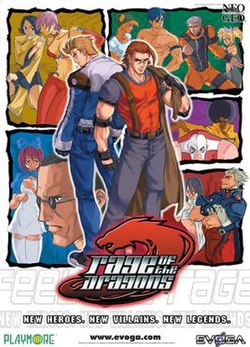 Rage 2 on PS4
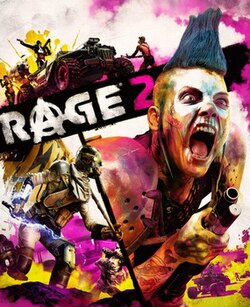 Rage of the Dragons on PS5
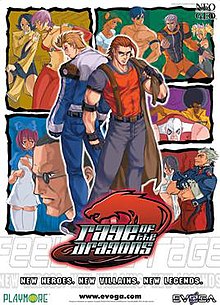 Road Rage on PlayStation
 Team Sonic Racing on Switch
 Toshinden Subaru on PlayStation
 Touhou Hyoibana: Antinomy of Common Flowers on Switch
 The King of Fighters '95 on PlayStation










 Another SquareThought Site