

 Jan 2018
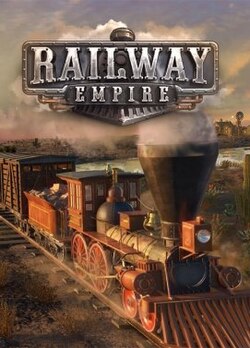

If you grew up playing tycoon games and secretly loved spreadsheets dressed up as fun, Railway Empire for PS4 is basically the console port of your childhood midlife crisis. It asks you one simple question: can you build a railway network that turns dusty boomtowns into bustling cities, makes your rivals cry into their pocket watches, and generally industrialises the 19th and early 20th century United States while looking neat on a TV? The answer is usually yes - after a few bankruptcy-induced sob sessions and a lot of frantic corridor-building. This management sim, cooked up by Gaming Minds Studios and published by Kalypso Media, drops you into America between 1830 and 1930. Your tools are locomotives, track, cunning office hires, and a stubborn refusal to accept that snow exists. The PS4 version earned decent praise (Metacritic pegs it around a high 70s on console), and it won a couple of German game awards for technical performance and overall quality. Translation: the engine hums smoothly even when your empire looks like a spaghetti bowl on fire.
Railway Empire's base campaign is comfortably Victorian: you start with modest ambitions and a modest balance sheet, and you end up with a map full of iron veins and political headaches. The campaign mostly nudges you along the history of the First Transcontinental Railroad, with one memorable detour into the American Civil War for mission four. It plays like a history lesson where the test is whether you can make more money than your neighbours while ensuring the wretched townspeople don't run out of coal. Mechanically, the core loop is gloriously straightforward and fiendishly deep. You lay tracks between cities and industries, buy locomotives (each with quirks, speed profiles and era-appropriate charm), set up routes, and hope the economics works out. Cities grow when connected properly; industries produce goods that feed into your freight lines; revenue flows when you match cargo and demand. On top of trains and tracks you hire folks - engineers, conductors, managers - each with personality types and bonuses. Some will be brilliant at keeping trains running on time; others will be officious paper pushers who inexplicably increase mail income. This is the part of the game where micro-management meets character-driven comedy: hire the right people and they turn your operation into a Swiss watch, hire the wrong ones and your payroll becomes a vampire slowly siphoning profits. Railway Empire lets you unlock technological innovations over time - think new locomotives and revenue-boosting perks - which feels rewarding and appropriately period-flavoured. Progression gives a satisfying sense of moving from steam-powered optimism to the screw-tighter efficiency of later eras. There are also competitors, AI-controlled rail barons who will casually poach your routes or try to railroad (pun intended) you into bankruptcy. They can be toggled between 0 and 3 opponents and set to difficulty levels of your choosing; if you like bullying NPCs, turn the difficulty down and practice your Machiavellian strategies until you're ready. Five main game modes diversify how you play. Campaign mode holds your hand just enough to teach the ropes while offering historical missions. Scenario mode is brutal but elegant: pick a rival with special bonuses, face tougher tasks, and feel like a real capitalist in a coat. Free mode generates a random task list at startup but doesn't force you to complete them - perfect for players who like guidance without being nagged. Sandbox mode is the 'what would ridiculously wealthy you do' mode: infinite money, all locomotives automatically researched, and zero competitors; it is peak power-trip train porn. Challenge mode throws you onto online leaderboards to compare empires with others, which is great if you enjoy public humiliation by strangers. The PS4 port keeps the bulk of the PC experience intact. The UI has been adapted to controller navigation - it's not as slick as a mouse-and-keyboard setup, but Gaming Minds did a respectable job translating menus and commands for thumb-driven empire-building. Track laying and route planning are intuitive with the stick and buttons, though fiddly late-game micromanagement can feel clunkier than on PC. The AI competitors are serviceable: sometimes ruthlessly clever, sometimes endearingly incompetent, much like real humans who were allowed to buy a railroad franchise. DLC and expansions add a surprising amount of replay value. Many packs introduce new maps, engines and tradeable goods, which spices up Free Game and Sandbox modes and gives you reasons to revisit the game long after the first turn of the century. Kalypso even released a 'complete collection' in 2020 bundling most of this content, so if you decide you want every locomotive and region under the sun, the option exists. The game's structure rewards strategic thinking: lay efficient routes, manage personnel, outcompete rivals, and don't forget to glance at the balance sheet unless you enjoy the brief cardio of emergency loans. If you're into economic simulations that are at once brainy and smugly satisfying, Railway Empire offers a slow-burn high. It's not going to hold your hand forever, and sometimes it feels like the game expects you to enjoy optimisation puzzles more than human drama. For players who delight in logistics and historical flavour - and for anyone who has dreamed of naming their empire something obnoxiously grand - it's an excellent sandbox.
For a management sim, Railway Empire does a very cute impression of a living diorama. Cities grow from tiny clusters of cottages to sprawling metropolises with smokestacks, people (tiny dot-citizens) bustle about, and trains chug with a respectable amount of personality. The map art is clear and attractive: top-down and slightly stylised, it communicates terrain and industry types effectively without making your eyes bleed during long hours of planning. On PS4 the visuals are competent rather than ostentatious. Textures and models are fine for console standards of a few years back - nothing here will be mistaken for photo-realism - but the clarity of UI icons and the readable map scale are what matter most. Special effects like snowfall (which can be toggled on or off) actually influence gameplay - winter slows trains - and adds a cozy but strategic element when storms roll in. Animations of engines and little trains rattling through the layout have a low-key charm; they won't win prizes at an animation festival, but they'll keep you smiling as you micromanage route timetables. The technical performance is one of the game's strong suits: Railway Empire won awards for its technical execution, and the PS4 version runs smoothly for the most part. Frame pacing and load times are reasonable, and expansions haven't noticeably borked the experience. The only real graphical complaint is the occasional visual clutter once your network explodes into a spaghetti junction; the map gets busy, icons overlap, and your inner OCD might cry a little. But that, frankly, is a design problem caused by your own hubris when you decided to connect six cities via a single two-lane line.
Railway Empire on PS4 is the console equivalent of a satisfying history-laced brain-teaser. It does what a great management sim should: it gives you a clear set of systems, lets you tinker, shows consequences, and then rewards clever planning with growing towns and bigger pockets. The five modes mean you can learn gently through the campaign, get punched in the face by scenarios, or go full demigod in sandbox mode. It isn't perfect - the controller UI can sometimes feel a hair clumsy compared to PC, and the late-game micro-management might ping the patience gauge - but the steady stream of DLCs, strong technical polish and the sheer pleasure of watching a train you bought chug across a continent make this an easy recommendation for strategy fans. If you like logistics, nineteenth-century aesthetics, and the quiet joy of turning rickety tracks into a money-making railway symphony, then hop on board. If you hate planning and profit, you'll probably be happier playing something with explosions and fewer spreadsheets. Final whistle: solid systems, historical charm, and plenty of replayable content. Railway Empire is a slightly nerdy love letter to railroading that will make you feel powerful, occasionally remorseful, and always entertained. All aboard, conductor - there's an empire to be built.
 Crimson Empire: Circumstances to Serve a Noble on PS2
 A-Train 6 on PS2
 PlayStation Home on PS3
 Gaelic Football '25 on Xbox Series X/S
 Together! The Battle Cats on Switch
 Crash Bandicoot: The Wrath of Cortex on PS2
 Port Royale 4 on Xbox Series X/S
 Port Royale 4 on PS5
 Port Royale 3: Pirates & Merchants on PS3










 Another SquareThought Site