

 May 2024


Read Only Memories: Neurodiver arrives like a polite detective who never learned to raise its voice. It's a sequel built from the same cyberpunk DNA as 2064: Read Only Memories, grown into something smaller, sharper and oddly more introspective. You play Luna, a psychic detective with extrasensory perception who rides a creature called a 'neurodiver' into other people's memories - which sounds like the sort of job that should come with a hazard pay stipend and decent dental. The setup is classic noir-with-neon: a fellow psychic is mucking up people's memories and now someone has to poke through the tangled synapses and tidy things up. Neurodiver is a single-player visual novel with adventure game trimmings, and if you enjoy reading more than button-mashing, this will feel like settling into a very stylish, slightly melancholic podcast that occasionally asks you to solve a puzzle.
Gameplay mostly lives in the land of text, which is to say: you read. Lots. Conversations unfold in classic visual-novel fashion and the narrative carries most of the heft. That's not a complaint, just a weekend warning: if you came looking for twitch reflexes you will be disappointed. The novelty - and mechanical twist - is Luna's neurodiver ability. When someone's memories are on the line you dive in and experience their past. The neurodiver sequences are where the game peels off its coat and exposes its neon heart. These sequences are presented as trips through pixelated reminiscences, sometimes straightforward, sometimes dreamlike, with the occasional puzzle to nudge things along. The adventure elements are modest and functional. You'll click, inspect, and solve puzzles that are more about pacing and variety than brain-melting cleverness. Puzzles are typically small logic problems or environmental fiddles designed to keep the flow moving; they rarely obstruct the story but do provide a welcome shift of gears when the dialogue could use an intermission. The balance here is admirable. Neurodiver never insists on being a two-ton narrative and a weighty puzzle game at once. It stays comfortably in the niche of conversational mystery with light interactivity. Where the writing leans into pop culture references and metahumor, opinions will diverge. The script is often witty and affectionate, but also occasionally smug. Rock Paper Shotgun noted that the easter eggs and meta jokes can pile up to the point of exhaustion, and they're not wrong: there are moments when the game seems to be winking so hard it risks a crick in the narrative neck. That said, the characters and world are consistently charming. MidBoss builds a believable, sticky cyberpunk community - a place where queer friendships, corporate grime and neon sincerity coexist without the need to scream "look how woke we are" into your ear. Pacing is the game's most honest flaw. Many reviewers praised Neurodiver's style and worldbuilding but found the story short and sometimes underpowered. If you expect a multi-hour epic with endless branching paths, this isn't it. Rather, it's a concise mystery with a tight focus: track down the memory manipulator, explore motives and consequences, and gently interrogate what identity means when memories can be edited like a bad Instagram caption. The final act resolves with reasonable economy, but some players will be left wanting more depth or time with characters who feel ready for additional chapters. Mechanically the PlayStation 4 version behaves itself. Controls are adapted for a controller in a way that makes sense for the genre: pointing, selecting, and menu navigation feel solid. There were mixed impressions about next-gen ports on other systems, but PS4 players get the experience the developers intended without noticeable awkwardness. Single-player only, naturally; the neurodiver is not multiplayer-friendly unless your friends are extremely into experiential therapy.
Neurodiver wears its pixel art like a favorite jacket: retro, slightly scuffed, and undeniably stylish. The world is rendered in compact, evocative frames that evoke classic point-and-click bruises of the past but with modern attention to color and lighting. Retro pixel art could be a way to save on budget, or a deliberate aesthetic choice; in this case it reads as the latter. The neon-soaked environments pop against darker palettes, creating a mood that communicates more about loneliness and late-night city grime than any single line of dialogue. The neurodiver memory sequences get creative: imagery warps, colors shift and the pixel aesthetic loosens into more surreal depictions. These moments are where the game's visual identity becomes its most interesting, transforming from a collection of pretty backgrounds into a series of evocative, memory-soaked tableaux. Character sprites are expressive within the limits of the art style, and side characters get distinct visual hooks so you rarely confuse who's who even if you're skimming text with the cold efficiency of someone speed-reading their own diary. The artwork isn't trying to blind you with technical prowess; it's quietly persuasive, like a street performer who also happens to be a philosopher.
Read Only Memories: Neurodiver is the sort of game that will make you smile and then make you think about why you smiled. It excels at character and atmosphere; its neurodiver conceit is clever and often affecting, and its pixel art world is charming in a way that never tips into self-parody. Criticisms land on predictable notes: the story is compact, the metahumor occasionally tiresome, and the writing sometimes opts for simplicity where complexity might have been satisfying. Reviews have been generally positive on some platforms and a little mixed on others, and Famitsu's 30/40 suggests the game is solid if not earth-shattering. If you want a brief but polished cyberpunk mystery that emphasizes feeling over flashy mechanics, Neurodiver is worth your time on PS4. It won't replace a sprawling RPG or a dense narrative epic in your backlog, but it will offer sharp characters, memorable moments, and a satisfying glimpse into what happens when memories stop being private. Play it like you would a short, excellent novel: savour the lines, enjoy the turns, and don't expect a sequel-sized denouement unless MidBoss decides to give Luna another case. Recommended for fans of visual novels, light adventure puzzles, and anyone who thinks psychic detectives should get hazard pay - or at least better benefits.
 Read Only Memories: Neurodiver on PS5
 Read Only Memories: Neurodiver on Switch
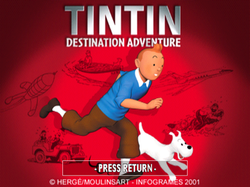
 Tintin: Destination Adventure on PlayStation
 One Piece Grand Adventure on PS2
 Taiko no Tatsujin: Don to Katsu no Jikū Daibōken on Switch
 Taiko no Tatsujin: Dokodon! Mystery Adventure on Switch
 2064: Read Only Memories Integral on Switch
 2064: Read Only Memories on PS4










 Another SquareThought Site