

 May 2017


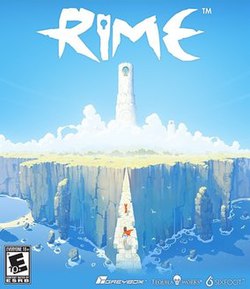
RiME is the kind of game that dresses its puzzles up in watercolors, gives them a fox guide and a tragic family subplot, then expects you to pay attention if you want to escape the island. On PS4 the game is a slow-burn puzzle adventure: you control a boy who can run, climb, carry, push and pull objects, and use his voice as a mechanical lever (yes, shouty solves). The island is split into five large areas that act like puzzle suites, and the underlying systems reward observational thinking over twitch reflexes. If you came here expecting twitchy platforming or combat, bring a towel and a new hobby. If you like perspective tricks, environmental logic, and the kind of quiet deduction that rewards patience, RiME will give you plenty to chew on - provided you've brought the right mental utensils.
RiME's core challenge revolves around environmental puzzles that are solved by understanding space, light, and sound as interconnected systems. Mechanically you're not overwhelmed: movement is third-person, basic platforming and object manipulation are your tools, and there's no combat, stamina, or inventory bureaucracy to clutter the experience. That minimal kit pushes the game to ask smarter questions: How can I orient these blocks so their shadows unlock a gate? Which statue reacts when I sing? Where does the fox want me to go, and what pattern in the world have I missed? A few consistent skills are required to make progress. Spatial reasoning is top of the list. Several puzzles depend on aligning otherwise unrelated elements using a turret-like perspective mechanic - you rotate a viewpoint or line up foreground and background objects to make shapes project correctly onto surfaces. These are "aha!" moments when separate geometry becomes a functional doorway, and solving them requires thinking in planes and projections: visualize how a column, a distant arch and a slab will look when viewed together, then physically move pieces until the world draws the answer for you. Observation is the next big one. RiME's design often buries the solution in details: a pattern of tiles, the timing of light as day influences play, or the audio cue produced when the boy shouts. The game intentionally tells its story and its rules silently, so players who aren't scanning the scenery or replaying small interactions will stall. Listening for chimes, watching how shadows stretch, and noting the tiny decorative motifs around doors are the kind of habits that move you from stuck to satisfied. Patience and methodical experimentation are rewarded more than brute force. Many puzzles are gentle in the sense that they allow you to try things without permanent penalty, but they can be frustrating if you treat them like fetch quests. RiME expects you to test hypotheses: try singing near statues to open a door for a short time, push a block into a pool to change a reflected shape, or climb to a ledge and see how elements line up from a different angle. The limited-time nature of some openings (you sing, a door stays ajar for a few seconds) adds a small rhythm challenge: plan, position, execute - and don't panic when the door snaps shut. Physical dexterity is minimal but not irrelevant. There are sections that require careful climbing and timing, though the platforming is forgiving compared to action platformers. The controls are smooth enough for the puzzle flow, but you'll occasionally need to manage the boy's momentum and balance when repositioning heavy objects or negotiating ledges. Still, RiME is primarily a thinking game, so if your hands are steady but your mind wanders, you'll find yourself backtracking more than failing. Interpretation of environmental language and symbolic thinking are subtle but essential skills too. The five large levels double as emotional stages; each area's architecture and puzzle language tie into themes that can hint at solutions. Reading the environment - not just as an obstacle course but as a storyteller - helps you prioritize what to examine. For players used to hand-holding tutorials, RiME can feel like a polite shrug: look, listen, and try. For those who enjoy that indie-level trust in the player, the payoff is the quiet satisfaction of discovery. Where RiME stumbles from a challenge perspective is in occasional shallowness and repetition. Critics have pointed out that many puzzles are variations on familiar indie puzzle tropes rather than wildly inventive mechanics. That means some sequences will feel like tasteful re-wraps of ideas you may have solved before in other games. When a puzzle is short on depth, the required skillset narrows to mere trial-and-error, which can be a letdown after a string of genuinely clever perspective-based brainteasers. Still, even the simpler puzzles generally reward attentive play, and the world does a decent job of keeping the curiosity muscle flexed until the next satisfying solution appears.
Graphically, RiME is dressed to impress - the PS4 runs the Unreal Engine 4 to produce a sun-soaked, cel-like palette that invites exploration. The environments aren't just pretty backdrops; they're information-dense. Textures, light angles and painted motifs do double duty as both aesthetic flourishes and puzzle clues. Good spatial puzzles rely on clear visual readouts, and RiME mostly succeeds: shadows are crisp when they need to be, and the way the world "holds" perspective tricks is visually convincing. The fox guide, the towering structures and the changing light help players orient themselves in space, which is crucial when the puzzle is "find the right view." The game's audio also plays into the puzzle design - the boy's shout and musical cues act as mechanical signals that help tie sight and sound together for solving.
If you want a videogame that tests your eye for detail, your ability to think in 3D, and your patience for quietly unfolding mysteries, RiME on PS4 is a solid match. The challenge is cerebral, not reflexive: spatial reasoning, observational acuity and methodical experimentation will get you through more often than fast thumbs. The puzzles lean heavily on perspective-alignment and environmental scripting, which produces frequent elegant solutions but also occasionally recycles ideas you've seen elsewhere. Still, Tequila Works packages these mechanics in a gorgeous, emotionally-driven landscape that turns problem-solving into a contemplative journey. Score-wise, RiME sits comfortably as a good-to-great puzzle title: it won't reinvent the wheel, but it gives you a well-crafted set of wheels to turn in satisfying directions. Bring your curiosity, your patience, and a willingness to look twice at seemingly decorative bits of the scenery - that's the real skill tree here. Then sit back and enjoy the small thrill when the island finally lets you through the next door.
 Puzzle by Nikoli 4: on PS4
 Twinbee Taisen Puzzle Dama on PlayStation
 Tokimeki Memorial: Taisen Puzzle-Dama on PlayStation
 Professor Layton and the Last Specter on DS
 Gylt on PS5










 Another SquareThought Site