

 Nov 2019
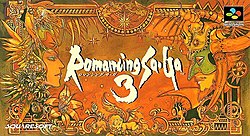

Romancing SaGa 3 arrives on PS4 like a classic RPG wearing a stylish new jacket and winking at you: this was originally a 1995 Super Famicom gem that finally got a proper worldwide remaster in 2019. If someone told you an adventure built around solar eclipses, mysterious "Children of Destiny," and a cast of eight very opinionated protagonists would be accessible on modern consoles, you might have laughed - and then gotten hopelessly lost in the first hour. The remaster brings English to a game that was once Japan-only, polishes the visuals, adds quality-of-life bells and whistles (hello, multiple save slots and New Game+), and otherwise keeps the core that made the original a cult favorite. This is not the hand-holding, spoon-fed RPG you see on every other shelf; it's the one that hands you a sword, a cryptic manual, and the universe's most passive-aggressive eclipse.
If you enjoy choices that matter and systems that make you feel clever (or confused, in a charming way), Romancing SaGa 3 has your name written in the stars - specifically, stars that may be foretelling doom via astronomical phenomenon. You begin by choosing one of eight protagonists: Julian, Ellen, Sarah, Thomas, Monika, Mikhail, Katarina, and Khalid. Each of them has their own motivations and tiny personal dramas, but the design genius is that they all exist in one living world and cross paths. The remaster keeps this structure intact, which means side quests feel like stumbling conversations between people who are actually doing things rather than NPCs waiting by a shop sign. Combat is gloriously old-school with a twist: there aren't traditional level-ups. Instead, stats grow depending on what your characters actually do in battle. Use a sword? Your strength improves. Dodge enough fatal blows and you might learn to evade similar attacks more often. Characters also have LP - a secondary life bar that drops when you get knocked below zero HP or get smacked while already down. Let LP hit zero and that character is removed from your roster for the rest of the run unless you recruit them again; let the main protagonist hit zero LP and congratulations, you've triggered Game Over. It's a system that raises tension without the melodrama of permadeath, and it makes you value each party member beyond their flavor text. The "spark" mechanic is a delight: characters can spontaneously learn new techniques mid-battle if conditions are right. It feels a little like magic, a little like watching someone remember they're secretly awesome. Throw in Commander mode - where the lead character can direct the party from behind the lines, learning multi-character techniques depending on formation - and you have tactical layers that reward experimentation. If you pick Mikhail as your lead, expect a mini-war campaign that plays out in RTS-lite fashion: you control units and issue marching orders instead of spamming Fireball. These war segments must sometimes be won to avoid a full game over, which is both terrifying and oddly cinematic. The cast isn't shy about being eccentric. The recruitment list reads like someone went through a fantasy bestiary and a very weird dating app: there's a lobster-man, an animated snowman (yes, really), a vampire, a masked hero, and army generals. Character designs by Tomomi Kobayashi give the whole affair a classy, elegant look that keeps even the goofier arrivals feeling coherent. Kenji Ito's soundtrack backs this up: ominous opening themes that morph into hopeful motifs and character tunes that range from melodramatic to cheeky parody. The world is open in a 1995 sense - not a modern open sandbox but a non-linear map that lets you explore and get swept up in side quests. That freedom is intoxicating but can occasionally leave you wandering in circles wondering what the game actually wants you to do next. Expect to grind. Expect to read your surroundings (and sometimes an actual manual) to understand the implications of your choices. The remaster does modernize things: New Game+ is available (even before finishing the game if you want), there's a new dungeon called Phantom Maze, added storylines, and you can toggle many of the new features off if you're purist-minded. These additions are thoughtful: they make the classic more approachable without neutering the original experience.
The remaster sprinkles a bit of modern fairy dust on the original 16-bit sprites. While the classic Super Famicom version already had strong character art and expressive spritework, the PS4 treatment refines those visuals into something that feels close to Final Fantasy VI-era polish - big, dramatic portraits and clearer animation frames. The aesthetic is still very much Romancing SaGa: Tomomi Kobayashi's "classic and cool" character designs are preserved, which means even the weirder characters (lobster-man, animated snowman, and the like) somehow look heroic instead of cosplay-fail. If you're nostalgic for pixel charm, the remaster respects that while offering cleaner backgrounds and UI improvements that spare your retinas. Audio-wise, Kenji Ito's compositions get their due. Themes are memorable and varied; one minute you're feeling dread at the Rise of Morastrum, the next you're humming a mischievous Robin tune that parodies anime openings. The PS4 audio quality makes those cues more impactful in boss fights and Abyss sequences. The new dungeon, Phantom Maze, and the additional story scenes have accompanying visual flourishes that mesh well with the original style, rather than clashing like an ill-advised cosplay crossover.
Romancing SaGa 3 on PS4 is a love letter to players who enjoy being trusted with decisions and thrown into a world that expects you to figure things out. The remaster adds sensible conveniences - multiple save slots, New Game+, new content like the Phantom Maze, and an English release for the first time - without turning the game into an entirely different creature. It retains the satisfying complexity of stat growth through action, the tense LP system, the quirky but endearing cast, and that wonderfully old-school openness that rewards curiosity and patience. This isn't the game for someone who wants constant guidance or a story that holds your hand through every eclipse. If you like your RPGs with a bit of mystery, a dash of grinding, and characters who could punch you or join your party depending on their mood, you'll have a great time. The difficulty can spike, side quests sometimes feel undercooked, and the interface still occasionally reminds you it was born in an era when manuals were part of the experience. But the world-building, music, and strategic combat more than make up for that. Treat it like an heirloom recipe slightly modernized: familiar, satisfying, and with a secret ingredient that sneaks up on you. Score: 7.4/10 - a solid, quirky remaster that's best enjoyed by players who appreciate challenge, curiosity, and a good cinematic eclipse.
 Romancing SaGa 2 on Switch
 SaGa: Scarlet Grace - Ambitions on PS4
 Combat Elite: WWII Paratroopers on PS2
 The Banner Saga 2 on PS4
 Arcania: The Complete Tale on PS3
 Gnosia on Xbox Series X/S










 Another SquareThought Site