

 Sep 2017
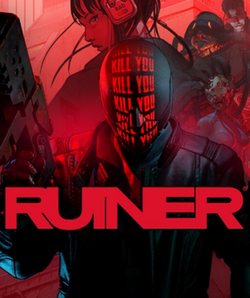

Ruiner arrives like a neon punch to the eyeballs: a top-down twin-stick shooter wrapped in 2091 cyberpunk aesthetics, developed by Polish indie studio Reikon Games and released on PS4 in September 2017. Built in Unreal Engine 4 and presented from an isometric perspective, it pairs terse, mission-driven storytelling with a relentless combat loop. If you care about how games are put together rather than just whether they are fun, Ruiner is interesting - equal parts engineering constraint and stylistic choice, with a few rough edges where ambition outstrips polish.
At its mechanical core, Ruiner is a textbook twin-stick shooter: precision movement, constant aiming, and a roster of enemies that demand situational awareness. The isometric viewpoint changes the usual 'move-and-shoot' rhythm because spatial information is compressed into a fixed camera angle. This has two effects: first, it forces designers to sculpt arenas so line-of-sight and cover are unambiguous; second, it makes hit detection and collision behave differently than in a strictly top-down or 3D third-person game. Reikon mitigates potential confusion by carving environments into readable lanes and choke points - narrow corridors, mezzanine platforms, and axial enemy spawns - which lets the player rely on pattern recognition rather than guessing where an attack came from. The combat is intentionally sharp. Reviews called it "sword-sharp," and that is reflected in enemy telegraphs, damage windows, and the emphasis on quick inputs. Enemy types complement one another instead of simply existing as HP sinks: close-range aggressors force you to reposition, ranged shooters punish sloppy dodging, and special enemies introduce movement constraints (for example, area-saturation attacks that demand vertical repositioning within isometric constraints). Boss encounters are framed as multi-phase tests of the systems you've been using: pattern memorization, resource management, and moment-to-moment dexterity. From a technical-design viewpoint, the decision to keep the protagonist mostly silent and masked reduces the need for animation-driven facial fidelity and voice-direction pipelines. That's smart for a small studio: you can allocate animation budget to combat transitions and enemy comportment rather than cinematic lip-sync. The narrative beats - kidnapping, rogue hackers, AI antagonists like Mother, and bosses such as TrafficKing and Geminus - are delivered in compact vignettes that tie into gameplay with minimal downtime. The plot twists where the player "hacks" brains and the protagonist is revealed to be biological material are handled as nodes that trigger new level types (factories, farms, compound interiors), which keeps technical complexity manageable by reusing asset sets with altered lighting and enemy loadouts. On PS4, the control surface is a natural fit for dual analog sticks and shoulder-button skill triggers. The twin-stick paradigm makes aiming intuitive; what becomes the real UI challenge is information density. The HUD is lean by design, but the mix of particle effects, neon bloom, and enemy projectiles occasionally competes with clarity. From a systems perspective, collision volumes for bullets and melee attacks are tuned to favor readability - you feel screwed over less often than luck-driven deaths, which is an underappreciated sign of good game feel. The checkpointing and progression pacing lean toward a modern arcade loop: repeated short runs through handcrafted arenas with incremental progression rather than sprawling open-world exploration. That model keeps technical scope constrained, reduces variance in asset streaming, and generally supports steady performance.
Visually, Ruiner is the part of the project where Reikon lets its art director flex. The game stylizes cyberpunk tropes - neon signage, rain-slick streets, industrial interiors - into dense screens that reward pausing to look. Using Unreal Engine 4 allows the team to deploy deferred lighting, bloom, and post-process anti-aliasing techniques that give the nightscapes depth. Particle systems are used liberally: sparks, smoke, muzzle flashes, and holographic UI elements layer over one another to create a 'sensory feast' effect that reviewers appreciated. Artistically, Benedykt Szneider's direction keeps a consistent palette and silhouette language so enemies are readable despite the visual noise. From a technical standpoint, this visual richness is a two-edged sword. On the one hand, the assets are optimized enough to maintain visual fidelity across the PS4's fixed hardware budget. On the other, the heavy post-processing and particle layering occasionally obscure the clarity that a twitch shooter needs. This is a trade-off: Ruiner opts for style over constant maximum readability, so expect moments where deciding whether a pixel is a projectile or ambient flare is not trivial. The isometric camera mitigates some of this because it freezes perspective and avoids sudden camera swings, which helps keep occlusion predictable. The art team also reuses modular level kits (factories, compounds, virtual farms) effectively, saving memory and draw-call costs while giving each area distinct lighting and enemy palettes. Audio is handled by a collection of composers and supports the aesthetic with pounding, electronic tracks that drive the combat tempo. Using multiple composers can make a soundtrack feel like a curated mixtape - it does here - and the result pairs well with the kinetic gameplay. From a production angle, leveraging multiple composers probably allowed the team to iterate on tracks in parallel, a useful technique for small studios constrained by time.
Ruiner is a technically savvy indie title that balances ambition and practical design. Reikon Games made smart choices: an isometric camera to simplify cinematic cost, Unreal Engine 4 to access modern rendering features, modular level kits to save memory and production time, and a combat system finely tuned to deliver satisfying hits and dodges. Where it stumbles is in the tension between spectacle and clarity - the very effects that make Rengkok feel alive sometimes get in the way of split-second decisions. Critical reception landed in the 'good, with caveats' territory on PS4 (Metacritic around 71/100), which matches what you get: a stylish, intense twin-stick shooter with excellent feel and occasional readability issues. If you appreciate games from an engineering lens - how systems interplay, how UI and art choices influence player perception, and how technical constraints shape design - Ruiner is worth playing on PS4. It's not flawless, but it's confidently executed, and its design decisions reveal a studio thinking hard about where to spend its resources. Expect short, tense runs, memorable boss fights, and a visual language that celebrates neon-noir excess - just be ready for the times when the visuals are so loud they try to steal your controller's thunder.
 Disney's Chicken Little: Ace in Action on PS2
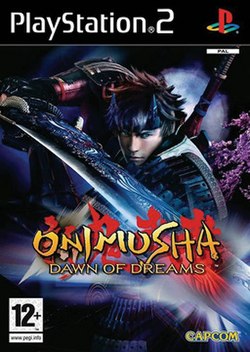
 Onimusha: Dawn of Dreams on PS2
 Action Man: Operation Extreme on PlayStation
 Ugly Americans: Apocalypsegeddon on PS3










 Another SquareThought Site