

 Sep 2019
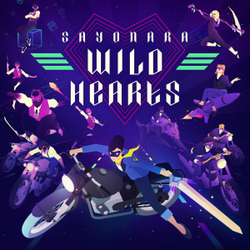

Sayonara Wild Hearts is the kind of game that arrives like a glittery pop song played through a dream - short, catchy, and impossible to forget. Developed by Simogo and published by Annapurna Interactive, this 2019 rhythm-action title dubs itself a "pop album video game" for good reason: the whole thing plays out level-by-level like tracks on an LP. You control a heartbroken young woman who is yanked from her bed into a neon-saturated alternate universe full of motorcycles, wolves, motorcycles on wolves, motorcycles that shoot, and other pleasantly bonkers tableau. The PS4 version, released on 19 September 2019, packages 23 levels of on-rails movement, boss fights, and choreography, all wrapped in a tight single-player experience. If you like games that treat gameplay like choreography and narration like a mixtape, this one is for you.
Sayonara Wild Hearts is rhythm-action boiled down to its most elegant parts: auto-forward movement, a joystick to steer, and a single button for jumps, attacks and timing prompts. The game is split into 23 levels, each one pulsing to its own pop-flavored song. The mechanics shift and shimmy from level to level - one minute you are longboarding along an ethereal highway collecting hearts, the next you're riding a motorcycle evading trams and trading paint jobs with a trio of devil-masked ladies. The core loop is simple: collect hearts for points, make timely button presses in time with the beat, dodge obstacles, and survive boss encounters that blend movement with rhythmic inputs. Hit an obstacle or a projectile and you're sent back to the last checkpoint, which keeps things tense but fair. If a particularly cruel section is chewing you up, the game hands you a get-out-of-jam card called The Magician, which lets you skip a section at the cost of possible points - a merciful safety net for anyone who prefers vibes over perfection. Not everything is a straightforward lane-runner. Some sequences give you a cursor to aim a bow or a rail-shooter style weapon - a mechanic that nods at games like Rez and classic rail shooters. There are chases, shootouts, rhythmic duels and even levels that alter the world's rules mid-run (the Stereo Lovers play universe-switching games that will scramble your reflexes in the best possible way). Boss fights are choreography in capes: learn patterns, time your inputs, and move with the song. Scoring hands out bronze, silver, or gold for each level, encouraging replay if you want to chase perfection. Simogo aimed for accessibility during development: they wanted controls that even people who don't normally play video games could pick up. That philosophy shows - the control scheme is friendly but surprisingly deep, letting designers rework the same core interactions into an astonishing variety of level types. Inspirations for the game's structure include rail shooters like Sin and Punishment and Star Fox, arcade racers like Out Run, and rhythm classics like Osu! - but Sayonara rarely feels derivative. Instead, it uses those references as seasoning, serving a concise, cinematic meal in under a few hours if you play through the main story. Replayability comes from chasing higher scores and enjoying the soundtrack; if you care more about narrative depth than sensation, you might find its short runtime a deliberate stylistic choice rather than a flaw.
Visually, Sayonara Wild Hearts is a neon postcard from a retro-future. The palette is a gorgeous collision of pinks, purples, and pastels that lean heavily into minimalist, almost wireframe-style composition - a throwback to early 3D rail shooters reimagined through a vaporwave prism. This bold visual identity won praise across the board; Edge awarded the game Best Visual Design and many outlets applauded how its sleek, stylized worlds amplify the music. The art team (including Carl Karjalainen and Ása Wallander) and director Simon Flesser clearly prioritized mood: every road, forest, and floating city is designed to feel like a stage set for a music video. But this game is as much about what you hear as what you see. The soundtrack, created by Daniel Olsén and Jonathan Eng with vocals by Linnea Olsson, is the game's beating heart - a string of pop songs that often sound like they came from an alternate-world radio station where Sia, Chvrches and Carly Rae Jepsen teamed up to score arcade dreams. The score even weaves in moments of Clair de lune for a surprisingly graceful touch. Critics universally praised the music, and the game collected awards and nominations for audio and artistic achievement, including Apple Arcade Game of the Year and wins at various festivals and award shows. Queen Latifah's surprise narration is a quirky, charismatic cherry on top, giving the short story a warm, offbeat frame.
Sayonara Wild Hearts is one of those rare games that trades length for a distilled, intensely pleasurable experience. It's stylish rather than sprawling, tight rather than layered - a pop single instead of a double album. The strengths are obvious: a knockout soundtrack, eye-catching visuals, approachable controls, and a design philosophy that turns simplicity into variety. Critics tended to love the audiovisual package (Metacritic scores for PS4 land in the mid-80s), though a few voices flagged that the game can be more style than substance if you're looking for deep mechanics or a sprawling narrative. Personally, the game's willingness to be unabashedly fun, forgiving and short is a boon: it respects your time, gives you an instant mood lift, and leaves you humming the songs out of spite. If you own a PS4 and want a game that feels like a midnight drive with the windows down and the perfect song on repeat, Sayonara Wild Hearts is worth the ride. It won't occupy your life for weeks, but it will brighten an evening, and you'll probably find yourself coming back for the music, the colors, and that small, satisfying itch to chase a gold rating on a level you already beat. Consider it a two-hour ceremony of forgiveness, neon and very good pop music - and yes, you can skip the hardest parts and still leave feeling like a cinematic hero.
 Sayonara Wild Hearts on PS5
 Sayonara Wild Hearts on Switch
 Disney's Chicken Little: Ace in Action on PS2
 Onimusha: Dawn of Dreams on PS2
 Action Man: Operation Extreme on PlayStation
 Door Kickers: Action Squad on Switch










 Another SquareThought Site