

 Jan 2017


UNO is the card game equivalent of a fluorescent fanny pack: instantly familiar, aggressively cheerful, and liable to cause family feuds. The Nintendo Switch version originates from Ubisoft's 2016 digital adaptation, with a Switch release noted in 2017. This review approaches UNO on Switch from a systems and implementation perspective - how faithfully does the software model the physical rules, how well does the UI and input mapping reduce friction, and how robust are the online and local multiplayer features that turn a simple shedding game into a portable party? The baseline for correctness is the official UNO rules: a specially printed deck (historically 108 cards, with later physical sets expanding to 112), action and wild cards, declared colors, penalties for missed "Uno" calls, and a mixture of high chance and light-handed strategy.
At its core UNO is trivial to simulate: each card has color, value, and an optional action, and turns proceed clockwise with clear effects for Skip, Reverse, Draw Two, Wild, and Wild Draw Four. The physical game provides a precise spec: seven-card starting hands, a discard pile seeded by a top-deck reveal, and specific penalty/challenge mechanics for Wild Draw Four cards. From a technical standpoint a faithful digital UNO must model: the full card set (zero-to-nine distribution, duplicates per color, four Wilds and four Wild Draw Fours, and the later additions of Wild Shuffle Hands and customizable Wilds introduced in 2018), turn state machines, draw-deck reshuffle behavior, and the penalty and challenge flows. The behavior of Wild Draw Four is the trickiest ruleset to codify without creating user frustration. Official rules allow a Wild Draw Four only when the player has no cards matching the current color; challengers can request a private hand reveal which triggers divergent outcomes (successful challenge: original player draws four; failed challenge: challenger draws six). Digitally you can automate that interaction, but automation must preserve the private-information semantics. Best practice is to present an explicit "Challenge" prompt to the next player, then show the challenged hand privately to the challenger only - the UI must clearly indicate who has seen what, and the networking layer must enforce confidentiality. If the game opts to fully automate legality checks server-side and block illegal plays, it reduces social bluffing but ensures rule-correctness; conversely, leaving everything permissive retains the table psychology but risks rule disputes. Given the Switch release date (2017), the port most likely implements the pre-2018 card roster and classical scoring-to-500 option, so players looking for the 2018/2022 official changes (Wild Shuffle Hands, customizable Wilds, or the demotion of the 500-point goal) should check in-game rule toggles or patch notes. Multiplayer modes are the raison d'etre for UNO. Locally, the Switch form factor introduces two important technical considerations: input method and privacy. Pass-and-play needs minimal UI overhead but must manage hand privacy on a single screen; split Joy-Con local-wireless sessions need synchronization and latency handling across consoles. For online play the critical systems are matchmaking, latency compensation for timed "snap" actions, and robust cheat prevention (card dealing must be server-authoritative to avoid predictable RNG exploits). AI opponents are the third axis - good bots need to model not just legal plays but heuristics (when to hold a Draw Two as bait, when to bluff with a Wild Draw Four) while avoiding transparent patterns. A competent digital UNO provides rule presets (official rules, common house rules like Stacking/Progressive Draw, Jump-In, Seven-O, or custom variants) and exposes them in lobby creation so players can trade off competitive integrity versus group habit. From an accessibility rules standpoint, physical UNO has seen ColorAdd decks and even braille editions; the digital port should reflect that ethos by providing colorblind modes (symbol-enhanced cards, high-contrast themes), large readable fonts, and explicit audio cues for turn events. An effective implementation makes calling "Uno" obvious: a one-tap audible/button prompt tied to the action of playing the penultimate card, plus a window for opponents to catch failures, mirrors the physical penalty rule and reduces "did I press it" ambiguity.
UNO's graphical requirements are modest but deceptively important: clarity === playability. The card faces must present color, number/symbol, and action iconography with pixel-perfect legibility at both docked 1080p and handheld 720p. Modern UNO decks moved to symbol-heavy action cards (instead of letters), and any digital port should emulate that shift, with crisp vector art and enough rim contrast to eliminate ambiguity when the Switch is used outdoors. Animations are another technical lever: a satisfying card toss effect, readable card flip for the current discard top, and clear overlays for color selection on Wild cards improve cognitive load and reduce misplays. Performance-wise, the Switch is overqualified; UNO needs snappy UI rather than GPU fireworks. The frames-per-second target should be locked and UI latency minimized - a menu that stutters while you're trying to "Jump-In" is a UX crime. Audio design should prioritize functional cues: distinct sounds for Skip/Reverse/Draw sequences, subtle confirmation chimes for successful Uno calls, and an optional voiceover or announcer for accessibility. If the port supports touch-screen input in handheld mode, it should allow dragging cards to the discard pile and tapping to select Wild colors - natural interactions that reduce menu friction. Lastly, visual customization (deck skins, table backgrounds, themed UNO decks) add polish but mustn't compromise legibility or color-blind accessibility options.
UNO on Switch is a low-barrier, high-social-impact title whose success hinges less on flashy visuals and more on marginal UX decisions: private-hand handling, rule fidelity, clear visual language for cards, and clean networking. The 2017 Ubisoft Switch release sits at the crossroads of a classic ruleset and an audience that expects both online stability and flexible house-rule support. Technically, the ideal port behaves like a diligent dealer: authoritative about the deck, communicative about state, and forgiving of incidental human error. Its flaws are likely to be in the edges - ambiguous Wild Draw Four handling, limited custom-rule lobbies, or lackluster AI - rather than in core mechanics, which are straightforward to model. Recommendation: if you want a portable UNO experience to settle quick party rounds or to serve as a rules-enforcing referee for analogue disputes, the Switch version delivers the fundamentals and convenience. Competitive groups that rely on particular house rules (stacking, seven-zero, jump-in) should verify rule toggles before joining public matches. For developers and curious players, UNO is an instructive case study: a simple ruleset exposes a surprising amount of systems engineering - from private-information mechanics and server-authoritative shuffles to input affordances and accessibility features. Score: 7.5/10 - solid implementation potential, with room for refinement in multiplayer tooling and accessibility polish.
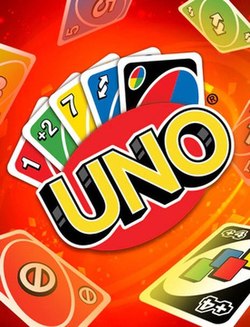 Uno on PlayStation
 Bō: Path of the Teal Lotus on Xbox Series X/S
 Press Your Luck on PS3
 Trivial Pursuit on PS3
 Coloball 2002 on PS2
 We Dare on PS3
 Prince of Persia: The Sands of Time on PS3
 Assassin's Creed: Brotherhood on PS3
 Assassin's Creed II on PS3
 Rayman Legends on PS3
 Tom Clancy's Rainbow Six Siege on PS5










 Another SquareThought Site