

 Aug 2025


Slitherlink is one of those logic puzzles that looks like innocent graph paper until you squint at it for too long and your brain files for overtime pay. The version being reviewed here is a PlayStation 4 adaptation of Nikoli's classic loop-forming logic puzzle. The source material is pure constraint satisfaction: a rectangular lattice of dots, numbered cells that constrain the number of filled edges, and the unlovable requirement that the final output be a single simple loop with no loose ends. This is not Angry Birds with physics - it's a spatial boolean problem; the rules are elegant, the solving methods are combinatorial, and the underlying complexity is embarrassingly high for undergrads (yes, Slitherlink is NP-complete for generalized sizes). On PS4, the puzzle is presented as a controller-driven, UI-rich experience rather than a paper-and-pencil exercise, and so the technical question becomes: how well does this port translate the precise cognitive affordances of pencil solving into a gamepad context, and does it add computational features that are actually useful rather than distracting?
At its core the gameplay is algorithmically identical to the paper template described in Nikoli's documentation: the grid of vertices and edges must be annotated with either a filled edge (part of the loop) or an X (definitely empty), and numbers inside squares indicate how many of that square's four edges belong to the loop. The PS4 build faithfully reproduces the canonical rule set and also includes non-rectangular tilings as optional modes (Penrose, Laves, snowflake and the like), which is a welcome nod to the generalizations discussed in the original source. These tilings are not just cosmetic: varying the degree of vertices and polygon side-counts materially changes the solver space and introduces topological edge cases that the UI has to handle cleanly. Input mapping and ergonomics are the place where a digital Slitherlink wins or loses. The implementation maps cursor movement to the left stick with snap-to-grid, while the right stick offers micro-zoom and panning. Face buttons toggle edge states (filled/X/clear), and the touchpad is optionally mapped to a 'drag-to-draw' mechanic that lets you trace a proposed line segment; this is a reasonable use of the DualShock 4 touch surface as long as the developers account for the higher latency and lower precision of swipes compared to analog sticks. The game supports full button remapping and a D-pad-only mode for purists who want eight-directional movement. Input latency is negligible on standard PS4 hardware - edge state changes register in a single frame and visual feedback is immediate, which is crucial because a half-second lag ruins the kind of rapid deductive iteration puzzle solvers rely on. The puzzle generator deserves a separate technical mention. The PS4 edition offers a seeded generator with difficulty tiers and an option to require uniqueness of solution. Ensuring a unique solution is nontrivial: generator loops must either use constraint programming to craft puzzle instances with provably unique solutions, or they must generate a candidate puzzle and run a solver to check uniqueness; the latter approach is the practical one used in most digital puzzle titles and appears to be the method here, as generation times for larger grids sometimes take a noticeable second or two. The generator exposes advanced parameters: grid dimensions, density of numerical clues, allowed tilings, and a 'proof depth' slider which biases puzzles toward those solvable by elementary local rules (arcs, corner rules, diagonal rules) versus puzzles requiring global parity/Jordan-curve style reasoning. This slider is a technically smart inclusion because it maps directly to algorithmic complexity classes within Slitherlink solving techniques. The hint system is where the port gets clever, and where technical design earns UX points. Hints are tiered: the first tier indicates a safe next edge (a single edge that can be deduced by a local rule), the second tier will highlight a set of cells and the rule that applies (e.g., "3 adjacent to 0: fill these edges"), and a third 'explain' tier provides step-by-step arc-notation style reasoning. The explain tier effectively exposes a trace of the internal solver's proof (backed, presumably, by a chain of deterministic deduction rules) and is enormously useful both as a teaching tool and as a method to verify generator claims of uniqueness. The downside is the paraphrase: presenting formal rule names to casual players is dry; fortunately the game uses short animated overlays to make the rules digestible. For players who like analytics, there's a very nice playback and branch-checker: you can place a tentative line and then query "if this choice is taken, does the puzzle remain solvable?" The background solver runs a quick backtracking search capped by configurable depth and returns either a contradiction or a continued proof obligation. This is effectively an engine-limited lookahead and is a legit computational feature that respects the puzzle's NP-ish nature while avoiding brute-force spoilers. For competitive types, asynchronous leaderboards record solve times and the number of 'hint' usages, which is handed off to a server. The server-side ranking seems to bucket players by grid size and difficulty; nothing revolutionary, but it works. The game includes a full tutorial that walks through notation (X marks, single-arc and double-arc notations), standard deduction patterns (corners, 1/2/3 rules, diagonals of 3s and 2s), closed-region parity checks, and even how to use Jordan curve parity reasoning. The tutorial doubles as a reference library and the decision to include arc-notation as a UI primitive (you can place an arc marker between edges to indicate "exactly one of these two") is a thoughtful adaptation of pencil-and-paper habit into UI affordances. The undo/redo stack is deep and well-indexed; quick-save and suspend-resume behave reliably with PS4's system suspend. A couple of nitpicks from a technical standpoint: the generator sometimes produces puzzles whose minimal human-solve path requires very non-local reasoning; while that is theoretically interesting, it occasionally feels like the puzzle had a "gotcha" move that depends on parity counting across a long path - the sort of deduction most people would call 'ungenerous'. The game exposes a setting for "favor local deductions" which helps, but that adds a second layer of calibration for developers and sharks alike.
Graphically, Slitherlink is minimal by necessity, and that is its strength. The grid is rendered with vector assets that scale cleanly at 1080p and up to 4K on PS4 Pro, with anti-aliased lines and a subtle drop shadow for the loop so it's readable on complex tilings. Edges have three visual states (filled, X'd, undecided) with color-blind-friendly palettes available in options. The cell numbers are high-contrast and use a statically rasterized font to avoid subpixel fuzz at different zoom levels. The game uses a lightweight shader to render highlighted deduction arcs and region shading; these are cheap GPU operations and keep GPU load microscopic, which means long puzzle sessions don't heat up the console. Animations are intentionally conservative: edge fills animate in with a short ease-in to give tactile satisfaction without delaying play. Menu transitions are snappy and avoid flashy 3D transforms; that's a good design decision because players spend more time in the grid than in the UI chrome. Sound design follows suit - sparse electronic blips for confirmation, a quiet ambient loop while solving, and optional calming piano for those who prefer it. No chiptune fanfare, no obnoxious stingers when you finish a loop - just satisfying, restrained feedback. From a rendering correctness perspective, the port is impressive: the verifier that checks the 'single loop' constraint is robust across all included tilings, and it properly handles degenerate graph vertices with varying degrees. The only visual hiccup noted was occasional aliasing on very steep zooms on Penrose tilings, where repeated geometric transformations exposed texture filtering artifacts; this is a minor shader/texture sampling oversight rather than a logic error.
Slitherlink on PS4 is a technically sound translation of a deceptively deep pencil-and-paper classic. It respects the puzzle's combinatorial heart while using the affordances of the console to add useful computational features: a proof-tracing hint system, parametric puzzle generation with uniqueness checks, a solid input mapping that accommodates stick, D-pad and touchpad, and accessibility options like color-blind palettes and remappable controls. The dev team's attention to keeping solver latency low and the UI responsive preserves the delicate feedback loop that makes Slitherlink satisfying to play. The game won't win awards for visual spectacle, and some players will find generator-edge "parity monster" puzzles frustrating rather than fun. If you want a casual time-killer you can pick up and drop, the game offers excellent quickplay options; if you want a serious logic workout with optional formal proof output, it doubles as a teaching tool. Because the source puzzle is NP-complete in the general case, the inclusion of solver transparency (showing the deduction steps behind hints) is a standout technical and pedagogical choice that elevates this port beyond a mere puzzle pack. Score-wise, it sits comfortably in the high range for puzzle fans: polished, precise, and pleasingly brain-burning. If you like the act of outsmarting a system of constraints rather than watching one, this is a clean and clever console adaptation of a classic.
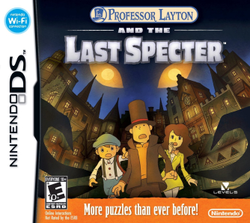
 Professor Layton and the Last Specter on DS
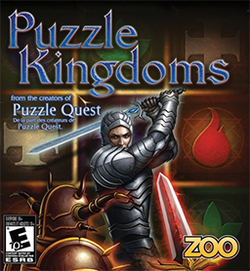
 Puzzle Kingdoms on DS
 Puzzle de Harvest Moon on DS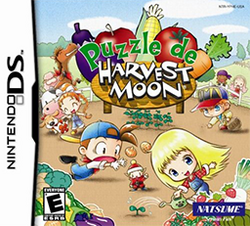










 Another SquareThought Site