

 Jul 2021
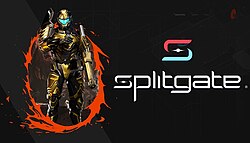

If you've ever wished Halo and Portal had a love child who was also into competitive multiplayer and battle passes, say hello to Splitgate. This free-to-play arena shooter from Nevada-based indie outfit 1047 Games started life as a Stanford school project and eventually blew up into a surprisingly clever FPS with a portal twist. On PS4 it arrives as a cross-platform, chaotic playground where one second you're sniping someone from twenty meters away and the next you're surgically teleporting behind them through a wormhole you placed five seconds earlier. Splitgate's hook is so audaciously simple that it sounds like one of those Twitter brain-food threads: give players Halo-style arena combat, then let them place two-way wormholes anywhere on the map. The result is a shooter that rewards map knowledge, creativity, and a sense of spatial confidence bordering on arrogance. The backstory is modest - born from a demo that racked up hundreds of thousands of downloads and then expanded through early access and an unexpectedly explosive beta in 2021 - but the gameplay idea is what keeps people logging in. Whether you're here for the high-skill plays or the hilarious misjudged portal flops, Splitgate on PS4 is a neat little experiment in how a single mechanic can rewire a familiar formula.
The core of Splitgate is arena-based, team-oriented FPS combat with a portal system lifted philosophically (and lovingly) from Valve's Portal games. You place paired portals on certain surfaces, and bullets, grenades, and your own body can travel through them. That turns every match into a chessboard where mobility and verticality become weapons in their own right. A tight mid-air portal into a sniper's perch? Instant chaos. A well-placed portal that turns a predictable chokepoint into a murder funnel? Priceless. Controls and weapon feel are solid - reviewers called the gameplay "impressively solid," and on PS4 the run-and-gun fundamentals translate well. The game leans into short, tactical skirmishes where decision-making often trumps raw aim. It's easy to learn: place a portal, shoot through it, try not to get shot while you panic-teleport. It's difficult to master because a single mis-placed portal can leave you exposed, and reading enemy portal setups becomes a mini-sport in itself. The design philosophy explicitly tried to mirror approachable-but-deep games like Fortnite and Rocket League: quick to pick up, a bajillion hours to get truly good. Splitgate launched with multiple competitive modes and later seasons added more. Season Zero introduced a map called Karman Station and a mode named "Contamination," while Season One brought a map creator beta, new modes like "Evolution" and "One Flag Capture the Flag," and various balance and fidelity changes. There's also a battle pass system for players who like unlocking skins and vanity items, which is unsurprising in a modern free-to-play multiplayer. Online experience has been a roller coaster. The game struggled after its 2019 early access launch, then exploded during a 2021 beta surge that crashed servers and forced the team to implement temporary queues. 1047 Games committed to staying in beta indefinitely as they worked on scalability, and they posted regular updates while juggling a sudden wave of popularity. On PS4 the cross-platform play helps keep lobbies populated, but matchmaking quality can still feel tied to how healthy the player base is on a given day. That said, when matches are full and players know what they're doing, Splitgate's tactical portal dance becomes wonderfully tense and frequently hilarious. If you're the kind of player who enjoys inventive movement and outplay setups - think high-skill Halo veterans who also enjoy trick-shotting through teleporters - Splitgate scratches that itch. If you mainly want a polished, content-stuffed, single-player beefcake, this isn't that. The game's strengths are in emergent moments: clever flanks, portal-assisted clutch plays, and the sweet satisfaction of outsmarting an opponent using geometry rather than just firepower.
Graphically, Splitgate is competent but not trying to win any "most photorealistic" awards. Reviewers described some maps as "bland" and called for more visual flair, and early seasons reflected that - armor and map aesthetics occasionally felt like they were taking design cues from forgotten mid-2000s shooters. Season One tried to address some of that with fidelity upgrades and graphical overhauls to several maps, and the addition of a map creator beta hinted that community-made maps could add personality over time. On PS4 the Unreal Engine 4 underpinnings deliver stable performance and crisp, readable visuals, which is actually more important than eye candy for this type of competitive game. You need to tell a portalable surface from a non-portalable one at a glance, and Splitgate mostly nails that clarity. Armor and skin variety exist, but some critics compared the designs to also-rans like Section 8 - not offensive, but not iconic either. Ultimately the visuals serve the gameplay well: everything is clear, bullets and portals are legible, and when the action ramps up you're more likely to admire a clever play than a texture map.
Splitgate on PS4 is a charming and clever twist on arena shooters. It pairs Halo-inspired sci-fi firefights with Portal-style wormholes to make a tactical shooter that rewards inventiveness and map smarts. It's free-to-play, has a battle pass and seasonal content, and the developers have shown a willingness to update and iterate - from fidelity tweaks to adding new modes and a map creator. The game's problems are mostly around polish and content depth: some maps feel plain, armor designs don't always spark joy, and the player count has had volatile moments (hello, server queues of 2021). Metacritic averaged the wider reception at 68/100, and outlets have called it an "average arena FPS" lifted by a smart core mechanic. If you enjoy creative movement, tactical play, and the occasional brain-bending portal maneuver, Splitgate is absolutely worth trying on PS4. It may not dethrone genre heavyweights or redefine art direction in shooters, but it's a brilliant little arena puzzler disguised as a shooter - one that produces highlight-reel moments often enough to justify the download. Consider it a multiplayer playground for people who like their pew-pew served with a side of spatial cunning. Now go place a portal, and try not to fall through it like I did the first seven times.
 Warhammer 40,000: Boltgun 2 on Xbox Series X/S
 PixelJunk Shooter 2 on PS3
 Turok: Dinosaur Hunter on Switch
 Primal Carnage: Extinction on PS4










 Another SquareThought Site