

 Oct 2015
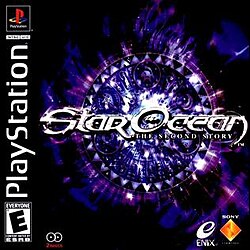

Electronic entertainment critics of the 1990s had a habit of declaring decisive battles: 2D versus 3D, JRPGs versus the rest, spectacle versus substance. Star Ocean: The Second Story originally landed in that fray back in 1998 as tri-Ace's ambitious follow-up to their debut, and its enhanced remaster, Second Evolution, keeps the fight interesting on modern iron. Presented here in its PS4 incarnation (a 2015 Japanese port of the PSP remaster), Second Evolution is both a time capsule and a polishing cloth: a game with late-'90s JRPG DNA remodelled with newly animated cutscenes, re-recorded music, extra story beats and the smug confidence of anime-flavoured sprite work. If you remember the era when Final Fantasy VII set a new bar for scope and spectacle, Second Evolution is the other studio that learned the same lesson, then decided to throw real-time combat, a bewildering number of endings, and a kitchen-sink crafting system at it. The game's tone is earnest, its ambitions sincere. It wants to be a sprawling science-fantasy soap opera, and for long stretches it succeeds. Whether you play as Claude C. Kenny-the Earth Federation ensign whose curiosity doubles as plot propulsion-or Rena Lanford, the wide-eyed local with a destiny stamp, what follows is a sprawling journey across the medieval-sounding world of Expel and beyond. This PS4 port is neither a full remake nor a lazy cash-in; it is a remaster that remembers its pedigree and amplifies its strengths while politely sanding down some rough edges.
Second Evolution sits at an interesting mechanical intersection: it remembers the command-driven JRPGs of the mid-90s but chooses to fight in real time. Battles occur on a generous battlefield where your protagonist moves freely, trading blows or trying for a tactical flank. You control one character directly while up to three allies behave under AI with selectable strategies. For a reviewer raised on turn-based patience, this feels like the genre learning to run before it could walk-combat is immediate and kinetic yet still infused with the tactical choices of an RPG. A large part of the game's long-term engagement comes from its skill and specialty systems. Nine skill groups are purchased from shops, then learned via battle-earned skill points. Some skills pump stats and unlock new battle tricks; others teach Specialties-crafting and life skills such as Herbal Medicine, Cooking, Composing and Pickpocketing. If you enjoy inventory alchemy, Super Specialties let the whole party collaborate on projects like Master Chef or Blacksmithing. You will spend consumables and gamble on recipes, and yes, attempts can fail. The reward loop is stubbornly addictive: create food to restore HP/MP, write a novel to earn future royalties, or cook up training items that boost experience gain. The Private Actions mechanic is the clever bit that elevates Second Evolution from a pleasant romp to a game with real replay value. During town visits you can trigger Private Actions that split the party for cutscene vignettes: characters shop, argue, flirt, or sulk. These social interactions alter relationship points and feed into everything from temporary combat bonuses to which of a staggering number of endings you will see. The original game boasted 86 possible endings; Second Evolution expands that count to nearly a hundred depending on who you recruit and how you behave. Recruitment is not infinite either-ten recruits but only six can be carried, and picking one often blocks another. That means your choices matter on a granular level and encourage multiple playthroughs. There are, inevitably, compromises. The AI can be inconsistent; set a companion to "attack" and they might choose a dance of indecision in a tug-of-war between ranged and melee. The camera in chaotic battles will sometimes betray you, and the learning curve for skill point investment can be a little opaque without a guide. Nevertheless, the combination of active real-time combat, deep crafting, nearly countless endings and branching recruitments produces a game that rewards patience and curiosity. For anyone looking for a JRPG that both remembers the 1990s and refuses to be a museum piece, Second Evolution delivers a complex, living system to explore.
Graphically the game wears its lineage on its sleeve. Enix deliberately stuck with sprites in the original release to achieve an anime aesthetic they felt polygonal models couldn't yet deliver, and that aesthetic survives the remaster with dignity. Character portraits and in-battle sprites retain a charming 16-bit-to-32-bit sensibility, while menus and world maps feel like a lovingly restored cartridge. Second Evolution's headline improvement is the Production I.G. animated cutscenes added for the remaster; these interstitials are glossy, professional and occasionally lavish-exactly the kind of camera-lensed drama that a late-90s press kit would have touted in bold type. The PS4 port benefits from cleaner upscaling, improved background detail and a re-recorded soundtrack that lifts Motoi Sakuraba's compositions into clearer air. Voice work has been expanded and re-recorded where possible, giving many scenes extra weight. It's important to note that this particular PS4 release was a Japan-only affair for Second Evolution, and some Western fans found themselves looking at the rich audiovisual package with a passport and a disappointed sigh. Compared to modern polygon-heavy titles the game will not win a graphics contest, but judged by the standards of faithful remasters, it modernizes the presentation while preserving the sprite-driven charm that made the original distinctive.
For those nostalgic for the late 1990s and for newcomers who crave an RPG with both ambition and eccentricity, Star Ocean: Second Evolution on PS4 is a compelling proposition. It is not flawless: some AI oddities and camera hiccups persist, and its Japan-only distribution for the 2015 PS4 port limited access for many Western players. But the strengths are weighty: engaging real-time combat, an expansive and thoughtful crafting system, Private Actions that meaningfully affect the narrative, and a near-outrageous number of endings that reward replay. The Production I.G. cutscenes and re-recorded score add polish without betraying the game's sprite-based soul. If you are the sort of player who appreciates games that feel like living books-where who you befriend, what you craft, and even which doors you don't open echo through the end credits-Second Evolution remains worth your time. It is an earnest relic of a terrific era of JRPG design, updated with enough modern sheen to sit comfortably on a PS4 shelf. Pop the disc (or the digital download), choose Claude or Rena, and prepare for a long, occasionally exasperating, frequently beautiful voyage. This is one of those titles that proves old-school mechanics, when thoughtfully expanded, can still surprise and delight.
 Lego Star Wars II: The Original Trilogy on PS2
 Angry Birds Star Wars on PS3
 Combat Elite: WWII Paratroopers on PS2
 Onimusha: Dawn of Dreams on PS2
 Disney's Chicken Little: Ace in Action on PS2
 Action Man: Operation Extreme on PlayStation










 Another SquareThought Site